






You know the dread. Before your eyes even open, before the coffee maker starts its morning hiss, your feet are already telling you what kind of day this will be.
You swing your legs over the edge of the bed. The floor is cold — tile, hardwood, whatever it is, it doesn’t matter. That first step lands like a knife slipping between flesh and bone. Your heel screams. Your arch tightens. You freeze, one foot on the ground, the other still dangling, wondering if today might be the day it finally goes away.
It won’t. Not on its own. Not if you’re like the two million Americans who deal with this every year.
Most articles about morning foot pain open with a dry definition of plantar fasciitis and tell you to stretch. You already know that. You’ve tried that. What you need — what you came here for — is to understand why this is happening to YOU, which of the seven common culprits matches your specific pain, and exactly what to do about it before your feet even hit the floor.
This guide is different. We’ll map your pain by location so you can self-diagnose in sixty seconds. We’ll give you a five-minute morning protocol that works — timed, ordered, and designed to happen before you stand up. We’ll cover the products that help (insoles, night splints, supportive slippers) without pushing miracle cures. And we’ll tell you, honestly, when it’s time to see a doctor versus when you can handle this yourself.
By the end, you’ll know why your feet hurt when you wake up. More importantly, you’ll know what to do about it.
BaronActive Resource: For a deeper dive into choosing the right arch support for your foot type, see our guide to finding the best insoles for plantar fasciitis.
The Science of Morning Foot Pain: Why It Happens (and Why It Eases After Walking)
Your feet didn’t betray you overnight. They tightened. Slowly, silently, while you slept.
The human body is economical. It shortens tissues that aren’t being used. When you lie in bed for six, seven, eight hours, the plantar fascia — that thick band of tissue running from your heel to your toes — contracts. So does your Achilles tendon. Your calf muscles settle into a shortened position. Your ankle stays in a neutral or slightly pointed angle, never reaching full dorsiflexion. The body thinks it’s doing you a favor by resting these structures. It’s not.
Then you stand.
Suddenly, that tightened plantar fascia is asked to stretch to 110% of its resting length in a fraction of a second. The microtears from yesterday’s walking, standing, or running haven’t healed yet. The inflamed tissue meets the cold floor and sends a distress signal straight to your brain. Sharp. Stabbing. Unmistakable.
Here’s the part that confuses people: after a few minutes of walking, the pain dulls. Sometimes it disappears entirely. This isn’t because the problem went away. It’s because warmth, blood flow, and gradual stretching have temporarily restored flexibility to the tissue. The plantar fascia has warmed up. The Achilles has lengthened. Your gait normalizes.
But the underlying irritation remains. Tomorrow morning, the same cycle repeats.
This pattern — pain upon first steps, relief after walking — is one of the most reliable diagnostic clues in podiatry. It points toward mechanical dysfunction, not structural damage. The tissue isn’t broken. It’s angry. And it’s angry because it’s being asked to do its job while shortened, stiffened, and unprepared.
Think of it like a rubber band left in the freezer. Pull it straight out and stretch it hard — it snaps. Warm it up first, gradually, and it handles the load. Your plantar fascia works the same way. The problem isn’t the tissue itself. It’s the transition from complete rest to full load with no warm-up.
Understanding this changes everything. It means your morning pain isn’t a mystery and it isn’t necessarily permanent. It’s a mechanical problem with a mechanical solution. The strategies in this guide work because they address the root cause: tissue that tightens overnight and gets shocked into load-bearing without preparation.
The 7 Most Common Causes of Morning Foot Pain (Mapped by Where It Hurts)
Not all morning foot pain is the same. The location tells the story. Use this map to narrow down what’s happening in your feet.
Bottom of the Heel: Plantar Fasciitis
The classic presentation. A sharp, stabbing pain at the inner front edge of your heel — right where the plantar fascia connects to the calcaneus bone. It feels like stepping on a nail. After a few minutes of walking, it dulls to an ache.
Plantar fasciitis affects roughly two million Americans each year, most commonly adults between forty and sixty. Risk factors include prolonged standing, sudden activity increases, flat feet or high arches, and excess weight. The plantar fascia absorbs 1.5 to 2 times your body weight with every step. When that load exceeds repair capacity, microtears accumulate — and morning pain follows because the tissue tightens overnight, then tears anew with first steps.
Back of the Heel: Achilles Tendinitis
Not heel-bottom pain — heel-back pain. The Achilles tendon, connecting calf to heel, becomes irritated from overuse, tight calves, or sudden activity spikes. Morning stiffness is common because the tendon shortens overnight. The first steps feel like your heel is rusted solid.
Unlike plantar fasciitis, Achilles pain often worsens with activity rather than improving. Running, jumping, or even walking uphill aggravates it. The tendon may feel thick or tender to the touch.
Heel Bone Itself: Heel Spurs
Here’s where confusion reigns. A heel spur is a calcium deposit on the heel bone. It’s visible on X-ray. But here’s what most people don’t know: heel spurs often cause no pain at all. The pain people attribute to spurs is usually plantar fasciitis happening in the same location.
If you have a documented heel spur and pain that doesn’t follow the classic plantar fasciitis pattern (sharp first-step pain that eases with walking), the spur might be incidental. Treat the soft tissue inflammation, not the bony growth.
Arch or Midfoot: Flat Feet / Fallen Arches
When the arch collapses, the plantar fascia stretches excessively. Some people feel this as aching fatigue across the entire arch rather than localized heel pain. It’s worse after standing for long periods and — yes — stiff in the morning after the ligament has been in a stretched position all night.
A simple wet-foot test can hint at this: step onto cardboard with a wet foot. A full footprint with little inward curve suggests flat feet. The absence of that arch means the plantar fascia is working overtime.
Multiple Joints: Arthritis
Rheumatoid arthritis, osteoarthritis, and psoriatic arthritis can all cause morning stiffness. The difference from plantar fasciitis: arthritis stiffness lasts longer (thirty minutes or more) and improves more gradually. It often affects multiple joints symmetrically. The pain is dull and aching rather than sharp and stabbing.
If both feet hurt, both ankles are stiff, and both knees feel wooden, think systemic inflammation, not localized tissue dysfunction.
Burning or Tingling: Tarsal Tunnel Syndrome
The tarsal tunnel is a narrow space inside your ankle where nerves, arteries, and tendons pass through. When the posterior tibial nerve gets compressed, symptoms include burning, tingling, numbness, or electric-shock sensations — not just pain. It’s often worse at night and may wake you from sleep.
Unlike plantar fasciitis, tarsal tunnel symptoms aren’t necessarily tied to the first steps of the morning. They may persist throughout the day and worsen with standing or walking.
Overuse or Microtrauma
Sometimes it’s not a named condition. It’s simply that yesterday was too much. A long day of standing at work. A new pair of shoes that didn’t fit right. A weekend hike that exceeded your conditioning. The foot complains the next morning because it’s still repairing the minor damage.
This pain is usually bilateral (both feet), diffuse (hard to pinpoint), and resolves within a few days with rest.
How to Tell Them Apart: A Quick Diagnostic Guide
| Pain Location | Quality | First-Step Pattern | Likely Cause |
|---|---|---|---|
| Inner heel, sharp | Stabbing, then dulling | Severe first steps, eases with walking | Plantar Fasciitis |
| Back of heel | Stiff, aching | Stiffness, worsens with activity | Achilles Tendinitis |
| Entire arch | Aching, fatigued | Gradual onset with standing | Flat Feet |
| Multiple joints | Dull, wooden | Lasts >30 min, both sides | Arthritis |
| Sole, burning/tingling | Electric, numb | Not necessarily morning-specific | Tarsal Tunnel |
| Heel bottom with X-ray finding | Variable | May not match classic pattern | Heel Spur (often incidental) |
The 5-Minute Morning Relief Protocol
Here’s what separates this guide from every other article you’ve read: the sequence matters. The timing matters. And doing this before your feet touch the floor is the difference between managing your pain and reducing it.
Step 1: Towel Stretch in Bed (60 seconds)
Before you sit up. Before you stand. While you’re still horizontal.
Loop a towel, resistance band, or even a bedsheet around the ball of your foot. Keep your knee straight. Gently pull your toes toward your shin until you feel a stretch in your calf and the bottom of your foot. Hold for 20 seconds. Release. Repeat three times per foot.
This isn’t a casual stretch. You’re manually lengthening the plantar fascia and Achilles tendon before they bear weight. Do this every morning for two weeks and the difference becomes undeniable.
Step 2: Ankle Mobility (60 seconds)
Still in bed. Point your toes away from you — hold five seconds. Pull them toward you — hold five seconds. Make ten slow circles with each ankle, first clockwise, then counterclockwise.
This wakes up the joint and tells your nervous system that movement is safe. It also distributes synovial fluid through the ankle joint, reducing stiffness before you load it.
Step 3: Calf Stretch at the Wall (90 seconds)
Now you may stand — but keep your heels down.
Place both hands on a wall. Step one foot back, heel flat, knee straight. Lean forward until you feel the stretch in your upper calf. Hold 30 seconds. Switch legs.
Then repeat with the back knee slightly bent. This shifts the stretch to the lower calf and Achilles — the areas that tighten most overnight.
Step 4: Ice or Heat? The Decision Tree (30 seconds)
Acute, inflamed, sharp pain? Ice. 10-15 minutes on a wrapped ice pack. Reduces inflammation and numbs pain receptors.
Chronic, stiff, dull pain? Heat. Warm towel or heating pad for 10 minutes before your first steps. Increases blood flow and tissue elasticity.
Not sure? Start with heat before walking, ice after. This primes the tissue for movement then manages any post-activity inflammation.
Step 5: Supportive Footwear Before First Steps (30 seconds)
Keep supportive slippers or running shoes with arch support beside your bed. Put them on before your bare feet touch the floor. This prevents the initial cold-floor shock and gives your plantar fascia immediate structural support.
This single habit — footwear before floor contact — eliminates the most painful moment of the day for many people. It sounds trivial until you try it.
The Complete Protocol
- Towel stretch in bed: 60 seconds (3 x 20 sec holds per foot)
- Ankle mobility in bed: 60 seconds (circles + point/flex)
- Wall calf stretch: 90 seconds (straight knee + bent knee variants)
- Heat or ice prep: 30 seconds (decision + application)
- Supportive footwear on: 30 seconds (before floor contact)
Total time before your first real step: 4 minutes 30 seconds.
Do this for fourteen consecutive mornings and your first-step pain will decrease measurably. Do it for eight weeks and it may disappear entirely.
Supportive Products That Actually Help (and How to Choose)
You’ve done the stretches. You understand the mechanism. Now let’s talk about the products that bridge between “knowing why” and feeling better.
Orthotic Insoles
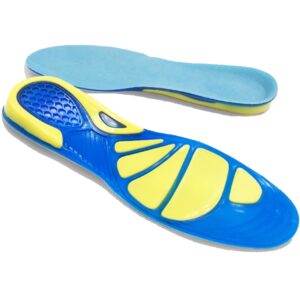
Insoles distribute pressure across the entire foot instead of concentrating it on the inflamed heel and arch. Look for:
- Firm arch support — not soft gel that collapses under load
- Deep heel cup — cradles the calcaneus and absorbs impact
- Durable material — EVA foam or carbon fiber that maintains shape
- Full-length design — supports the entire foot, not just the heel
Over-the-counter insoles with these features cost $25–$60 and outperform most custom orthotics for plantar fasciitis specifically. Custom orthotics excel for structural abnormalities but aren’t necessarily better for standard morning foot pain.
BaronActive Resource: Our guide to the best insoles for plantar fasciitis breaks down top picks by foot type and budget.
Night Splints
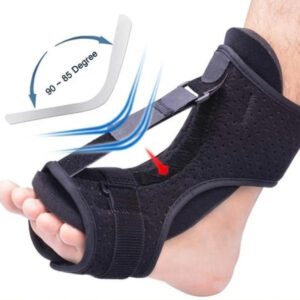
A night splint holds your foot in slight dorsiflexion while you sleep — toes pointed slightly upward. This prevents the plantar fascia and Achilles from tightening overnight. It’s the only product that addresses the root cause of morning pain rather than just managing symptoms.
Studies show night splints reduce morning pain by 50–70% within four weeks. The downside: they’re awkward to sleep in. The first few nights feel strange. Most people adapt within a week.
If your morning pain is severe and consistent, a night splint is worth the adaptation period. Use it in combination with morning stretches, not as a replacement.
Supportive Slippers
Standard slippers are foot-shaped blankets. They offer zero support and often make morning pain worse by allowing uncontrolled foot movement on hard floors.
Supportive slippers have structured arch support, a firm midsole, and a non-slip sole. Wear them from the moment your feet leave the bed until you’re fully dressed. The cost ($40–$80) is negligible compared to the daily pain reduction.
Compression Socks
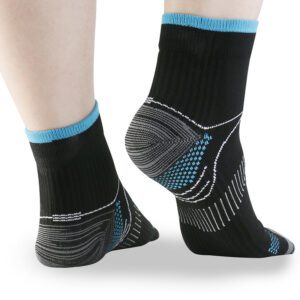
Graduated compression increases blood flow and reduces swelling in the feet and ankles. They’re particularly helpful if you stand all day, travel frequently, or notice ankle puffiness by evening.

Compression socks won’t fix plantar fasciitis directly, but they support the circulatory system that delivers nutrients and removes waste from healing tissue. Think of them as recovery accelerators, not primary treatment.
What to Skip
- Cushioned gel inserts — Temporary comfort, no structural support
- Magnetic insoles — No clinical evidence for pain relief
- Generic drugstore arch supports — Too flimsy for meaningful load distribution
- Essential oil roll-ons — Pleasant smell, no tissue-level effect
What Your Daily Habits Reveal: Prevention and Management
Morning foot pain doesn’t exist in a vacuum. Your daytime choices dictate your nighttime recovery.
Sleep Position
Stomach sleepers: your feet are plantarflexed (toes pointed) all night, shortening the plantar fascia and Achilles maximally. Try side-sleeping with a pillow between your knees, or stomach-sleep with a pillow under your shins to keep ankles neutral.
Back sleepers: you’re in the best position already. Add a pillow under your calves to maintain slight dorsiflexion.
Footwear Choices
Wear supportive shoes during the day, not just when exercising. The cumulative load from unsupportive footwear throughout the day determines how much repair your feet need overnight. Switch between two pairs of supportive shoes every other day to vary pressure points.
Floor Surfaces
Hard floors (tile, concrete, hardwood) multiply impact forces. If you stand in the kitchen for an hour, your feet absorb 1.5–2x body weight per step × thousands of steps. Use anti-fatigue mats in high-standing areas. The $30 investment pays for itself in reduced morning pain.
Weight Management
Every pound of body weight adds roughly 4 pounds of pressure to the plantar fascia with each step. A 20-pound reduction decreases plantar fascia load by 80 pounds per step. This isn’t cosmetic advice — it’s biomechanical. The correlation between BMI and plantar fasciitis incidence is well-documented.
When to See a Doctor (and When You Don’t Need To)
Self-treatment has limits. Here’s how to know when you’ve reached them.
Green Light: Self-Treat at Home
- Morning pain that eases within 10–15 minutes of walking
- No swelling, redness, or warmth in the foot
- Normal activity level maintained
- Pain is improving week-over-week with stretching
Yellow Flag: Schedule an Appointment
- Pain persists beyond 30 minutes after waking
- Pain is worsening despite 6+ weeks of consistent protocol
- New numbness, tingling, or burning sensations
- Pain in both feet symmetrically
Red Flag: See a Doctor Within Days
- Visible swelling or redness (possible infection or gout)
- Unable to bear weight on the foot
- Sudden severe pain after injury (possible fracture or tendon rupture)
- Foot is warm to the touch (possible infection or inflammatory condition)
- Pain accompanied by fever
What a Specialist Will Actually Do
A podiatrist or orthopedist will assess your gait, test foot flexibility, and possibly order imaging. X-rays rule out fractures and heel spurs. Ultrasound visualizes soft tissue inflammation in real time. MRI is reserved for cases where surgery is being considered.
The treatment protocol from a good doctor will mirror much of this guide: stretching, support, load management, and patience. If a doctor immediately recommends surgery without trying conservative measures for 6–12 months, get a second opinion. Surgery for plantar fasciitis has a 70–90% success rate but also carries risks and requires 6–12 weeks of recovery.
The Honest Outlook
Here’s what the data says: approximately 80% of plantar fasciitis cases resolve within 12 months with conservative treatment. Not 12 weeks — 12 months. The tissue heals slowly because it’s constantly loaded. Every step is a micro-trauma. Healing happens between steps, during rest, during sleep.
That timeline sounds discouraging. But the pain reduction happens faster. Most people who follow a consistent protocol — stretches, supportive footwear, load management — notice meaningful improvement within 4–8 weeks. The condition becomes manageable long before it fully resolves.
Patience isn’t passive. It’s doing the right things daily while the tissue catches up.
FAQs
Why does my foot pain go away after I walk around?
The plantar fascia and Achilles tendon tighten overnight. Your first steps stretch them cold, which hurts. After a few minutes of walking, blood flow increases, tissues warm, and flexibility returns. The underlying irritation remains, but your warmed-up tissue handles the load better. This pattern — pain with first steps, relief after walking — is the signature of mechanical morning foot pain, not structural damage.
Can flip-flops cause morning foot pain?
Yes. Flip-flops offer zero arch support and zero heel stabilization. Your plantar fascia works overtime with every step. If you wear them all day and then experience worse morning pain, they’re contributing. Switch to sandals with built-in arch support and a structured heel cup.
Is plantar fasciitis permanent?
No. Approximately 80% of cases resolve within 12 months with conservative treatment. The tissue heals slowly because every step loads it, but meaningful pain reduction typically happens within 4–8 weeks of consistent stretching, support, and load management. Chronic cases beyond 12 months may need professional intervention, but surgery is rarely necessary.
How long does morning foot pain take to heal?
With consistent protocol application, noticeable improvement usually appears in 4–8 weeks. Full resolution can take 6–12 months because plantar fascia tissue has limited blood supply and heals slowly. The key variable isn’t time — it’s consistency. Skipping stretches for three days can erase two weeks of progress.
Can I still run with morning foot pain?
Not during acute flare-ups. During recovery, modify rather than eliminate: reduce mileage by 30–50%, avoid hills and speed work, run on softer surfaces, and never skip your pre-run warm-up. If first-step pain is severe on running days, your tissue isn’t ready for that load yet. Cross-train with cycling or swimming until morning pain drops to a 2/10 or below before resuming full running volume.
Conclusion
You now understand why your feet hurt when you wake up. The tissue tightens overnight. The first steps stretch it cold. The pain eases because warmth returns, not because the problem is gone.
More importantly, you have a map. You know which of the seven common causes matches your specific pain. You have a five-minute morning protocol that addresses the root mechanism — tissue preparation before weight-bearing. You know which products support healing and which ones waste money. You know when to self-treat and when to seek help.
Here’s what most articles won’t tell you: the difference between people who recover and people who don’t isn’t knowledge. It’s consistency. The towel stretch done every morning for eight weeks outperforms every miracle cure tried once and abandoned.
Ready for the next step? Explore our complete collection of foot health guides and recovery tools to build your full morning relief system.
Start tomorrow. Before your feet hit the floor. Loop that towel. Pull your toes toward your shin. Hold twenty seconds. Do it three times per foot. Put on supportive slippers before you stand.
Your feet have been telling you something every morning. Now you know how to listen — and how to answer.