





Let’s be honest — if you’re reading this, there’s a good chance your lower back is reminding you it exists right now. Maybe it’s that familiar stiffness when you stand up from your desk, or that dull ache that greets you every morning like an unwelcome houseguest. You’re not alone, and more importantly, you’re not stuck with it.
Lower back pain is one of the most common physical complaints on the planet. It affects everyone from weekend warriors and desk workers to grandparents who just want to play with their grandkids without wincing. The good news? Most lower back pain doesn’t require surgery, expensive treatments, or a medicine cabinet full of pills. A lot of it can be managed — and even resolved — right at home, with the right knowledge and a few simple changes.
This guide is going to walk you through why your back is acting up, when it’s safe to handle things yourself, and exactly what to do to start feeling better. No medical jargon. No vague advice like “just stretch more.” Real, practical solutions you can use today.
Let’s get into it.
Why Lower Back Pain Is So Common (And Why It’s Probably Not Your Fault)
Your lower back — the lumbar spine — is an engineering marvel that does a tremendous amount of work. It supports your upper body weight, allows you to bend, twist, and rotate, and absorbs shock every time you take a step. It’s basically the project manager of your body, and like most project managers, it’s overworked and underappreciated.
So why does it break down so often? Here are the usual suspects.
Muscle Tightness
When muscles around your lower back, hips, and legs get tight, they start pulling on your spine like a tug-of-war game nobody signed up for. Tight hamstrings, for instance, tilt your pelvis backward. Tight hip flexors pull it forward. Either way, your lower back absorbs the stress.
Weak Core Muscles
Your core isn’t just your abs — it’s a full cylinder of muscles wrapping around your midsection, including your deep stabilizers, obliques, and even your pelvic floor. When this system is weak, your spine has to do the stabilizing on its own. That’s like asking a flagpole to stand up in a hurricane without guy wires.
Prolonged Sitting
Sitting is the modern back’s worst enemy. When you sit for hours — at a desk, in a car, on the couch — your hip flexors shorten, your glutes basically go to sleep, and your lower back rounds into a position it was never designed to hold for extended periods.
Poor Posture
Slumping forward increases the load on your lumbar discs significantly. Imagine holding a bowling ball close to your chest versus holding it at arm’s length. Same weight, drastically different effort. That’s what bad posture does to your spine.
Tight Hip Flexors and the Psoas Muscle
Here’s one that flies under the radar: your psoas muscle. This deep hip flexor connects your lumbar spine to your thigh bone, and it’s one of the only muscles that directly attaches to your lower spine. When the psoas gets tight — which happens to almost everyone who sits regularly — it pulls your lower back into an exaggerated arch. That compression creates pain, stiffness, and sometimes even nerve irritation.

If you’ve ever stood up after a long car ride and felt like you couldn’t straighten up for the first few steps, your psoas was likely the culprit.
Reduced Mobility With Age
As we get older, our discs lose hydration, our joints get stiffer, and our muscles lose elasticity. None of this is a death sentence — it just means your back needs a little more attention and care than it did twenty years ago.
Everyday Triggers You Might Not Think About
Lower back pain doesn’t always come from dramatic events. It often sneaks in through:
- Desk work: Hours of sitting with a rounded spine
- Driving: Vibration plus a slouched position is a recipe for stiffness
- Lifting objects: Picking up a heavy box (or a toddler) with a rounded back
- Gardening: All that bending and twisting in awkward positions
- Exercise: Overdoing it at the gym, especially with poor form on squats or deadlifts
The point is this: lower back pain is usually the result of accumulated stress, not a single moment of failure. And that means the solution is often about changing patterns, not just treating symptoms.
When Lower Back Pain Can Be Treated Safely at Home
Here’s the reassuring part: the vast majority of lower back pain episodes are mechanical in nature — meaning they come from muscles, joints, and movement patterns rather than serious structural damage. These respond well to home-based care.
Self-care at home is generally appropriate when:
- Your pain came on gradually or after a period of inactivity
- It feels like muscle tightness, stiffness, or a dull ache
- It improves with gentle movement or position changes
- There’s no history of major injury associated with it
- It’s been present for a few days to a few weeks
When to See a Doctor
While most back pain isn’t dangerous, there are some red flags that warrant medical attention. Please take these seriously:
- Severe pain that doesn’t improve with rest or position changes after several days
- Numbness or tingling in your legs, feet, or groin area
- Weakness in one or both legs — difficulty lifting your foot or standing on your toes
- Loss of bladder or bowel control — this is an emergency, seek care immediately
- Pain following a fall, accident, or trauma
- Unexplained weight loss combined with back pain
- Pain that wakes you from sleep consistently
If none of those apply to you, take a breath. You’ve got a lot of tools at your disposal, and they don’t require a prescription.
The Best Lower Back Pain Relief Methods at Home
This is the section you’ve been waiting for. Let’s break it down into categories so you can pick what works for your situation.
Movement-Based Solutions
If there’s one thing decades of research agree on, it’s this: movement is medicine for your lower back. The old advice of “go to bed and rest for a week” has been thoroughly debunked. Gentle, intentional movement is one of the most effective things you can do.
Gentle Stretching
Stretching helps restore length to tight muscles that are pulling on your spine. Focus on these areas:
- Hamstrings: Lie on your back and gently straighten one leg toward the ceiling, holding behind your thigh. Hold for 30 seconds each side.
- Hip flexors: Kneel on one knee in a lunge position, gently push your hips forward until you feel a stretch in the front of your hip. This directly targets the psoas muscle.
- Piriformis and glutes: Lie on your back, cross one ankle over the opposite knee, and pull the bottom leg toward your chest. This is sometimes called the figure-four stretch.
- Cat-cow stretch: On your hands and knees, alternate between arching your back (cow) and rounding it (cat). This gently mobilizes your entire spine.
- Child’s pose: From a kneeling position, sit back toward your heels and reach your arms forward on the floor. This decompresses the lower spine beautifully.
Pro tip: Stretch after a warm shower or a few minutes of walking. Warm muscles respond much better than cold ones.
Mobility Exercises
Mobility goes a step beyond stretching — it’s about actively moving joints through their full range of motion.
- Pelvic tilts: Lie on your back with knees bent. Gently flatten your lower back against the floor, then release. This teaches your pelvis to move independently of your spine.
- Knee-to-chest rocks: Pull one knee to your chest, hold for a few seconds, release, and switch. Alternate for 10 repetitions each side.
- Spinal rotations: Lie on your back with knees bent and feet flat. Slowly let both knees drop to one side, then the other. Keep your shoulders on the ground.
- Hip circles: Stand with hands on your hips and make slow, large circles with your pelvis — like you’re using a hula hoop. This lubricates the hip joints and loosens the surrounding muscles.
Walking and Light Movement
Never underestimate the power of a simple walk. Walking gently engages your core, promotes blood flow to your spinal tissues, and helps reduce the inflammation that contributes to pain. Even 10–15 minutes twice a day can make a meaningful difference.
If walking is uncomfortable, try walking in a pool. The buoyancy takes pressure off your spine while you still get the benefits of movement.
Muscle Relief Techniques
Sometimes your muscles are so wound up that stretching alone won’t cut it. That’s where direct muscle relief comes in.
Foam Rolling
A foam roller is one of the most cost-effective tools for back pain relief. Use it to:
- Roll your thoracic spine (upper back): This improves extension in your upper back, which takes pressure off your lower back.
- Roll your glutes and piriformis: Sit on the roller with one ankle crossed over the opposite knee and slowly roll back and forth.
- Roll your hip flexors and quads: Lie face down with the roller under the front of your thigh and slowly roll from hip to knee.
Important: Avoid rolling directly on your lower back. The lumbar spine doesn’t have the rib cage for protection, and direct pressure can cause spasm. Instead, address the muscles around the lower back — glutes, hip flexors, upper back, and hamstrings.
Trigger Point Release
Trigger points are tight knots in muscles that refer pain to other areas. A tight spot in your glute can send pain down your leg. A knot in your QL (quadratus lumborum — the muscle on either side of your lower spine) can create a deep, aching back pain.
You can address trigger points with:
- A tennis ball or lacrosse ball: Place it between your body and the floor (or a wall) and apply sustained pressure to tender spots for 30–90 seconds.
- A dedicated muscle release tool: Tools designed specifically for reaching deep muscles like the psoas and QL can be incredibly effective. These allow you to apply targeted pressure without contorting yourself into awkward positions. A psoas release tool, for instance, lets you safely access that deep hip flexor that’s so often responsible for lower back tightness — something that’s nearly impossible to reach with a regular foam roller.
Heat Therapy
Heat increases blood flow, relaxes muscle tension, and reduces pain signaling. Apply a heating pad or warm compress to your lower back for 15–20 minutes at a time. This works especially well for:
- Morning stiffness
- Muscle tightness after sitting
- Chronic, dull aching pain
For acute pain or inflammation (the first 48–72 hours after a flare-up), ice may be more appropriate. A good rule of thumb: ice for fresh pain, heat for chronic tightness.
Posture Improvements
You’ve heard “sit up straight” a thousand times. Let’s talk about what actually helps.
Sitting Posture Adjustments
Perfect posture isn’t about sitting ramrod straight like you’re in military school. It’s about finding a supported, neutral position:
- Feet flat on the floor, knees roughly at hip level
- Hips pushed to the back of your chair
- A slight natural curve maintained in your lower back (not flattened, not exaggerated)
- Shoulders relaxed, not pulled back forcefully
- Screen at eye level so you’re not craning your neck forward
The single most impactful change? Adding lumbar support. Most chairs — even expensive office chairs — don’t adequately support the natural curve of your lower back. A lumbar support pillow or a back brace designed for seated use fills this gap and dramatically reduces the load on your spinal discs. It’s one of those small changes that feels immediately different.
Standing Posture Awareness
If you use a standing desk or spend time on your feet:
- Avoid locking your knees — keep a micro-bend
- Distribute weight evenly between both feet
- Keep your pelvis neutral (not tilted excessively forward or backward)
- Stand on a cushioned mat to reduce fatigue
Ergonomic Changes at Home
Your home environment matters more than you think:
- Couch: If your couch is soft and saggy, use a firm cushion to sit on and a lumbar roll behind your back
- Bed: A medium-firm mattress generally provides the best support for lower back pain. If your mattress is old and sagging, consider a mattress topper as a more affordable upgrade
- Kitchen: If your countertops are low and you find yourself hunching while cooking, consider using a thicker cutting board or stepping stool to bring the work surface closer to a comfortable height
Supportive Tools
Let’s talk about products that can genuinely help — not as a crutch, but as a support system while your body heals and adapts.
Back Braces and Lumbar Supports
A well-designed back brace serves two purposes: it provides external stability to your lower back, and it gives your muscles a chance to relax instead of constantly guarding against pain. Think of it as a helping hand, not a replacement for your muscles.

Back braces are especially useful during:
- Flare-ups when pain makes normal movement difficult
- Activities that stress your back (driving, household chores, light lifting)
- The recovery period while you’re building strength through exercise
The key is choosing a brace that supports without completely immobilizing you. You want something that encourages better posture and reduces strain, while still allowing your muscles to engage.
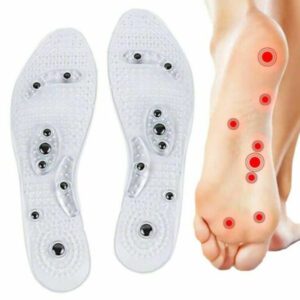
Orthotic Insoles
Here’s something many people don’t realize: your lower back pain might start at your feet. If your arches collapse inward (overpronation) or your feet don’t absorb shock well, the impact travels straight up through your knees, hips, and into your lower back.
Supportive insoles help by:
- Maintaining proper arch support
- Improving alignment from the ground up
- Reducing shock that reaches your spine with each step
If you notice that your back pain gets worse after walking or standing for extended periods, your footwear and insoles deserve a closer look.
Simple Daily Habits That Protect Your Lower Back
Relief is great, but prevention is the real goal. These daily habits can keep back pain from becoming a recurring part of your life.
Take Regular Movement Breaks
Set a timer for every 30–45 minutes during sedentary activities. Stand up, walk for a minute, do a few pelvic tilts or hip circles. This prevents the cumulative stiffness that leads to pain. Your body was designed to move frequently, not sit in one position for hours.
Strengthen Your Core (The Right Way)
Forget hundreds of sit-ups — they can actually increase lower back strain. Focus instead on exercises that build stability:
- Dead bugs: Lie on your back, arms extended toward the ceiling, knees bent at 90 degrees. Slowly extend one arm overhead and the opposite leg straight, keeping your lower back pressed into the floor. Alternate sides.
- Bird dogs: On hands and knees, extend one arm forward and the opposite leg back. Hold for 3–5 seconds, then switch. Focus on keeping your hips level.
- Glute bridges: Lie on your back with knees bent, feet flat. Squeeze your glutes and lift your hips toward the ceiling. Hold for 2–3 seconds, lower, and repeat.
- Modified planks: Hold a plank on your forearms and knees (or toes if you’re able) for 15–30 seconds, building up gradually. Keep your body in a straight line — no sagging or piking.
Even 10 minutes a day of core work can significantly reduce back pain episodes over time.
Improve Hip Mobility
Your hips and your lower back are neighbors who share everything — including problems. When your hips are stiff, your lower back compensates by moving more than it should.
Daily hip mobility work doesn’t have to be complicated:
- 90/90 hip stretches (sit on the floor with both legs bent at 90 degrees, one in front and one to the side, and lean forward gently)
- Deep squat holds (hold onto a doorframe and sit into a deep squat for 30 seconds)
- Hip flexor stretches (the kneeling lunge stretch mentioned earlier)
Learn Proper Lifting Technique
This one can save you from countless flare-ups:
- Get close to the object before lifting
- Bend at your hips and knees, not your lower back
- Brace your core before you lift — imagine someone is about to poke you in the stomach
- Keep the object close to your body as you stand
- Avoid twisting while holding something heavy — move your feet to turn instead
This applies to everything from grocery bags to grandchildren.
Mistakes That Can Make Lower Back Pain Worse
Good intentions can sometimes lead you astray. Watch out for these common traps.
Complete Inactivity
It’s tempting to park yourself on the couch and not move when your back hurts. But prolonged rest actually deconditions your muscles, stiffens your joints, and slows healing. Gentle movement — even if it’s just a slow walk around the block — is almost always better than total rest.
Ignoring Posture
“It doesn’t matter how I sit, it’s only for a few minutes.” Except it’s never just a few minutes. Hours of poor posture accumulate into days, weeks, and months of excessive spinal loading. Small postural adjustments maintained consistently make a bigger difference than you might expect.
Overtraining Through the Pain
On the flip side, pushing through sharp or worsening pain during exercise is a recipe for making things worse. There’s a difference between mild discomfort that improves as you warm up (generally okay) and pain that intensifies with activity (stop and reassess). Listen to your body. Soreness is normal; sharp or shooting pain is a warning.
Using Improper Lifting Techniques
We covered this above, but it bears repeating because it’s one of the most common triggers for acute back pain episodes. Even a light object lifted with a rounded back at an awkward angle can set off a spasm. Make proper lifting technique a habit, not something you only think about with heavy objects.
Relying Solely on Passive Solutions
Heat packs, braces, and massage feel wonderful — and they genuinely help. But if you only use passive treatments without also strengthening and mobilizing, you’re managing symptoms without addressing causes. The best approach combines passive relief (to feel better now) with active strategies (to prevent recurrence).
Frequently Asked Questions
What is the fastest way to relieve lower back pain at home?
For immediate relief, try lying on your back with your knees bent and feet flat on the floor (or calves resting on a chair seat). This position takes pressure off your lumbar discs. Apply heat for 15–20 minutes, then gently perform some pelvic tilts and knee-to-chest stretches. Most people notice a significant reduction in pain within 20–30 minutes using this approach.
Should I rest or move when my lower back hurts?
Move — but move gently. Extended bed rest (more than a day or two) is no longer recommended for most lower back pain. Start with very gentle movements like walking, pelvic tilts, and cat-cow stretches. Let pain be your guide: if an activity causes sharp or increasing pain, ease off. If it creates mild discomfort that improves as you continue, you’re on the right track.
What stretches help relieve lower back pain?
The most effective stretches for lower back pain target the muscles around your spine, not the lower back itself:
- Knee-to-chest stretch (decompresses the lumbar spine)
- Hip flexor/psoas stretch (reduces anterior pelvic tilt)
- Piriformis/figure-four stretch (relieves deep gluteal tension)
- Cat-cow (mobilizes the entire spine)
- Child’s pose (gently stretches the lower back and lats)
Hold each stretch for 20–30 seconds and repeat 2–3 times. Breathe deeply and never force a stretch to the point of sharp pain.
Do back braces help with lower back pain?
Yes, when used appropriately. A quality back brace provides external support that reduces the workload on your spinal muscles, encourages better posture, and can make daily activities more comfortable during flare-ups. They’re most effective as part of a comprehensive approach that also includes stretching, strengthening, and movement. Think of a brace as support during recovery, not a permanent solution. Over time, as you build strength and improve your movement habits, you may need it less.
Can the wrong shoes cause lower back pain?
Absolutely. Shoes without proper arch support or cushioning allow excessive foot pronation and increase shock transmission up through your legs to your spine. If you notice your back pain worsens after prolonged standing or walking, consider supportive footwear or adding orthotic insoles to your existing shoes. The difference in how your back feels can be surprisingly significant.
Your Back Pain Action Plan
If you’ve made it this far, you now understand more about your lower back than most people ever will. Here’s what to do next:
Today: Try the lying-down decompression position with heat, and do 5 minutes of gentle stretching (knee-to-chest, cat-cow, hip flexor stretch).
This week: Add a daily 10–15 minute walk and start doing core exercises (dead bugs, bird dogs, glute bridges) three times this week.
This month: Evaluate your sitting posture and make one ergonomic improvement (lumbar support, monitor height, or footwear). Add hip mobility work to your routine.
Ongoing: Build these habits into your daily life. Movement breaks, core work, and postural awareness aren’t a temporary program — they’re the maintenance your back needs to keep you moving freely for years to come.
Lower back pain might be common, but that doesn’t mean you have to accept it as a permanent part of your life. With the right knowledge and consistent action, most people can dramatically reduce their pain and get back to doing the things they love.
Your back has been carrying you your whole life. It’s time to return the favor.