






It’s 4:40pm. Your chin has drifted three inches toward the monitor without your permission, your shoulders have crept up around your ears, and when you finally look up, your neck doesn’t so much turn as complain. You’ve read that a traction device might help. You’ve also read ten different “best neck traction device” roundups that all list the same seven products with no real explanation of why any of them would work, or whether the expensive one is meaningfully different from the $19.99 inflatable pillow in your cart.
Here’s what almost none of those roundups tell you: there isn’t just one kind of home cervical traction device. There are four. Most buying guides only know about three of them, which means most of what you’ve read is already working from an incomplete map. And the honest research on traction itself is more interesting, and more qualified, than either the skeptics or the sales pages let on.
This guide covers all four device types, what the actual clinical literature says about who traction helps and who it doesn’t, and where a specific product fits for a specific kind of neck pain, so you’re buying based on mechanism and evidence, not a listicle.
The Short Answer (For People Who Just Want the Verdict)
For most people dealing with tech-neck stiffness, tension headaches, and forward-head-posture tightness from a desk job, a motorized cyclic traction device that combines heat, traction, and massage is the best-fit modern option, and it’s the one category almost no buying guide covers. Our NeckEase 3-in-1 Cervical Traction & Heat Therapy Device ($99.99) is built around that exact sequence: heat first to soften tissue, then cyclic traction, then massage to keep muscles from re-tightening.
That said, the honest caveat comes first, not last: cervical traction’s evidence base is real but modest, and how well it works depends heavily on what’s actually going on in your neck. If you have numbness or weakness running down an arm, a recent neck injury, or any of the red flags in the section below, a home traction device is not your first move. See a doctor first.
What’s Actually Happening in a Stiff, “Tech” Neck
Your head weighs roughly 10-12 pounds when it’s balanced directly over your spine. Tilt it forward 15 degrees, the angle of someone reading a phone or looking slightly down at a laptop screen, and the effective load on your cervical spine and the muscles holding it up can more than double. Hold that position for eight hours a day, five days a week, and two things happen: the muscles at the base of your skull and across your upper traps stay in a low-grade, sustained contraction that rarely fully releases, and the joints and discs in your neck spend the day compressed rather than resting at their natural resting length.
That’s the mechanical story behind “tech neck,” and it’s why stretching alone often provides only temporary relief; you’re stretching muscles that are going to shorten right back up the moment you return to the same posture. Traction devices work on a different part of the problem: rather than asking a tight muscle to lengthen through active stretching, they apply gentle, sustained or cyclic pulling force through the head and neck to create separation between vertebrae and take some of that compressive load off the joints and discs directly.
There’s a second piece to the tech-neck picture that most articles skip: the suboccipital muscles, a small group at the base of your skull where your neck meets your head, are disproportionately involved in forward head posture. They’re packed with proprioceptors (sensors that tell your brain where your head is in space), and when they stay chronically shortened, they refer pain upward into the base of the skull and temples. That’s a large part of why “tech neck” so often shows up as a tension headache rather than, or in addition to, neck pain itself. Any effective approach has to reach that specific muscle group, not just the more obvious muscles across the top of your shoulders.
Here’s the honest part most product pages skip: researchers don’t fully agree on why traction helps when it does. A StatPearls clinical overview of cervical traction lays out two competing theories, one centered on physically widening the space between vertebrae to relieve nerve pressure, the other centered on muscle relaxation rather than any real mechanical separation, and states plainly that “there is no accurate description of the mechanism of relief.” Traction can genuinely help. Nobody has fully nailed down why.
The Four Types of Neck Traction Devices (Buying Guides Usually Only Cover Three)
Nearly every roundup you’ll find sorts cervical traction devices into three buckets:
Over-the-door pulley systems. A chin-and-head harness connects via rope and pulley to a hanging counterweight. This is the oldest home-traction format and the one most physical therapists trained on decades ago. It’s effective and inexpensive, but capped at around 20 pounds of force, requires assembly, and isn’t something you can use anywhere but a doorway.
Pneumatic (inflatable) neck pillows. A soft collar you inflate by hand, building 20-50 pounds of gentle traction pressure with a squeeze bulb. No assembly, genuinely portable, and usable sitting or lying down. The tradeoff is that the traction force is static and manually controlled, so consistency depends entirely on you.
Posture pumps. A rigid unit placed under the head while lying flat, designed to restore the natural forward curve of the cervical spine. These deliver the strongest traction of the three and often the fastest subjective relief, but they’re also the most expensive of the traditional formats and the least portable.
What almost none of the existing buying guides mention is a fourth, newer category: motorized cyclic traction devices that combine traction with heat and massage in one sequence. Instead of one static pulling force, these units cycle the traction on and off (mimicking the rhythmic technique a physical therapist uses by hand) and pair it with heat beforehand to soften tissue and massage afterward to stop the muscle from immediately re-tightening. NeckEase falls into this category: mains-powered rather than battery-driven (so the traction force doesn’t taper off with battery charge the way it can on cordless devices), with independent controls for heat, lift, and massage that can run separately or together across a 15-minute session.
Whether “cyclic” traction is inherently superior to a simple sustained pull is a fair question, and the honest answer is: not necessarily. That StatPearls review specifically notes that in the clinical literature, “intermittent traction was not able to achieve a more favorable outcome than its sustained counterpart.” The real differentiator of a combo device isn’t that cycling is magic, it’s that pairing heat, traction, and massage in sequence addresses more of the actual mechanical problem (tight tissue, compressed joints, and the tendency to snap right back into that tightness) than any single modality does alone.
What the Research Actually Shows About Cervical Traction
This is the section most sales pages skip entirely, and it’s worth reading before you buy anything.
The evidence for cervical traction is real, but it comes with caveats that matter. The same StatPearls review notes that most published studies on traction “are of low quality and include a small number of participants,” and that while short-term relief is well documented, there’s limited evidence on long-term benefit. That’s not a reason to dismiss traction. It’s a reason to have realistic expectations about what a $99.99 device at home will and won’t do compared to, say, six weeks of supervised physical therapy.
Where the research gets genuinely useful is in showing who traction is more or less likely to help. A 2021 study in PLOS ONE put 36 patients with cervical radiculopathy (nerve-related neck and arm pain) through an intensive protocol: 30-minute traction sessions twice a day for five straight days, with force gradually increased from 5% to 10% of body weight. At three months, 48.3% of patients had improved by more than the minimum clinically meaningful amount on the Neck Disability Index, with cervical and radiating pain both dropping by roughly 20 points on a 100-point pain scale. That’s a real, measurable effect, in patients with a diagnosed nerve-related condition, using a structured, repeated protocol, not a single quick session.
The more important finding for a buying decision comes from a 2024 study in Scientific Reports, which followed 113 patients with cervical spondylotic radiculopathy through a two-week daily traction protocol and stratified them by how much underlying cervical spine instability and muscle degeneration they had going in. The results were stark: 85% of patients with mild instability trends responded well to traction, compared to 69.6% with moderate instability, and just 44.4% with severe instability. Encouragingly, the study also found that traction did not worsen anyone’s underlying spinal instability. But the practical takeaway is direct: the milder and more posture-related your neck problem is, the more likely a traction device is to genuinely help. The more structurally significant your underlying issue, the more you should be working with a doctor or physical therapist rather than self-treating with a home device, even a well-designed one.
In short: if your neck problem is “eight hours a day of screen-forward posture,” the evidence is reasonably encouraging. If it’s a diagnosed structural issue, get a professional opinion on whether traction is appropriate for your specific case before buying anything.
Who Should Check With a Doctor Before Trying Any Traction Device
This section applies to every type of device in this guide, not just NeckEase, and it’s worth reading before you buy any of them.
The StatPearls review lists several relative contraindications for cervical traction: acute torticollis (a sudden, severe neck spasm/twist), aortic aneurysm, osteoporosis, ligamentous instability, tumors in the cervical spine, myelopathy (spinal cord compression), and vertebral-basilar artery insufficiency. On top of that clinical list, a few common-sense red flags apply:
- Numbness, tingling, or weakness running down an arm or into your hand, which can indicate nerve compression that needs a professional diagnosis before you add mechanical force to the equation.
- A recent neck injury, whiplash, or neck surgery, where you need medical clearance before any home traction device.
- Pain that’s severe, worsening, or came on suddenly without an obvious postural cause, rather than the gradual, end-of-workday tightness this guide is mainly addressing.
- Pregnancy, where you should check with your OB or a physical therapist before using any traction device.
If none of that applies to you and your neck pain matches the “long day at a screen” pattern, you’re squarely in the population the research above is most encouraging about.
Choosing the Right Device for Your Situation
| Device Type | Best For | Mechanical Approach | Typical Price |
|---|---|---|---|
| Over-the-door pulley | Budget buyers willing to trade convenience for a proven, adjustable format | Static weighted traction via harness and pulley | $30-60 |
| Inflatable pneumatic pillow | Travel, portability, using it anywhere without setup | Static traction via manual air pressure | $20-40 |
| Posture pump | Strongest single-modality traction, fastest subjective relief | Static traction, lying flat | $150-300 |
| Motorized cyclic combo | Desk-job tech neck, tension headaches, wanting heat + traction + massage in one device | Heat softens tissue, cyclic traction, massage prevents re-tightening | $99.99 (NeckEase) |
Editor’s Pick: For the specific problem most people searching for a traction device have (tight, tension-headache-prone neck from a desk job, not a diagnosed structural condition), the NeckEase 3-in-1 Cervical Traction & Heat Therapy Device is our recommendation. It’s mains-powered so traction force stays consistent session to session, runs a 15-minute session at roughly $0.27 in electricity, and comes with a 30-day trial. It won’t outperform a supervised PT protocol for a diagnosed nerve issue, and it isn’t meant to. For everyday tech-neck tightness, it addresses more of the actual mechanical picture (tight tissue, compressed joints, and the tendency to snap right back) than a static pillow or pulley rig does on its own.
If you’re mainly looking for the lightest, most portable option for travel and don’t mind manual control, an inflatable pneumatic pillow remains a reasonable, inexpensive choice. If you’ve been told by a physical therapist that you need stronger, sustained traction for a specific diagnosed issue, follow their guidance on device type over any generic recommendation, including this one.
Cost-per-use is worth thinking about too, not just sticker price. A $30 over-the-door rig is cheap upfront but needs a doorway and roughly ten minutes of setup and teardown each session, which is exactly the kind of friction that gets a device shoved in a closet after two weeks. A $99.99 motorized device that you can sit down and start in under a minute at your desk or from your couch has a real advantage that never shows up in a price comparison: you’ll actually keep using it, and every study cited above depended on consistent, repeated use, not an occasional session.
If Your Pain Isn’t Just Your Neck
Tech neck rarely travels alone. The same slumped, forward-leaning posture that loads your cervical spine also flattens your lower back’s natural curve and asks your lumbar muscles to hold a compromised position for hours at a stretch. If your desk-job pain shows up in your lower back as much as your neck, our SpineEase 3-in-1 Therapeutic Back Massager($99.99) uses the same heat-plus-vibration-plus-acupressure logic for the lumbar region that NeckEase applies to the cervical spine. They’re built to be used as a pair for anyone whose workday punishes both ends of the spine at once, not as an upsell for its own sake.
Common Mistakes People Make Buying (or Using) a Neck Traction Device
Buying the cheapest inflatable pillow for a real, diagnosed disc or nerve issue. A $19.99 pneumatic pillow is fine for end-of-day tightness. It’s not a substitute for a device and protocol chosen with a physical therapist for a diagnosed condition.
Skipping the heat step. Whether you’re using a combo device or a standalone pulley rig, applying heat first (a warm shower, a heating pad, or a device’s built-in heat function) makes the tissue more pliable before you add traction force, and skipping straight to traction on cold, tight muscle blunts the benefit.
Cranking up force or session length to get faster results. More traction force or a longer session isn’t automatically better; the research above used moderate, controlled protocols, not maximum settings held for as long as possible. Follow the device’s recommended session length.
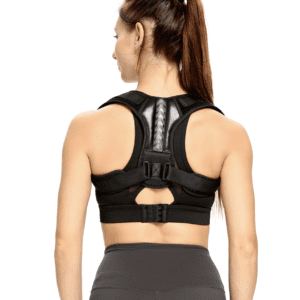
Assuming a device alone will fix a posture-driven problem for good. Traction addresses the symptom (tight, compressed neck) but not the eight-hour-a-day cause. Pairing a traction device with something that corrects the underlying forward-head posture, like our Pro Posture Adjustable Posture Corrector Belt ($39.99), addresses both ends of the problem instead of just the symptom.
Assuming “cyclic” or “intermittent” traction is automatically better than static traction. As covered above, the clinical literature hasn’t shown cyclic traction to outperform sustained traction on its own. A combo device’s real advantage is combining modalities, not the cycling itself.
Ignoring red flags to “just try it and see.” Arm numbness, recent injury, and severe or sudden-onset pain are reasons to see a doctor first, not reasons to test a device and hope for the best.
Frequently Asked Questions
How long before a cervical traction device makes a difference? Many users notice looser, less tender muscles within the first few sessions, but the research showing measurable, lasting improvement (like the 2021 PLOS ONE study) used a repeated protocol over days to weeks, not a single use. Treat it as a daily habit for at least two to three weeks before judging results.
How often should I use a neck traction device? Once daily, in a 10-20 minute session, is a reasonable and well-supported starting point. There’s no evidence that more frequent or longer sessions produce proportionally better results, and overdoing it can leave you sore rather than relieved.
Can you overdo cervical traction? Yes. Excessive force or duration can irritate already-sensitive tissue. Start at the lowest traction setting on any device and increase gradually only if you’re tolerating it well.
Does a traction device help tension headaches? Often, when the headache is coming from tight suboccipital and upper trap muscles related to forward head posture, which is a common source of tension headaches in desk workers. If headaches are severe, sudden, or different from your usual pattern, see a doctor rather than self-treating.
Is cervical traction safe if I have a herniated disc? Sometimes, but this is exactly the situation where you should get a professional opinion first rather than guessing. The 2024 Scientific Reports data above shows traction can help with disc-related radiculopathy, but outcomes get less reliable as the underlying issue gets more severe, and a doctor can tell you which category you’re in.
Is a motorized device worth it over a $20 inflatable pillow? If your main need is portability and occasional light relief, the inflatable pillow is a perfectly reasonable, inexpensive option. If you’re dealing with regular, tech-neck-driven tightness and want a heat-plus-traction-plus-massage routine you can rely on daily without manual pumping, a motorized combo device does more of the underlying mechanical work in one session.
Will insurance cover a home cervical traction device? Occasionally, with a prescription and documented medical necessity, but most consumer devices in this category (including every one covered here) are sold as over-the-counter wellness products, not billed through insurance.
Can I use a traction device during my workday, or only after? A motorized combo device with a fixed session length works well as a midday break, roughly 15 minutes away from your screen, rather than something you’d wear continuously while typing. Treat it as a deliberate reset, not a background accessory: the point is a full break from the posture that caused the tightness in the first place, not traction while you stay hunched over a keyboard.
The Bottom Line
The honest answer to “what’s the best cervical traction device for neck pain” isn’t a single universal product, it’s a match between how serious your underlying neck issue is and which of the four device types addresses it. For the majority of people searching this phrase, whose neck pain traces back to a screen-forward workday rather than a diagnosed structural condition, a motorized device that combines heat, cyclic traction, and massage addresses more of the real mechanical picture than a static pulley or inflatable pillow alone, and NeckEase is built specifically around that sequence. If your pain shows up in your lower back too, pairing it with SpineEase treats both ends of the same desk-job problem. And if you have any of the red flags above, the right first step isn’t a traction device at all, it’s a conversation with your doctor.