






You’ve been living with this dull, persistent ache in your lower back for weeks—maybe months. It’s not the sharp, alarming kind of pain that sends you running to the emergency room, but it’s there. Always there. When you stand up from your desk, when you try to straighten up after gardening, when you’re walking and suddenly feel that familiar tightness pulling through your hip and into your spine.
You’ve stretched. You’ve tried different chairs. You’ve wondered if you slept wrong, if you’re getting old, or if something more serious is happening inside your body.
Here’s something most people don’t know: one of the most common—and most overlooked—culprits behind stubborn lower back pain isn’t in your back at all. It’s a deep hip muscle called the psoas, and when it gets tight, short, or dysfunctional, it can absolutely wreak havoc on your lower back.
Let me explain exactly how this works, why it happens, what you’re actually feeling, and most importantly—what you can do about it.
What Exactly Is the Psoas Muscle (And Why Should You Care)?
The psoas (pronounced “SO-as”) is one of those muscles most people have never heard of—until it starts causing problems. Then suddenly, it’s all you can think about.
Technically called the iliopsoas when paired with its partner muscle (the iliacus), the psoas is a long, thick muscle that runs from your lower spine, through the depths of your pelvis, and attaches to the top of your thighbone. It’s buried deep inside your body—you can’t see it or touch it like your biceps or quads—but you use it constantly.
What Does the Psoas Actually Do?
Think of the psoas as your body’s primary hip flexor. Every time you:
- Lift your knee toward your chest
- Walk up stairs
- Get out of a chair
- Stand from lying down
- Bend forward at the hip
- Even stand upright (it helps stabilize your spine)
…your psoas is working.
But here’s where it gets interesting: the psoas doesn’t just move your leg. Because it attaches directly to your lumbar spine (the five vertebrae in your lower back), it has a direct mechanical relationship with the position and health of your lower back.
When your psoas is healthy, flexible, and balanced, it supports good posture and smooth movement. But when it becomes chronically tight, shortened, or overworked, it literally pulls on your lower spine—and that’s when the pain starts.
How a Tight Psoas Actually Causes Lower Back Pain: The Biomechanics Explained Simply
Let’s talk about what happens inside your body when your psoas gets too tight.
Imagine a tent. The poles hold it upright, but the tension in the guy-lines determines whether the tent stands tall and stable or sags and collapses. Your spine is like that tent pole, and your muscles—including the psoas—are the guy-lines creating tension from different directions.
When your psoas muscle shortens and tightens (which happens for reasons we’ll cover in a moment), it pulls on the front of your lumbar vertebrae. This forward pull creates something called anterior pelvic tilt—your pelvis tips forward, your lower back arches more than it should, and your spine is forced into an exaggerated curve called hyperlordosis.
What Does This Feel Like in Real Life?
You might experience:
- A deep ache or stiffness in your lower back, especially after sitting
- Difficulty standing up straight without feeling tight or compressed
- Pain that worsens when you try to extend your back (lean backward)
- A sensation of your back “locking up” when you’ve been in one position too long
- Discomfort that radiates into your hip, groin, or even down the front of your thigh
- Feeling like you need to constantly stretch or adjust your posture
One patient I spoke with described it perfectly: “It felt like someone was yanking on a rope attached to the front of my hip, and my lower back was stuck paying the price.”
That’s exactly what’s happening.
The Compression Problem
When your psoas pulls your spine into excessive extension, it compresses the joints and discs in your lower back. The small facet joints (the interlocking parts of your vertebrae) get jammed together, and the discs between your vertebrae experience uneven pressure. Over time, this can lead to inflammation, muscle guarding (when surrounding muscles tense up to protect the area), and chronic pain.
To make matters worse, a tight psoas often means a weak or underactive opposing muscle group—in this case, your glutes and deep core stabilizers. This imbalance leaves your lower back doing more work than it should, which compounds the problem.
Why Does the Psoas Get Tight in the First Place?
If the psoas is such an important muscle, why does it become problematic? The answer lies in how we live.
1. Sitting—the Silent Psoas Shortener
This is the big one. When you sit, your hip is flexed, which means your psoas is in a shortened position. Sit for hours every day—at a desk, in a car, on the couch—and your psoas adapts to that length. It literally becomes shorter and tighter over time, a process called adaptive shortening.
When you finally stand up, your psoas doesn’t easily return to its full length. It stays contracted, pulling on your spine and creating that familiar lower back discomfort.
If you’re someone who sits for work, then sits during your commute, then sits to relax in the evening, your psoas might spend 12+ hours a day in a shortened state. No wonder it starts to complain.
2. Lack of Hip Extension in Daily Life
Modern life doesn’t require much hip extension—that’s when your leg moves behind your body, lengthening the psoas. We rarely walk long distances, sprint, climb hills, or lunge deeply. Without regular hip extension, the psoas never gets the chance to fully stretch and maintain its healthy resting length.
3. Stress and the Psoas Connection
Here’s something fascinating: the psoas is intimately connected to your nervous system and your stress response. Some bodyworkers and somatic therapists call it the “fight-or-flight muscle” because it tightens when you’re under chronic stress or emotional tension.
When you’re anxious, worried, or constantly on edge, your body holds tension—often in the psoas. Over time, this creates a feedback loop: stress tightens the psoas, the tight psoas creates pain, and pain increases stress.
4. Overuse Without Balance
If you’re very active—cycling, running, rowing, or doing lots of sit-ups—you might be overworking your hip flexors without adequate stretching or strengthening of the opposing muscles. Cyclists, for example, often develop tight psoas muscles because the pedaling motion keeps the hip flexed for extended periods.
5. Previous Injuries or Compensations
If you’ve had an injury to your hip, knee, ankle, or even your opposite side, your body may have developed compensatory movement patterns that overwork the psoas. Sometimes a tight psoas isn’t the original problem—it’s a reaction to instability or weakness elsewhere.
How Do You Know If Your Psoas Is the Problem? Recognizing the Signs
Not all lower back pain comes from the psoas, but there are some telltale signs that point to it as a likely contributor.
Common Symptoms of a Tight Psoas:
- Pain that’s worse after sitting: You stand up and feel stiff, achy, or like you need to “unfold” your body
- Difficulty standing fully upright: You feel a pull or tightness in the front of your hip that prevents you from extending your back comfortably
- Morning stiffness: Your back feels tight and sore when you first get out of bed
- One-sided pain: Psoas tightness is often asymmetrical—one side might be tighter than the other, leading to uneven pain or discomfort
- Hip or groin discomfort: Pain that seems to travel from your lower back into the front of your hip, groin, or upper thigh
- Pain with certain movements: Extending your hip (moving your leg behind you), standing on one leg, or doing activities like climbing stairs can trigger discomfort
A Simple Self-Test: The Thomas Test
While I always recommend seeing a healthcare professional for persistent pain, here’s a basic test you can try at home to get a sense of whether your psoas might be tight:
- Lie on your back at the edge of a bed or sturdy table
- Pull one knee toward your chest and hold it there
- Let your other leg hang off the edge
- If the hanging leg’s thigh lifts up off the surface (rather than staying flat or hanging down), that suggests your psoas on that side may be tight
A tight psoas resists hip extension, so the leg won’t comfortably lower.
When Should You Worry? Tight Psoas vs. Something More Serious
Here’s the reassuring news: a tight psoas causing lower back pain is a mechanical problem, not a disease. It’s your body responding to posture, movement patterns, and lifestyle—and that means it’s something you can address.
However, it’s important to know when your pain might signal something more serious that needs medical evaluation.
See a Doctor If You Experience:
- Sudden, severe pain that comes on without explanation
- Numbness, tingling, or weakness in your legs or feet
- Loss of bladder or bowel control (seek emergency care immediately)
- Pain that wakes you up at night or doesn’t improve with rest
- Unexplained weight loss, fever, or feeling unwell along with back pain
- Pain following a fall, accident, or significant trauma
- Progressive worsening despite rest, stretching, and activity modification
These symptoms could indicate nerve compression, a herniated disc, spinal stenosis, infection, or other conditions that require professional diagnosis and treatment.
But if your pain is activity-related, improves with certain positions, and fits the pattern of muscular tightness we’ve described, a tight psoas is very likely playing a role.
What Can You Actually Do About a Tight Psoas? Practical Solutions That Work
The good news—and I mean genuinely good news—is that psoas-related lower back pain typically responds very well to the right interventions. You’re not stuck with this forever.
1. Stretch the Psoas Regularly (But Do It Right)
The classic psoas stretch is a kneeling hip flexor stretch, and it’s effective when done properly:
- Kneel on one knee (use a cushion or pad for comfort)
- Place your other foot flat on the floor in front of you, knee bent at 90 degrees
- Keep your torso upright and gently push your hips forward
- You should feel a stretch deep in the front of the hip of your back leg
- Hold for 30-60 seconds, breathe deeply, and repeat 2-3 times per side
Important: Don’t arch your lower back during this stretch. Engage your core gently and think about tucking your pelvis slightly under. The stretch should be felt in your hip, not your lower back.
2. Strengthen Your Glutes and Core
Remember that muscle imbalance we talked about? Strengthening the muscles that oppose the psoas helps restore balance and takes pressure off your lower back.
Try these:
- Glute bridges: Lie on your back, knees bent, feet flat. Lift your hips toward the ceiling, squeezing your glutes. Hold for a few seconds, then lower. Repeat 10-15 times.
- Planks: Hold a plank position (on your forearms or hands) to strengthen your deep core stabilizers without crunching your spine.
- Clamshells: Lie on your side, knees bent. Keeping your feet together, lift your top knee while keeping your hips stable. This strengthens your hip stabilizers.
3. Move More, Sit Less (Or Sit Better)
If you can’t avoid sitting for work or other reasons, make these adjustments:
- Set a timer: Stand up and move every 30-45 minutes
- Sit with your hips slightly higher than your knees: This reduces psoas tension
- Use a lumbar support: A small cushion or rolled towel behind your lower back helps maintain neutral spine alignment
- Consider a standing desk: Alternating between sitting and standing reduces cumulative psoas shortening
Even better: take short walking breaks. Walking promotes hip extension and gives your psoas the chance to lengthen naturally.
4. Practice Hip Extension Activities
Incorporate movements that take your hip into extension throughout your day:
- Walking with longer strides (not exaggerated, just purposeful)
- Lunges (forward lunges emphasize hip extension on the back leg)
- Step-ups or stair climbing (focus on pushing through your heel and extending your hip)
- Gentle yoga poses like low lunge (similar to the psoas stretch) or warrior poses
5. Address Stress and Tension
Since the psoas responds to emotional stress, stress management can genuinely help:
- Deep breathing exercises
- Progressive muscle relaxation
- Gentle yoga or tai chi
- Mindfulness or meditation practices
- Adequate sleep and recovery
When you’re calmer, your muscles—including your psoas—are less likely to hold chronic tension.

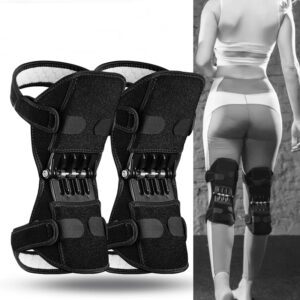
6. Consider Supportive Tools to Reduce Strain
While stretching and strengthening are essential, sometimes your body needs extra support while it’s healing and rebalancing. This is where well-designed supports and braces can make a meaningful difference.
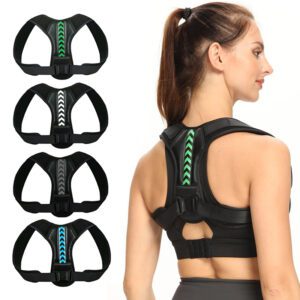
Lower back supports can help by:
- Providing gentle compression and warmth to ease muscle tension
- Encouraging better posture and spinal alignment during daily activities
- Reminding you to engage your core and avoid excessive arching
- Reducing the load on fatigued back muscles while you rebuild strength
Supportive insoles can help by:
- Improving your overall body alignment from the ground up
- Reducing compensatory movement patterns that strain the psoas and lower back
- Providing shock absorption that decreases cumulative stress on your spine
These tools don’t “fix” the problem on their own, but they can support your recovery process—especially if you’re active, on your feet all day, or dealing with pain that makes movement difficult.
Think of them as training wheels: they help you maintain better mechanics while you’re building the strength and flexibility to sustain those improvements on your own.
Real-Life Scenarios: What Tight Psoas Pain Actually Looks Like
Let me share a few common stories—maybe you’ll recognize yourself.
The Desk Worker
Sarah, 52, works in accounting. She sits at a computer for 8-10 hours a day. Over the past year, she’s noticed increasing stiffness in her lower back, especially at the end of the workday. Standing up from her desk feels like “unfolding a rusty hinge.” She’s tried a new chair and a standing desk mat, but the pain persists. After learning about the psoas connection, she started doing hip flexor stretches twice a day and taking walking breaks every hour. Within three weeks, her pain decreased by about 60%, and she finally understood why sitting was her enemy.
The Active Senior
Tom, 68, loves gardening and walking his dog, but he’s been frustrated by persistent lower back discomfort that makes him feel “old.” He can’t stand up straight after weeding, and his morning walks start with 10 minutes of stiffness. His doctor cleared him of any serious issues, but the pain remained a mystery. When a physical therapist evaluated him, they found significant psoas tightness on his right side. With targeted stretching, core strengthening, and a supportive lumbar brace for his longer walks, Tom’s pain improved dramatically. He realized his body just needed some help rebalancing after decades of life.
The Runner
Jessica, 34, runs 4-5 times a week and recently increased her mileage. She started experiencing a deep, nagging ache in her lower back and left hip. She worried she’d injured something serious. After ruling out stress fractures and disc issues, she worked with a sports medicine professional who identified bilateral psoas tightness and weak glutes. By adding strength work, reducing her mileage temporarily, and using supportive insoles to improve her running mechanics, Jessica’s pain resolved over several weeks. She learned that strong doesn’t always mean balanced.
The Bottom Line: Yes, a Tight Psoas Can Absolutely Cause Lower Back Pain—And You Can Do Something About It
If you’ve been struggling with persistent, nagging lower back pain that seems to flare up after sitting, first thing in the morning, or when you try to stand tall, there’s a very real chance your psoas muscle is involved.
This isn’t about getting older or being broken. It’s about understanding how your body responds to the way you move—or don’t move—every day. The psoas is a powerful, hardworking muscle that can become a source of pain when it’s chronically shortened, tight, or imbalanced with other muscles.
The good news? Psoas-related back pain is highly treatable. With consistent stretching, smart strengthening, better movement habits, and sometimes a little extra support from well-designed braces or insoles, most people see significant improvement.
Your Action Plan Starting Today:
- Assess your sitting habits: How many hours a day are you seated? Start taking movement breaks.
- Try the psoas stretch: Do it gently, daily, and notice how your body responds.
- Strengthen your glutes and core: Balance is everything.
- Move with intention: Walk more, sit less, and incorporate hip extension into your day.
- Listen to your body: If pain persists or worsens, see a healthcare professional to rule out other causes.
- Consider supportive tools: A quality lumbar support or insole system can help you maintain better alignment while you rebuild strength and flexibility.
You don’t have to live with this pain. Your body is telling you something—and now you know how to listen, respond, and take action.
At Baron Active, we believe that managing pain and staying active shouldn’t be complicated.Whether you’re navigating the challenges of aging, recovering from an injury, or simply trying to move through your day with less discomfort, we’re here to support you—literally. Explore our range of braces, supports, and insoles designed to help you move better, feel better, and keep doing what you love.
Because life doesn’t stop for lower back pain. And neither should you.