






It is 3:12 a.m., and your right hand is gone.
Not hurting. Gone. It lies on the sheet like something you borrowed and left in the wrong room: heavy, thick, with a fizz at the fingertips as if the feeling is being poured back in through a coffee stirrer. You do what everyone does. You grab the wrist with your other hand and shake it hard, until the pins and needles rush in and the hand remembers it belongs to you.
Then you lie there, awake, and do what everyone does next. You pick up your phone and search.
The internet says carpal tunnel.
Maybe. Often, yes. But here is the part the first ten results skip. When researchers reviewed the evidence for diagnosing carpal tunnel syndrome in a JAMA Rational Clinical Examination review, the symptom that sent you to Google, numbness at night, had little or no diagnostic value. Many different problems get louder after dark, because most of us sleep with a wrist or an elbow folded like a letter.
The clock can’t tell you which nerve is complaining. Your fingers can.
This guide gives you a 60-second way to sort night-time hand numbness into its likely causes: the wrist, the elbow, the neck, or something that has nothing to do with any of them. You will also get the red flags that mean “stop experimenting and call someone,” and the small, cheap changes that help most people sleep through the night again.
It’s educational, not a diagnosis. But knowing which question to ask is half of getting a useful answer.
The Short Version (Save This One)
If you only read one thing, make it this table. Find the row that matches your fingers.
| Where it’s numb or tingling | Nerve most often involved | Typically worse with | First move |
|---|---|---|---|
| Thumb, index, middle finger, and the thumb side of the ring finger | Median nerve at the wrist (carpal tunnel) | Bent wrists: sleeping, phone, steering wheel, keyboard | Keep the wrist straight at night |
| Little finger and the pinky side of the ring finger | Ulnar nerve at the elbow (cubital tunnel) | Bent elbow: sleeping, long phone calls, leaning on an armrest | Keep the elbow straighter at night |
| Fingers plus neck pain, or numbness that changes when you move your head or lift your arms overhead | Nerve root in the neck, or the thoracic outlet near the collarbone | Neck position, arms overhead, slumped posture | Get it examined; don’t self-treat the wrist |
| Both hands (sometimes feet too), no clean finger pattern, building over weeks | A body-wide cause: diabetes, thyroid, low vitamin B12 and others | Gradual, not position-driven | Ask a doctor about blood tests |
| Whole hand, no pattern, gone within minutes of changing position | Temporary pressure from how you slept | Sleeping on the arm, hand under the pillow | Change the position |
Now the part that makes the table useful: why night is the problem hour, and how to read your own hand.
Why Do Hands Go Numb at Night in the First Place?
Think of the nerves in your arm as garden hoses running through narrow doorways. At the wrist, the doorway is the carpal tunnel. At the elbow, the nerve slides around a bony ridge with little padding on top. Straight limbs leave those hoses room. Bent ones kink them.
During the day you keep moving. You shift, you shake out a hand, you straighten an elbow without noticing. At night you stop. You curl up, and you stay curled for six or seven hours.
That is the entire mechanism, and the major medical references agree on it. The American Academy of Orthopaedic Surgeons says nighttime symptoms of carpal tunnel are common because many people sleep with their wrists bent, which raises pressure on the median nerve. Its page on ulnar nerve compression at the elbow explains that bending the elbow stretches the nerve around the bony ridge and reduces its blood supply, and that many people sleep with bent elbows and wake because of it.
A nerve that is squeezed or stretched doesn’t send a clean signal. It sends static. The static is the buzzing, the burning, the “dead arm” feeling. Straighten the joint, shake it out, wait a few minutes, and the nerve gets its blood supply back. That’s why the pins-and-needles rush follows the shake.
Here’s the twist that makes night a poor detective. Almost every compression problem in the arm gets worse in a bent position, and you spend the night in bent positions. So “worse at night” fits carpal tunnel, cubital tunnel, a neck problem, a sleeping-on-your-arm problem, and several others. That is exactly why the JAMA review found night-time numbness weak evidence for carpal tunnel on its own.
Timing tells you little. Location tells you a great deal.
The 60-Second Finger Check
Do this tonight, or tomorrow morning while the memory is fresh. Keep your phone beside the bed and make a note before you go back to sleep, because by breakfast most people can’t remember which fingers it was.
Step 1: Name the fingers
Hold your hand in front of you, palm up. Count which fingers were numb or tingling:
- Thumb, index, and middle finger point toward the median nerve at the wrist.
- Little finger and ring finger point toward the ulnar nerve at the elbow.
- All five, or a pattern that doesn’t follow either, is a signal to keep reading, because that points elsewhere.
The ring finger is the interesting one. It is the only finger that answers to two nerves. The median nerve covers the thumb side of it, and the ulnar nerve covers the little-finger side. OrthoInfo describes carpal tunnel numbness as affecting the thumb, index, middle, and half of the ring finger on the thumb side.
Step 2: Find the boundary
Touch the tip of your ring finger lightly on its thumb side, then on its pinky side. Compare. If one side feels duller, buzzier, or “further away” than the other, you’ve found the edge where one nerve’s territory stops and the other’s begins.
This is a sorting clue, not a medical test. Clinicians use more thorough examinations. But it’s a good party trick, and a surprisingly good way to give your doctor something specific instead of “my hand goes numb.”
Step 3: Check which joint was bent
Ask yourself how you were lying when you woke up. Wrist folded under the pillow? Elbow tucked tight to your chest? Hand resting above your head?
If you often wake with the elbow bent and the pinky side numb, the elbow is the suspect. If the wrists curl under you and the thumb side buzzes, suspect the wrist.
Step 4: Do the shake-out and notice what relieves it
Clinicians call the habit of shaking or flicking the hand to relieve numbness the “flick sign.” As this clinical-signs reviewsummarizes, an original 1984 study reported 93% sensitivity for predicting abnormal nerve testing, though later studies were less consistent, and it’s best treated as a useful history clue rather than a verdict. Still, “I wake up and have to shake it out” is exactly the kind of detail worth telling a clinician.
Step 5: Test the neck and shoulder
Slowly tilt and turn your head. Does it change the tingling, or bring on neck pain that runs down the arm? Raise your arm overhead for a minute. Does the numbness creep in?
Those two checks are for the third row of the table. A pinched nerve in the neck, or compression in the narrow passage between the collarbone and first rib, produces hand symptoms that no wrist splint can fix, because the problem isn’t at the wrist.
Step 6: Count the hands (and the feet)
One hand, always the same one, is a local-compression story. Both hands, sometimes with tingling in the feet, is a different story and gets its own section below.
None of these steps gives you a diagnosis. Together they give you a map. And a map turns a vague, frightening symptom into a short list.
Row One: The Wrist (Carpal Tunnel)
This is the famous one, and it is common for good reason. The median nerve runs through a tunnel formed by wrist bones and a tough ligament, shared with the tendons that bend your fingers. Swelling or a bent wrist squeezes the nerve.
The classic picture is thumb, index, middle, and half the ring finger, worse at night and when the wrist is held bent: on the phone, on the steering wheel, with a book. The NHS describes the symptoms as often starting slowly, coming and going, and usually worse at night.
The risk factors include a naturally small tunnel, repetitive hand use, extreme wrist positions, pregnancy, and conditions such as diabetes, rheumatoid arthritis, and thyroid imbalance.
What helps most people first
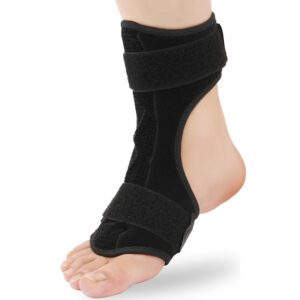
The first-line fix is almost boring: stop the wrist bending while you sleep. OrthoInfo’s advice is that a brace or splint worn at night will keep you from bending the wrist. The NHS adds a useful reality check: you may need to wear a splint for up to six weeks before it starts to feel better. That timeline surprises people who expect relief by Thursday and quit on day four.
If you want the full evidence on whether splints are worth wearing, what the research shows, and how to choose one, we’ve laid it out in Do Carpal Tunnel Wrist Braces Actually Work?.
Two cautions. First, an untreated, worsening carpal tunnel doesn’t just stay annoying. OrthoInfo warns that without treatment it can lead to permanent hand dysfunction, including loss of sensation and weakness. Second, if a splint, a few weeks, and sensible habits haven’t moved the needle, that is the moment for a professional opinion, not a tighter splint.
Row Two: The Elbow (The Twin Nobody Mentions)
Cubital tunnel syndrome is what happens when the ulnar nerve, the “funny bone” nerve, is stretched or squeezed at the inner elbow. It is carpal tunnel’s less famous twin, and people miss it for a simple reason: they search “hand numbness,” land on carpal tunnel, buy a wrist splint, and wonder why their pinky still buzzes.
The giveaway is the finger pattern. Cleveland Clinic describes cubital tunnel as affecting the pinky and ring finger, which distinguishes it from carpal tunnel’s thumb, index, and middle fingers. It often comes with an ache on the inside of the elbow, and symptoms show up most often when the elbow is bent, including during sleep.
It isn’t rare. In a cross-sectional study of 1,001 adults in the St. Louis area published in the Journal of Bone and Joint Surgery, researchers found cubital tunnel syndrome in 5.9% of people using sensitive criteria and 1.8% using strict criteria, and concluded it may be more common than previously reported.
The towel trick
The nicest thing about this one is the fix. OrthoInfo suggests a padded brace or splint worn at night to keep the elbow straight. The low-tech version: loosely wrap a towel around the elbow and secure it with tape, so every time you try to fold your arm in your sleep, the towel reminds you not to. Loosely is the operative word. You’re after a gentle block, not a tourniquet.
The warning sign that changes the plan
With the ulnar nerve in particular, weakness is the line you don’t want to cross. Muscle weakness or visible muscle wasting in the hand points to severe, prolonged compression. Cleveland Clinic recommends contacting a provider if symptoms persist for more than six weeks or are severe. If you’re dropping things, or the muscle between your thumb and index finger looks thinner than it used to, don’t wait for the six weeks to be up.
Row Three: When the Problem Starts Above the Hand
Sometimes the nerve is pinched nowhere near the hand. The wires are fine; the cable is squeezed upstream.
The neck
Cervical radiculopathy, a pinched nerve root in the neck, can send tingling or pins and needles into the fingers and hand, along with pain that runs from the neck down the arm. OrthoInfo lists weakness in the arm, shoulder, or hand among the symptoms and describes the pain as burning or sharp. One surprisingly useful clue: some people get relief by resting a hand on top of the head, which temporarily takes pressure off the nerve root.
The same page makes a point worth remembering. Several conditions can mimic a pinched nerve in the neck, and carpal tunnel and cubital tunnel are on that list. That overlap is why a wrist splint that does nothing, after weeks of faithful use, is itself a piece of information.
If your hands tingle and you also have a stiff neck, neck pain that travels into the shoulder or arm, or symptoms that change when you tilt or turn your head, this row is the one to take seriously. If your days are spent at a screen, our pieces on how posture loads the neck and shoulders explain the mechanics: Your Neck, Your Shoulder, and Your Knee Aren’t Connected. Your Chair Is. and Why Do You Get a Headache After a Computer All Day?.
The thoracic outlet
The third upstream suspect is thoracic outlet syndrome, in which nerves are squeezed in the narrow passage between your collarbone and first rib. According to Mayo Clinic, the neurogenic form accounts for about 95% of cases, causes numbness and tingling in the arm or fingers, often the ring finger and little finger, and typically worsens when you lift your arms overhead. Mayo notes that drooping shoulders or a head held too far forward can add pressure to this area.
Notice the overlap: ring finger and little finger again. That is the reason a finger pattern alone can’t settle things. It narrows the field. A clinician’s examination finishes the job.
Row Four: When It’s Both Hands (and Maybe Your Feet)
Local compression usually has a side. One hand, mostly the dominant one, mostly the same fingers. When both hands go numb together, particularly if your feet tingle as well, the usual suspect is no longer a tunnel. It’s the body’s chemistry.
OrthoInfo lists diabetes, rheumatoid arthritis, and thyroid imbalance among the conditions linked with carpal tunnel. And one cause that is easy to overlook: vitamin B12. The NHS explains that B12 deficiency can affect the nervous system, causing numbness, pins and needles, and muscle weakness, and it adds a blunt caution: although many symptoms improve with treatment, some problems can be irreversible if left untreated.
Pregnancy belongs in this row too. OrthoInfo notes that hormonal changes during pregnancy can cause swelling that presses on the median nerve, which is why night-time hand numbness is a familiar complaint during pregnancy.
If your numbness is in both hands, creeping up over weeks, or paired with fatigue, balance trouble, or tingling in the feet, the sensible next step is a conversation with a doctor about blood tests. A splint won’t touch a vitamin deficiency.
The Red Flags: When to Stop Experimenting
Most night-time numbness is a nuisance, not an emergency. But some patterns deserve a prompt professional look. A specialist overview from Rush orthopaedics lists the situations where evaluation makes sense, and they match what the major references say:
- It happens most nights, or has lasted several weeks.
- It also shows up in the daytime.
- You’re dropping things or feel clumsy with small objects.
- You can see muscle changes in the hand.
- The same finger pattern repeats every time.
- Both hands are involved.
- You’ve lost feeling, rather than only feeling tingling.
- It began after an injury.
- The fingers change color, white or blue, with temperature.
Two more belong in a separate category. Numbness that arrives suddenly on one side of the body, especially with facial droop, slurred speech, or weakness, can be a sign of stroke, and the NHS stroke guidance is to call emergency services immediately, even if the symptoms have since stopped. Don’t wait to see whether it passes. And numbness with chest pain, shortness of breath, or pain spreading from the chest into the arm warrants the same urgency.
One more point on timing. Nerves can recover, but they don’t wait forever. The pattern with carpal tunnel, cubital tunnel, and B12 deficiency is the same: early attention protects the outcome. If you’re on the fence, you’re probably already past the point where asking is worth it.
What to Do Tonight (Before Any Appointment)
None of this replaces an evaluation if you have red flags. If you don’t, these changes cost almost nothing and help many people:
- Straighten the joint your finger map pointed to. Thumb-side numbness: a neutral wrist splint at night. Pinky-side numbness: a loosely wrapped towel or padded brace to hold the elbow straighter.
- Fix the pillow problem. Don’t tuck a hand under your head or pillow. Don’t sleep with your wrists curled toward your chest. If you’re a side sleeper who hugs a pillow, hug a bigger, softer one that doesn’t force your wrists to fold.
- Break up the day-time triggers. The same bent positions that wake you at 3 a.m. are the ones you hold for hours at the steering wheel, the phone, the keyboard. OrthoInfo specifically names phone use, driving, and reading with the wrist bent forward or backward. Change grip, set the phone down, and drop your shoulders every so often.
- Keep a seven-night log. Write down which fingers, which hand, what time, and how you were lying. After a week, you’ll have something no search result can give you: your own pattern. It also makes the appointment, if you need one, far more productive.
- Give it six weeks, not six days. Straightening a joint is a slow fix. The NHS timeline for a carpal tunnel night splint is up to six weeks before relief. Track the log and let it tell you whether things are moving.
What about the hands themselves?
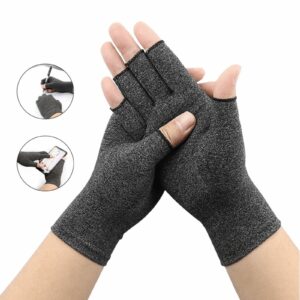
If your night-time numbness turns out to be median-nerve compression and you’re working on recovery, hand strength and grip comfort become the next conversation. We cover that in Best Grip Strengthener for Carpal Tunnel Recovery. And if the real complaint is stiff, achy, swollen finger joints rather than buzzing, it’s a different problem, and Best Compression Gloves for Arthritis Hands is where to look.
But start with the map. The right fix depends on the right question.
Frequently Asked Questions
Why do my hands go numb at night but not during the day?
Because at night you hold joints bent for hours without moving. A bent wrist narrows the carpal tunnel, and a bent elbow stretches the ulnar nerve around its bony ridge. During the day you keep shifting, so the compression never builds. Daytime symptoms, as well as night ones, are a signal to be examined sooner.
Is numb hands at night always carpal tunnel?
No. Carpal tunnel is a common cause, but cubital tunnel at the elbow, a pinched nerve in the neck, thoracic outlet syndrome, sleeping position, and body-wide causes like diabetes, thyroid problems, and B12 deficiency can all produce similar symptoms. The JAMA review found night-time numbness alone carried little or no diagnostic value for carpal tunnel, which is why the finger pattern matters more than the clock.
Which fingers go numb with carpal tunnel and which with a pinched ulnar nerve?
Carpal tunnel affects the thumb, index finger, middle finger, and the thumb side of the ring finger. Ulnar nerve compression at the elbow affects the little finger and the ring finger, mostly on the pinky side. The ring finger is the one that’s shared, so comparing the two sides of it can help sort the pattern.
What vitamin deficiency causes numb hands?
Vitamin B12 deficiency is the best-known nutritional cause of numbness and pins and needles. The NHS notes that some problems caused by it can be irreversible if left untreated, so it’s worth raising with a doctor if numbness affects both hands, or comes with tingling in the feet, fatigue, or balance problems. Don’t start supplements to self-treat before getting tested, because treatment depends on the cause.
When should I worry about numb hands?
Get evaluated if the numbness happens most nights for several weeks, appears during the day, involves both hands, comes with weakness or dropping things, or follows an injury. Seek emergency help if numbness comes on suddenly on one side of the body, especially with facial droop, slurred speech, or chest pain.
How can I stop my hands from going numb while I sleep?
Match the fix to the finger pattern: a neutral-position night splint for the wrist, a towel wrap or padded brace to keep the elbow straight, a different pillow arrangement so your hands don’t get tucked under your head. Give any change up to six weeks and keep a log. If nothing improves, or weakness appears, see a clinician.
The Bottom Line
Your hand isn’t dying at 3 a.m. A nerve is being folded, stretched, or squeezed, and it is telling you where, in a language of fingers.
The clock can’t read that language. The thumb side points to the wrist. The pinky side points to the elbow. A pattern that includes the neck, or both hands, or the feet, points somewhere else, and that is worth a doctor’s time rather than another week of guessing.
So the next time you wake up with a hand that feels like it belongs to someone else, resist the phone for ten seconds. Count the fingers first.
This article is educational and is not a substitute for medical advice. If you have sudden numbness, weakness, or symptoms that persist, consult a qualified healthcare professional.