






It’s 3:15 in the afternoon. The ache starts low, right where your skull meets your neck, and by 4:00 it’s crawled up and settled in behind one eye. You blame the fluorescent lights. You blame not drinking enough water. You blame the report that’s due, or the three back-to-back calls, or the fact that you skipped lunch again. You dig two ibuprofen out of the bottom drawer, the same drawer that’s had a bottle in it for over a year now, and you tell yourself you’ll leave the screen earlier tomorrow.
Tomorrow, at 3:15, it happens again.
Here’s the honest answer nobody’s given you yet: you’ve probably been treating the right problem in the wrong place. Not because you’re careless about your health, but because a screen-time headache almost never announces itself as a neck problem. It shows up in your head, so that’s where everyone — including you — goes looking for the cause.
This article isn’t a buying guide. Before we get anywhere near a product, we’re going to walk through what’s happening, give you a real way to check whether your headache is coming from your neck, and tell you exactly when this stops being a “manage it at your desk” problem and becomes a “call a doctor” one. If you get to the end and decide a device isn’t the next step for you, that’s a completely fine outcome. If you get to the end and it is, you’ll at least understand why.
The Short Answer (For People Who Just Want the Verdict)
If your headache builds gradually through the day rather than striking suddenly, sits at the base of your skull or behind one eye rather than pounding across your whole head, and eases somewhat when you lie down or stop looking at a screen, there’s a real chance you’re dealing with a cervicogenic headache — one that originates in your neck, not your eyes or your sinuses. The interventions with actual evidence behind them target the neck directly: correcting how your head sits relative to your screen, and a deliberate daily session of heat plus mechanical traction. A single gadget alone, without addressing posture, is not what the research supports — the combination is.
The Headache You’ve Been Blaming on the Wrong Thing
You are not imagining this pattern, and you are not alone in misreading it. A 2026 cross-sectional study in the Journal of Occupational Health looked at 370 administrative workers across six healthcare facilities and found that headache was the single most commonly reported symptom among people who spend their day in front of a screen — reported by 61.1% of the workers studied. That’s not a niche complaint. That’s the majority of people doing exactly what you do all day.
What’s more revealing is what the researchers found actually predicted it. The instinctive assumption — yours, and most of the internet’s — is that screen headaches come from your eyes: brightness, glare, blue light, dryness. The study measured that too. But the strongest independent predictor wasn’t glare exposure. It was poor screen positioning — a monitor set below or above proper eye level — which nearly doubled the odds of computer vision syndrome (adjusted odds ratio of 2.27). Wearing corrective glasses showed up as a factor as well, but glare itself, once other ergonomic fixes were in place, didn’t independently predict the syndrome the way position did.
Read that again, because it’s the whole hinge of this article: it’s not primarily about how bright your screen is. It’s about where your head has to go to look at it.
What You’ve Probably Already Tried
If you’re like most people with this pattern, you’ve already run through the obvious fixes. Blue light glasses. A bigger water bottle on the desk. A note on your phone reminding you to “take breaks” — advice that’s technically correct and practically useless when you’re three deep in back-to-back meetings. And the ibuprofen. Always the ibuprofen.
None of that is wrong to try. But there’s a genuine cost to stopping there, and it’s worth being honest about it: reaching for an over-the-counter painkiller most afternoons, week after week, carries a real and well-documented risk of medication-overuse headache — a pattern where the very drug you’re using to manage the pain starts perpetuating it. That’s not a reason to panic about the pill in your drawer. It’s a reason to find the source instead of quietly normalizing a daily dose as “what Tuesdays feel like now.”
And if the source is your neck, no amount of blue light filtering is going to touch it.
What’s Actually Happening in Your Neck While You Work
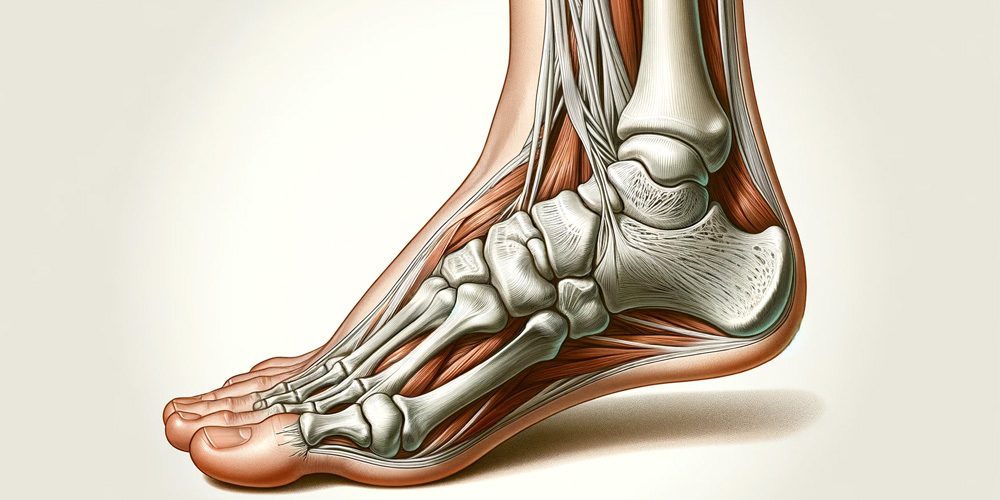
Here’s the mechanism, in plain terms. When your head sits forward of your shoulders — which happens the moment you lean toward a screen that’s too low, too far, or too small — the effective load your neck has to support increases sharply. Your head weighs roughly 10-12 pounds in a neutral position; tilted forward even a few inches, the leverage on your cervical spine can effectively multiply that load several times over. Your body doesn’t let that happen for free. A group of small, easily overlooked muscles at the very base of your skull — the suboccipital muscles — tighten to hold your head up against that increased leverage, hour after hour, meeting after meeting.
These muscles are disproportionately packed with proprioceptors, the sensors that tell your brain where your head is in space. When they stay chronically shortened, they don’t just get tight and sore locally — they refer pain upward, into the base of the skull, and often forward, behind one eye or across one temple. That referred pattern is precisely what gets mistaken for eye strain, sinus pressure, or a garden-variety tension headache. It has a name: a cervicogenic headache, meaning a headache whose actual origin is the neck, even when the neck itself doesn’t feel like the main complaint.
This is the part most generic wellness advice skips entirely, because “sit up straight” doesn’t explain why your particular headache shows up at 3:15 and not 9:00, or why it’s worse on meeting-heavy days than on days when you’re moving between tasks.
Is Your Headache Actually Coming From Your Neck? A Real Self-Check
This is the part we’re not going to skip past on the way to a product, because it’s the most useful thing in this article. Cleveland Clinic’s clinical guidance, based on the diagnostic criteria used to distinguish cervicogenic headache from other types, points to a handful of practical differences you can check against your own pattern right now:
One side, not both. Cervicogenic headaches are typically one-sided — starting at the base of the skull and traveling up, or beginning at the back of the head and radiating forward behind one eye. A headache that pounds evenly across your whole head, or shifts sides randomly, is less likely to fit this pattern.
Movement changes it. Turning your head, tilting it, or holding a particular neck position tends to make a cervicogenic headache noticeably better or worse. A headache that stays exactly the same regardless of how you move your neck points elsewhere.
What’s missing matters as much as what’s there. Migraines typically come with light sensitivity, sound sensitivity, or nausea. Cervicogenic headaches usually don’t. If you’re also squinting at every light in the room and feeling queasy, that’s a meaningfully different picture than a dull ache that gets worse when you crane your neck at a laptop.
Pressing at the base of your skull reproduces it. If pressing firmly on the muscles where your neck meets your skull recreates something close to your usual headache, that’s a strong practical sign the source is muscular and cervical, not vascular or ocular.
None of this replaces an actual diagnosis — cervicogenic headache is relatively uncommon on its own (affecting an estimated 0.4% to 4% of people with headaches overall), and plenty of desk-job headaches are a tension-type headache with a very similar postural driver rather than the specific cervicogenic diagnosis. Practically, though, that distinction changes less than you’d think: both respond to the same neck-focused approach we’re about to walk through. What this self-check is for is ruling in your neck as a real, plausible cause — worth addressing directly — instead of continuing to throw blue light glasses and painkillers at a problem they were never going to fix.
When to See a Doctor Instead of Self-Treating
Before anything else in this article, some patterns are not “manage it at your desk” situations. See a doctor, and don’t wait, if:
- Your headache came on suddenly and violently — a “worst headache of my life,” thunderclap-style onset
- It’s accompanied by fever, a stiff neck, confusion, or a rash
- You have new neurological symptoms alongside it: vision changes, slurred speech, weakness or numbness anywhere, difficulty with balance
- It started after a head or neck injury, even one that seemed minor at the time
- You’re over 50 and this is a genuinely new headache pattern for you
- The headache keeps getting worse week over week despite trying the self-care in this article, rather than staying steady or improving
Everything else in this article assumes your pattern doesn’t match any of those — a recurring, gradually-building, desk-day headache that’s been going on for a while and behaves predictably, not a new or alarming one.
What the Research Actually Shows Helps
Here’s the part most advice skips entirely: assuming your pattern does fit a neck-driven, desk-job headache, what does the evidence say works?
A 2024 randomized controlled trial published in BMC Musculoskeletal Disorders gives an unusually specific answer. Researchers took 36 patients dealing with cervicogenic headache and split them into three groups receiving different loads of mechanical intermittent cervical traction — a light 2kg (essentially a control-level dose), a moderate 8kg, and a heavier 12kg — alongside standard rehabilitation. At six months, the 12kg group showed significantly greater improvement in both headache intensity and headache frequency than either lighter-dose group (p = 0.005 for both measures). This matters because it’s not just “traction might help” — it’s evidence that the amount of traction genuinely changes the outcome, which most consumer buying advice never mentions at all.
The second piece is arguably more important, and it’s the honest caveat this brand tries to lead with rather than bury: a 2024 randomized study in Frontiers in Public Health followed 96 office workers with cervicogenic headaches split into four groups — ergonomic correction alone, physiotherapy alone, the two combined, or education only. The combined group saw headache frequency drop by roughly 89% over six months. Either intervention alone helped meaningfully less, and education alone barely moved the needle. The takeaway isn’t subtle: fixing your screen position or doing the physical work alone both help some. Doing both, deliberately and consistently, is where the real result comes from.
Put those two studies together and you get an honest, unglamorous conclusion: a real fix looks like posture correction plusa properly-dosed traction-and-movement routine, not a single purchase that undoes months of forward-head posture in one 15-minute session.
Building the Actual Fix
Three concrete pieces, in order of what to do first:
First, fix where your screen sits. This is free, it’s the single strongest factor the 2026 study identified, and it’s the step most people skip because a monitor riser feels less satisfying than a new gadget. Top of your screen at or slightly below eye level, arm’s length away, is the target — not a fix for everything, but the foundation everything else builds on.
Second, give your neck a deliberate daily session that matches what the research actually tested — heat to soften the tissue, followed by traction to unload the joint, not just a five-second stretch between emails. This is where a device earns its place, and it’s why we built our NeckEase 3-in-1 Cervical Traction & Heat Therapy Device ($99.99) around that exact sequence: heat first, then cyclic traction, then massage to help keep the suboccipital muscles from snapping right back to their tightened state before your next screen-heavy day.
Editor’s Pick: For the specific pattern this article describes — a gradually-building, base-of-skull or behind-the-eye headache tied to long screen stretches, without red-flag symptoms — NeckEase is the tool we’d point you to, precisely because it delivers the heat-then-traction sequence the 2024 dose-response research tested, not a static stretch or a light inflatable pillow. It runs on mains power so the traction force stays consistent session to session, and it comes with a 30-day trial. It will not fix a bad monitor setup by itself, and it’s not a substitute for the ergonomic fix above — the research is clear that the combination, not the device alone, is what moves the needle.
Third, build in actual movement, not just posture awareness. A 60-second stand-and-look-away every 45-60 minutes does more for this specific pattern than an hour of perfect posture with zero breaks — this is the same “behavior over static position” finding that shows up across desk-job pain research generally, not just for headaches.
If you want a more thorough comparison of traction device types — over-the-door pulleys, inflatable pneumatic pillows, posture pumps, and where a motorized heat-and-traction combo like NeckEase fits among them — our full cervical traction device buying guide goes deeper on that decision. This article’s job was to help you figure out whether you have a neck-driven headache in the first place.
If Your Pain Isn’t Just in Your Head (or Neck)
A forward-head, hunched-shoulders desk posture rarely stays contained to one body part. If your lower back is also stiff and aching by the end of the day — a genuinely common pairing, since both come from the same static, slouched sitting posture — it’s worth addressing that half of the pattern too rather than fixing your neck while your back quietly picks up the slack. Our SpineEase 3-in-1 Therapeutic Back Massager ($99.99) uses the same heat-plus-mechanical-therapy logic for the lower back. And if the underlying posture itself — not just its downstream symptoms — is what you want to work on, the Pro Posture Adjustable Posture Corrector Belt ($39.99) is the lowest-cost, most direct way to retrain the position that’s driving all of this in the first place.
Common Mistakes People Make With Screen-Time Headaches
Treating it as a purely visual problem. Blue light glasses can genuinely help some people with eye strain, but if screen positioning — not brightness — is the stronger driver for your pattern, glasses alone will leave the actual cause untouched.
Normalizing daily painkillers instead of finding the cause. If you’ve reached for an OTC painkiller most weekdays for months, that’s not a sustainable management plan — it’s a sign the underlying driver hasn’t been addressed, and it carries its own risk of medication-overuse headache.
Buying a gadget while ignoring screen height. A traction device layered on top of a monitor that’s still six inches too low is fighting the same battle every single day. Fix the free thing first.
Skipping the self-check and assuming “it’s just stress.” Stress absolutely can contribute to head and neck tension, but assuming that’s the whole story means never testing whether a genuinely mechanical, addressable cause is sitting underneath it.
Expecting one session to undo months of posture. The dose-response research found real gains at six months of consistent use, not after a single session. Treat this like the daily routine the studies tested, not a one-time fix.
Ignoring red flags because “it’s probably just the usual headache.” A pattern that’s genuinely changing, worsening, or coming with new symptoms deserves a doctor’s visit, not a longer trial of self-care.
Frequently Asked Questions
How do I know if this is a tension headache, a migraine, or a cervicogenic headache? Migraines typically bring light sensitivity, sound sensitivity, or nausea along with the pain; cervicogenic and tension-type headaches usually don’t. Cervicogenic headaches also tend to be one-sided and change with neck movement or position, which migraines and general tension headaches don’t reliably do. If you’re unsure after reading the self-check above, that uncertainty itself is a reasonable reason to bring it up with a doctor.
Can stress cause this too, separately from my neck? Yes — stress commonly increases muscle tension in the same neck and shoulder muscles involved in a postural headache, so the two causes often overlap rather than compete. Addressing posture doesn’t mean stress isn’t also a factor; it means you’re addressing the mechanical piece the research shows responds to treatment.
Do blue light glasses actually help at all? They can reduce eye strain and dryness for some people, particularly with extended close-up screen work, but the 2026 occupational health study found screen positioning was the stronger independent predictor of headache-related symptoms, not glare. Glasses are a reasonable add-on, not a substitute for fixing screen height.
How long before a traction-and-heat routine helps? The clearest evidence comes from a six-month trial, with the heavier-dose group showing significantly better results by that point. Some people notice the immediate, same-day relief that heat and gentle traction commonly provide; the more durable frequency and intensity improvements built over consistent daily or near-daily use over weeks to months.
Can teenagers or younger people get this from screen time too? Yes — forward head posture from phone and laptop use isn’t limited to office workers, and the same mechanism (increased cervical load, suboccipital tension, referred head pain) applies regardless of age. The self-check and ergonomic fixes in this article apply the same way.
Is it safe to use a traction device every day? For most people without the red-flag conditions listed above, a short daily session (typically 15-20 minutes) is how the devices are designed to be used and is consistent with how the research studies dosed their interventions. If you have a diagnosed cervical spine condition, check with a doctor before starting any traction routine, device-based or otherwise.
Does this happen from phone use, not just computer monitors? Yes, arguably more so — looking down at a phone held below eye level creates an even steeper forward-head angle than most computer setups. The mechanism is identical; the fix (bring the screen up, don’t bring your head down) is the same principle applied to a smaller screen.
Should I see a doctor before trying any of this? If your pattern matches the red flags listed earlier in this article, yes, before anything else. If it’s a recurring, gradually-building, desk-day headache without those warning signs, it’s reasonable to try the self-check and the ergonomic and traction approach here first — and to see a doctor if it doesn’t meaningfully improve after several weeks of consistent effort.
The Bottom Line
Most people chasing this headache are aiming at the wrong target, not because they’re not trying hard enough, but because a neck-driven headache is remarkably good at disguising itself as an eye problem, a stress problem, or a hydration problem. The honest fix isn’t a single gadget — it’s screen position first, a properly-dosed daily traction-and-heat routine second, and real movement breaks third. NeckEase is built around the specific sequence the 2024 research tested, and it’s a genuinely useful tool for the second piece of that system. It is not, on its own, a replacement for fixing where your monitor sits, and it won’t touch a headache that turns out to be something else entirely — which is exactly why we walked through the self-check and the red flags before ever mentioning it. If your afternoon headache matches the pattern in this article, you now know enough to address it instead of reaching for the same drawer tomorrow at 3:15.