





It starts around hour four. You’re halfway through your shift, and there it is — that familiar heaviness creeping into your calves. Your ankles feel a little puffy, your feet ache in a dull, persistent way, and you still have hours to go. By the time you finally sit down at the end of the day, your legs feel like they belong to someone who just ran a marathon, not someone who was simply doing their job.
If that sounds like your life, you’re not alone. Millions of people — nurses pulling twelve-hour shifts, teachers pacing classrooms, retail workers navigating store floors, warehouse employees loading and unloading for hours on end — deal with this exact scenario day after day. The tired legs, the swollen ankles, the aching calves that make you dread getting out of bed to do it all over again tomorrow.
Here’s the thing most people don’t realize: that pain and fatigue isn’t just “part of the job.” It’s a circulatory problem, and it has a remarkably effective solution. Compression socks — the right ones, anyway — can transform the way your legs feel during and after a long day on your feet. Not the flimsy, uncomfortable kind you might have tried before, but well-designed, properly graduated compression socks built for people who actually need them.
This guide will walk you through exactly why standing all day takes such a toll on your legs, how compression socks address the root cause, what separates a truly effective pair from the dozens of mediocre options on the market, and how to find the best compression socks for standing all day so you can finally get through your shifts feeling like yourself.
Why Standing All Day Causes Leg Pain and Fatigue
To understand why compression socks work so well, it helps to understand what’s actually happening inside your legs during those long hours on your feet. It’s not just about tired muscles — though that’s certainly part of it. The real story is about gravity, blood flow, and a system that was never designed for eight or twelve hours of motionless standing.
The Gravity Problem
Your heart pumps blood down to your legs with relative ease — gravity helps with that. But getting that blood back up to your heart is a different story entirely. Your veins rely on a series of tiny one-way valves and the pumping action of your calf muscles to push blood upward against gravity. When you’re walking, running, or moving around, your calf muscles contract and relax rhythmically, squeezing blood through those valves and back toward the heart. It’s an elegant system, and it works beautifully — when you’re moving.
Standing still is a different matter. When you’re planted in one spot for hours, your calf muscles aren’t contracting and relaxing the way they need to. That muscular pump slows down dramatically, and blood begins to pool in your lower legs. The longer you stand, the more blood accumulates, and the harder your circulatory system has to work to move it back up.
Why Your Legs Swell
As blood pools in the veins of your lower legs, pressure builds inside those vessels. That increased pressure forces fluid out of the bloodstream and into the surrounding tissue — and that’s what causes the swelling so many people notice in their ankles and lower calves by the end of a shift. It’s called peripheral edema, and while it’s incredibly common among people who stand for long periods, it’s not something you should simply accept as normal.
That swelling isn’t just uncomfortable. It contributes to the sensation of heaviness and fatigue, and over time, chronic pooling and swelling can lead to more serious issues like varicose veins, spider veins, and even deep vein discomfort. Your legs are essentially telling you that they need help moving blood more efficiently.
Muscle Fatigue Compounds the Problem
On top of the circulatory challenges, the muscles in your feet, calves, and thighs are working constantly just to keep you upright. Unlike walking, which cycles through different muscle groups, standing in place requires certain muscles to contract continuously without rest. Those stabilizer muscles in your feet and lower legs fatigue quickly under that kind of sustained load, especially on hard surfaces like concrete, tile, or industrial flooring.
The combination of circulatory pooling and muscular fatigue creates a one-two punch that leaves your legs feeling heavy, achy, and exhausted. And the older you get, the less efficient those venous valves become, which is why many adults over forty notice the problem getting progressively worse over the years.
How Compression Socks Help
Compression socks work by applying gentle, graduated pressure to your lower legs — and that simple concept makes a remarkable difference in how your legs feel during a long day on your feet.
Graduated Pressure, Maximum Effect
The key word here is “graduated.” The best compression socks for standing all day aren’t just tight tubes of fabric. They’re engineered to apply the most pressure at your ankle and gradually decrease that pressure as the sock moves up your calf. This design mimics and amplifies the natural pumping action of your muscles, gently squeezing blood upward through your veins and back toward your heart.
Think of it like this: if your veins are a highway and blood is the traffic, standing all day creates a traffic jam in your lower legs. Graduated compression acts like a series of on-ramps that keep traffic flowing smoothly, preventing that buildup before it starts. The result is less pooling, less swelling, and significantly less fatigue.
Reducing Swelling Before It Starts
Because compression socks help keep blood moving efficiently, they prevent the pressure buildup inside your veins that causes fluid to leak into surrounding tissue. That means the ankle swelling you’re used to seeing at the end of a shift can be dramatically reduced — or even eliminated — when you’re wearing proper compression. Many nurses and healthcare workers describe the difference as night and day, especially during those grueling twelve-hour shifts when swelling would normally be at its worst.
Supporting Tired Muscles
Beyond circulation, compression socks provide physical support to the muscles and soft tissues of your lower leg. That gentle, consistent pressure reduces the micro-vibrations and oscillations that contribute to muscle fatigue, similar to the way a supportive brace helps a joint work more efficiently. Your calf muscles don’t have to work as hard to assist with circulation, and the stabilizing effect means they fatigue more slowly throughout the day.
Many people also notice less soreness and faster recovery after their shifts when wearing compression socks regularly. The improved circulation means metabolic waste products — like lactic acid — are cleared from muscle tissue more efficiently, so that deep, lingering ache you feel the morning after a long day is significantly reduced.
What Makes the Best Compression Socks for Standing All Day
Not all compression socks are created equal, and if you’ve ever tried a pair that was uncomfortable, too tight, or wore out after a few washes, you already know this firsthand. When you’re relying on compression socks to get you through long shifts day after day, certain qualities matter far more than a low price tag.
The Right Compression Level
Compression socks are measured in millimeters of mercury (mmHg), and the level you choose matters a great deal. For most people who stand all day, a compression range of 15–20 mmHg or 20–30 mmHg is the sweet spot. The 15–20 mmHg range works beautifully for moderate fatigue and mild swelling, while 20–30 mmHg provides firmer support for people dealing with more significant circulation challenges, heavier swelling, or particularly long shifts.
Going too high without medical guidance — say, 30–40 mmHg — can actually be counterproductive, causing discomfort or restricting blood flow if the fit isn’t perfect. The goal is consistent, comfortable pressure that you can wear all day without thinking about it, not a tourniquet-like squeeze that you can’t wait to peel off.
Fabric That Works as Hard as You Do
When you’re on your feet for eight, ten, or twelve hours, the fabric of your compression socks needs to perform. Breathability is essential — your feet generate a surprising amount of heat and moisture during a long shift, and socks that trap that moisture become uncomfortable, slippery, and prone to odor. The best compression socks use moisture-wicking materials that pull sweat away from the skin and allow airflow to keep your feet dry and comfortable.
Durability matters just as much. Compression socks that lose their elasticity after a few washes aren’t just a waste of money — they stop doing their job. Quality construction and high-grade fibers ensure that the graduated compression stays effective wash after wash, so you can count on consistent support for months rather than weeks.
Built-In Arch Support
This is a feature that often gets overlooked, but it makes an enormous difference for people who stand all day. Compression socks with integrated arch support help distribute pressure more evenly across the foot, reducing the strain on your plantar fascia and the small muscles in your arch. If you’ve ever felt that deep ache in the bottom of your foot after a long shift, inadequate arch support is likely a major contributor.
The combination of compression for your calves and support for your arches addresses fatigue from both directions — circulatory and structural — which is why the most effective socks for standing all day include both features.
Comfortable Fit That Stays Put
A compression sock that slides down your calf during a shift is worse than useless — it bunches, creates pressure points, and becomes a constant distraction. The best options feature a secure, comfortable top band that keeps the sock in place without digging into your skin or cutting off circulation. A smooth toe seam is equally important, since a bulky or uneven seam pressing against your toes for hours can cause irritation and blisters.
Why Many Compression Socks Fail
If you’ve tried compression socks before and felt underwhelmed, you’re not alone — and it’s probably not your fault. The market is flooded with products that technically qualify as “compression socks” but fail to deliver meaningful results for people who actually need them.
One of the most common problems is inconsistent or poorly calibrated compression. Cheap socks often apply pressure unevenly, squeezing too tightly in some areas while offering almost no compression in others. That uneven pressure doesn’t create the graduated effect that drives blood upward — it just creates discomfort.
Material quality is another frequent issue. Budget compression socks tend to use synthetic blends that don’t breathe, don’t wick moisture, and lose their stretch quickly. After a handful of washes, the compression that was already inconsistent fades further, leaving you with what amounts to a slightly tight dress sock.
Then there’s the sizing problem. Many brands offer limited size ranges with vague fit guidelines, which means a huge number of buyers end up wearing socks that are either too loose to be effective or too tight to be comfortable. Compression only works properly when the fit is right — and that requires a brand that takes sizing seriously and provides clear, accurate guidance.
These failures erode trust, and understandably so. When you’ve spent money on compression socks that didn’t help, it’s natural to conclude that compression socks don’t work. But the reality is that good compression socks work remarkably well — the challenge is finding them.
Compression Socks Designed for People Who Stand All Day
This is where BaronActive compression socks come in, and they’re worth a closer look if you’ve been searching for something that actually delivers on its promises.
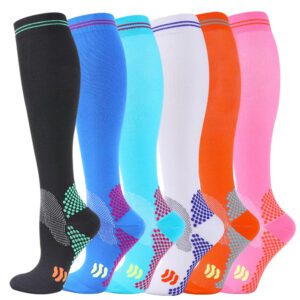
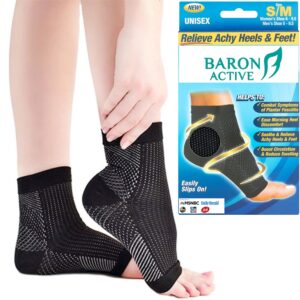
BaronActive designed their compression socks specifically with long-shift workers and active adults in mind. These aren’t generic, one-size-fits-most products pulled from a factory floor. They feature true graduated compression in the 20–30 mmHg range — the level that research consistently supports as most effective for people who spend extended hours on their feet. The pressure profile is carefully calibrated, strongest at the ankle and tapering up through the calf, to actively assist your venous return throughout the day.
The fabric is where BaronActive really sets itself apart. Their socks use a breathable, moisture-wicking blend that stays comfortable even during the hottest, most demanding shifts. Nurses who have tried them frequently mention how much drier and more comfortable their feet feel compared to other compression socks they’ve worn — and when you’re twelve hours into a hospital shift, that kind of comfort matters enormously.
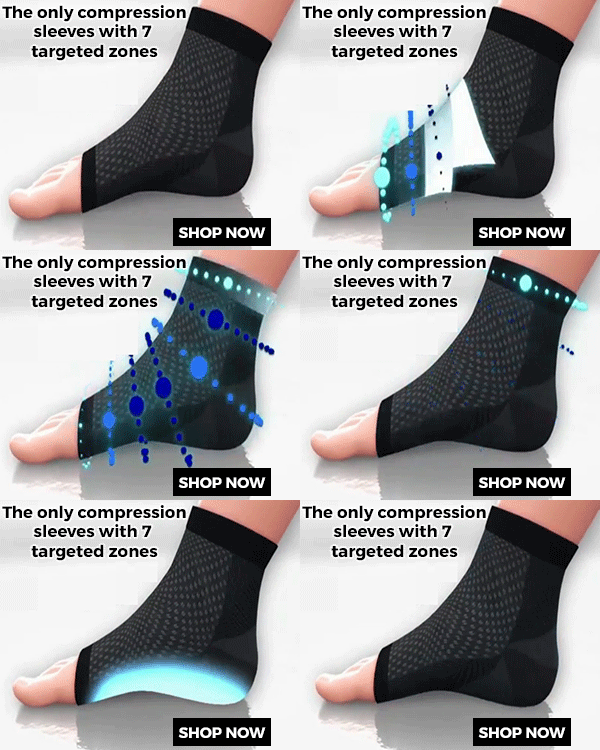
Built-in arch support provides an added layer of fatigue relief, cradling your foot in a way that reduces strain and helps distribute pressure more evenly with every step. The secure top band keeps the sock in place without pinching or sliding, and the smooth toe seam eliminates the irritation that plagues so many other brands.
What many people appreciate most, though, is the durability. BaronActive compression socks are built to maintain their compression level through repeated washing and extended use, which means the support you feel on day one is the same support you’ll feel months later. For people who rely on their socks every working day, that consistency is invaluable.
If you’re ready to experience the difference that well-designed compression can make, explore BaronActive’s full range of compression socks here. Your legs will thank you by the end of your very first shift.
Tips to Reduce Leg Fatigue When Standing All Day
Compression socks are one of the most effective tools in your arsenal, but they work even better as part of a broader strategy for keeping your legs healthy and comfortable. Here are some habits that complement compression and help you feel your best during long days on your feet.
Move Whenever You Can
Even small movements make a significant difference. Shifting your weight from one foot to the other, rising up on your toes for a few seconds, or taking a short walk when you have the chance all activate that calf muscle pump and keep blood flowing. If your work allows it, try to take a brief movement break every thirty to forty-five minutes — even sixty seconds of walking or calf raises can reduce pooling and refresh tired muscles.
Stretch Your Calves and Feet
A few targeted stretches during breaks can relieve tension and improve circulation. Simple calf stretches against a wall, ankle circles, and toe flexes all help counteract the stiffness and tightness that build up during prolonged standing. Many people find that a short stretching routine before and after their shift reduces next-day soreness considerably.
Invest in Supportive Footwear and Insoles
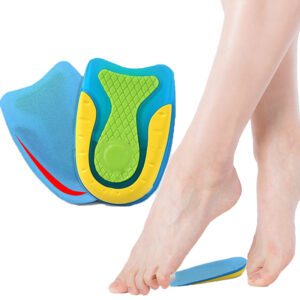
Your shoes matter more than you might think. Worn-out shoes with collapsed arch support force your muscles to work harder with every step, accelerating fatigue and contributing to foot pain. If your work shoes are past their prime, replacing them — or adding a high-quality insole — can make a noticeable difference.
BaronActive’s supportive insoles are designed to complement their compression socks, providing cushioning and arch support that reduce the structural strain on your feet. The combination of compression from below the knee and support from beneath your foot addresses fatigue from multiple angles, giving your legs the best chance of feeling good all the way through your shift.
Elevate Your Legs After Your Shift
When you get home, spend fifteen to twenty minutes with your legs elevated above the level of your heart. This simple habit uses gravity in your favor, helping drain accumulated fluid and giving your circulatory system a chance to reset. Pair elevation with your compression socks still on, and you’ll often find that the swelling and heaviness dissipate remarkably quickly.
Stay Hydrated
It sounds counterintuitive when you’re dealing with swelling, but dehydration actually makes fluid retention worse. When your body doesn’t get enough water, it holds onto what it has, and that often manifests as increased swelling in the lower extremities. Drinking water consistently throughout your shift supports healthy circulation and helps your body manage fluid balance more effectively.
Who Benefits Most from Compression Socks
While compression socks help virtually anyone who stands for extended periods, certain groups tend to experience the most dramatic improvements.
Healthcare workers — nurses, CNAs, surgical techs, and others who work long hospital shifts — often describe compression socks as a game changer. The combination of extended hours, hard floors, and constant movement creates the perfect storm for leg fatigue, and graduated compression directly addresses every one of those factors.
Retail and restaurant employees face similar challenges, often with the added difficulty of working on concrete or tile flooring that amplifies the impact on joints and muscles. Teachers, who spend hours moving between desks and standing at the front of classrooms, frequently discover that compression socks eliminate the afternoon fatigue that used to derail their energy.
Warehouse workers and those in logistics or manufacturing often deal with the most physically demanding standing conditions, and compression socks provide both circulatory support and muscular stabilization that help them get through physically grueling shifts.
Older adults and anyone dealing with age-related circulation changes also benefit enormously. As venous valves become less efficient with age, the need for external circulatory support increases, and many adults over fifty find that compression socks restore a level of leg comfort they haven’t felt in years. If you’ve noticed that your legs swell more easily than they used to, or that the achiness after standing has been getting progressively worse, compression socks can address that decline directly.
Travelers and commuters who spend long hours sitting or standing on flights, trains, or buses also find relief with compression socks, which help prevent the stiffness and swelling that often accompany extended travel.
No matter which group you fall into, the underlying principle is the same: when your legs need help managing circulation and fatigue, properly designed compression socks provide that help in a comfortable, wearable, all-day format.
Frequently Asked Questions
Are compression socks good for standing all day?
Absolutely. Compression socks are one of the most effective, research-supported tools for reducing leg fatigue, swelling, and discomfort caused by prolonged standing. By improving venous blood flow and supporting your calf muscles, they address the root causes of the pain and heaviness you feel after long shifts. For best results, choose graduated compression socks in the 15–25 mmHg range from a quality brand like BaronActive.
What compression level is best for long shifts?
For most people who stand all day, 20–30 mmHg provides the ideal balance of effective support and all-day comfort. If you’re new to compression or experience only mild fatigue, 15–20 mmHg is a great starting point. Avoid going above 30 mmHg without consulting a healthcare provider, as higher levels are typically intended for specific medical conditions.
Can compression socks reduce swelling in the legs?
Yes, this is one of their primary benefits. Graduated compression prevents blood from pooling in your lower legs, which reduces the venous pressure that forces fluid into surrounding tissues. Many people notice a significant reduction in ankle and calf swelling from their very first day wearing quality compression socks.
How long should you wear compression socks during the day?
You can safely wear compression socks throughout your entire shift and even beyond — most people put them on in the morning and remove them before bed. In fact, wearing them consistently during your standing hours is how you’ll get the best results. Just make sure you’re wearing the correct size and compression level so they remain comfortable all day. It’s generally recommended to remove them while sleeping unless your doctor advises otherwise.
Can I wear compression socks with my work shoes?
Yes. Quality compression socks like those from BaronActive are designed to fit comfortably inside standard work shoes, sneakers, and boots. They’re slim enough to avoid bunching or tightness inside your footwear while still providing full graduated compression. Pairing them with supportive insoles inside your shoes maximizes comfort and fatigue relief.
Take the Next Step for Your Legs
If you’ve read this far, chances are you know exactly what leg fatigue feels like — and you’re ready to do something about it. The science is clear, the solution is proven, and the difference that proper compression socks make is something you’ll feel from your very first shift.
BaronActive’s compression socks are built for people like you — people who work hard, stand long, and deserve legs that feel as strong at the end of the day as they did at the beginning. Explore the collection, find your size, and discover what your legs have been missing.
Your legs carry you through every shift, every step, every day. It’s time to give them the support they deserve.