






Your back aches. Your hips feel stiff. Standing upright after sitting for a while feels like a slow-motion negotiation with your own body. You’ve tried stretching your back, you’ve switched chairs, you’ve adjusted your screen height — and yet the discomfort keeps coming back.
What if the culprit isn’t your back at all?
Deep inside your body, tucked behind your abdominal organs and invisible to the eye, lives a muscle most people have never heard of — a muscle that quietly controls how you stand, walk, sit, and carry yourself through every single day of your life. It’s called the psoas (pronounced so-AZZ), and there’s a very good chance it’s been the missing piece in your posture puzzle all along.
This article is going to change the way you understand your body. By the end, you’ll know exactly what the psoas does, why it goes wrong, and what you can actually do about it — no vague fitness advice, no overwhelming medical jargon. Just clear, practical, empowering information.
Let’s get into it.
What Is the Psoas Muscle? (And Where on Earth Is It?)
The Anatomy in Plain English
The psoas major is the largest and most powerful muscle in your hip flexor complex. It runs deep inside your body — starting at the sides of your lower spine (from the T12 vertebra all the way down to L5), traveling diagonally forward and downward through the pelvis, and finally attaching to the top of your thigh bone (the femur), at a bony bump called the lesser trochanter.
Here’s a helpful way to picture it: imagine a thick rope anchored to your lower spine, threading over the rim of your pelvis like a cable over a pulley, and then bolting down into the top of your leg. That rope is your psoas. It bridges three structures that are absolutely central to how your body moves — your spine, your pelvis, and your leg.
Because of this architecture, the psoas is the only muscle in the human body that directly connects the spine to the lower limb. That’s not a small deal. That’s the anatomical equivalent of a bridge connecting two continents, and when that bridge is compromised, everything on both sides feels the effects.
The Iliopsoas: A Powerful Partnership
The psoas major works in close partnership with another muscle called the iliacus, which lines the inside of your pelvic bowl. Together, they’re often referred to as the iliopsoas complex. The iliacus and psoas share a common tendon that inserts on the femur, making them an almost inseparable team when it comes to hip flexion — lifting your knee toward your chest, climbing stairs, or taking a step forward.
But here’s the important distinction that many people miss: the psoas has a separate and arguably more critical role beyond just flexing your hip. It stabilizes your lumbar spine. It modulates pelvic position. It connects, via the surrounding fascial tissue, all the way up to your diaphragm and down to your pelvic floor. In other words, it doesn’t just move you — it holds you together.
How the Psoas Influences Your Posture
The Body’s Hidden Core Stabilizer
Posture isn’t just about standing up straight and pulling your shoulders back. Real posture starts deep — in the muscles that anchor your spine from the inside out. The psoas is arguably the most important of these deep stabilizers, and here’s why.
When your psoas is functioning well — balanced in length and strength on both sides — it acts like a pair of internal guide wires that gently hold your lumbar spine in its natural, healthy curve. Biomechanics researchers have described this role using a vivid analogy: imagine the lumbar spine as a fishing rod standing upright, with tensioned guide wires attached at different levels keeping it perfectly vertical. The psoas is one of those essential wires. Remove or loosen the tension, and the rod buckles.
Psoas, Pelvis, and the Domino Effect on Posture
Here’s where things get interesting — and where so many postural problems trace their origins.
The psoas attaches to both the lumbar spine and the femur. This means that when it tightens or shortens (more on why that happens shortly), it creates a pulling force in two directions simultaneously. On one end, it tugs the lower back forward and downward. On the other end, it pulls the front of the pelvis down and forward, rotating the pelvis into what’s known as an anterior pelvic tilt — essentially a forward-tipped bucket position.
This tilt cascades up the entire spine. The lumbar curve deepens (creating what’s commonly called a swayback). The belly may protrude slightly forward. The ribcage shifts to compensate. The upper back rounds. The head drifts forward. The whole body is reacting to one muscle being out of balance.
Think of it like a tent pole. If the pole in the center leans forward, the entire fabric of the tent distorts. The psoas is the tent pole.
Your Walking Pattern and the Psoas
The psoas also plays a critical role in how you walk. Every step you take involves the psoas firing on the swinging leg — pulling the thigh forward and upward. When it’s tight, it restricts how far your leg can extend behind you, shortening your stride and subtly altering your gait. Over time, this can create compensatory patterns in the hips, knees, and even the ankles. If you’ve ever been told your walk looks “off,” or you’ve noticed one hip seems to hike slightly with each step, the psoas may be worth investigating.
Common Posture Problems Caused by a Tight or Dysfunctional Psoas
Anterior Pelvic Tilt and Exaggerated Lower Back Arch
This is the most classically recognized posture problem linked to a tight psoas. When the muscle shortens, it tips the pelvis forward — increasing the lumbar arch and making the lower back look exaggerated or “swayed.” The lower lumbar vertebrae are compressed, spinal joints are stressed, and over time, this can accelerate disc wear and create chronic aching in the low back.
People with this posture often say their lower back “always feels tight,” and it does — because it is. The muscles of the lower back are being stretched under constant tension as they try to counteract the pull of the shortened psoas.
Slouched and Rounded Posture
A tight psoas doesn’t always mean a dramatic lower back arch. Sometimes, particularly in people who sit for long periods, the psoas shortens while the lumbar spine simultaneously flattens — leading to a tucked pelvis and a slumped, rounded upper back. In this case, the psoas is no longer supporting the spine from the inside; instead, it’s dragging it into a flexed, collapsed position. The result is the classic “desk worker posture” — rounded shoulders, forward head, flat lower back — that so many of us know all too well.
Forward Head Posture
This one surprises people. How does a muscle deep in the abdomen affect the position of your head? Through the same chain reaction we described earlier. When the pelvis tips forward and the lower back arches or the upper back rounds, the head compensates by drifting forward to maintain the eyes level with the horizon. This forward head position adds enormous strain to the cervical spine — each inch of forward head carriage can add the equivalent of an extra 10 pounds of load on the neck structures. The psoas may be far from the head, but it can absolutely be a contributing factor in neck tension and stiffness.
Hip Imbalance and Uneven Gait
Psoas tightness rarely happens symmetrically. Very often, one side is tighter than the other — perhaps due to habitual leg crossing, a dominant sports movement, or always sitting with weight shifted to one side. This asymmetry creates a hip imbalance that can make one hip sit higher or more forward than the other, create uneven wear on the sacroiliac joints, and produce the classic “hip hike” pattern in walking. You might notice one side of your lower back aches more than the other, or your trousers seem to hang unevenly — small signs that shouldn’t be ignored.
Why Sitting All Day Wrecks the Psoas
If you spend the majority of your waking hours sitting — whether at a desk, in a car, or on a sofa — this section is particularly important for you.
A 2023 study published in the European Heart Journal found that the average person now sits for approximately 10.4 hours per day. That’s a staggering amount of time to spend in a position that is essentially the worst thing possible for your psoas.
Here’s why: when you sit, your hips are flexed at roughly 90 degrees. The psoas, which is responsible for hip flexion, is in its shortened, contracted position for the entire duration. Muscles that are held in a shortened position for extended periods undergo a process called adaptive shortening — they gradually lose their ability to fully lengthen and relax. The muscle fibers and their surrounding fascial tissue essentially “lock” at a shorter length.
When you eventually stand up, your psoas doesn’t immediately let go. It continues to pull your lower spine and pelvis forward, which is why so many desk workers or drivers find it uncomfortable — even painful — to stand fully upright after a long period of sitting. That slow, creaking journey from hunched to upright? That’s your psoas negotiating with gravity.

It’s Not Just Desk Work
Long drives, extended flights, prolonged sofa sessions — any sustained hip-flexed position contributes to this process. Equally, a sedentary lifestyle that involves little movement or active exercise gives the psoas no opportunity to move through its full range. Over time, the muscle not only shortens but also weakens, losing the functional ability to properly stabilize the spine. This weakened, shortened psoas is one of the most common hidden contributors to chronic low back pain.
Aging Makes It Worse
Here’s a sobering fact: after the age of 30, the average person loses between 4 and 6 percent of their psoas muscle mass per decade — and the rate accelerates after 60, particularly in men. This muscle mass loss, combined with reduced daily movement and potentially years of sitting, means that psoas dysfunction tends to compound with age.
This doesn’t mean posture decline is inevitable — far from it. But it does mean that paying attention to the psoas earlier in life is a worthwhile investment, and that it’s never too late to start.
Stress: The Surprising Psoas Trigger
You may not expect to see stress in a list of causes for psoas tightness, but it belongs there. The psoas has a direct fascial connection to the diaphragm — the muscle you breathe with. Under stress, the body tends to brace itself, tightening the core, shortening the breath, and — often unconsciously — contracting the hip flexors. Many physiotherapists and somatic practitioners note that people who carry chronic emotional stress tend to hold significant tension in the psoas. It’s one reason why deep breathing, yoga, and relaxation practices often produce such notable relief in hip and lower back tension.
Signs Your Psoas Is Affecting Your Posture
You don’t need an MRI to suspect your psoas is playing up. Here are some of the most common signs — many of which are regularly misattributed to other causes:
Lower back pain that’s a deep ache, particularly felt near the border between the lower back and the top of the buttocks. Psoas-related back pain often feels better with gentle movement and worse when you sit still for a long time.
Hip tightness or stiffness, especially when you try to take a long stride, extend your leg behind you, or stretch at the front of the hip. If you feel restriction or pulling in the front of the hip when you try to stand up fully straight, that’s your psoas talking.
Groin or inner thigh discomfort that doesn’t seem to have a clear cause. Because the psoas runs over the front of the pelvis and down into the thigh, tension in the muscle can radiate into the groin and even down the front of the thigh.
Difficulty standing upright after sitting. If you need a moment after rising from a chair — slightly hunched, taking a few shuffled steps before you can stand straight — a shortened psoas is a very likely factor.
One hip appearing higher than the other when you stand in front of a mirror, or noticing that you always seem to lean to one side.
Pain that worsens with prolonged standing but feels better when you can put a slight bend in the knee or hip — essentially when you can take tension off the front of the hip.
Recurring lower back pain that doesn’t fully respond to back stretches, back strengthening, or changes in chairs and mattresses — because the source of the problem isn’t actually the back itself.
If you recognize two or more of these, there’s a reasonable chance your psoas deserves some attention.
The Hidden Link Between Hip Flexors and Posture
Why This Connection Is Routinely Missed
Here’s the frustrating truth: psoas-related posture problems are frequently misdiagnosed — or more commonly, simply not diagnosed at all. People are told their back pain is “muscular” or “postural” and given generic advice. Physiotherapists who don’t assess hip flexor length may focus on back muscles, core strengthening, or glutes without ever addressing what’s actually shortening at the front.
The psoas is deep, inaccessible to standard visual assessment, and its symptoms overlap with many other conditions — disc issues, sacroiliac dysfunction, hip arthritis, and even digestive problems (the kidneys sit directly on the psoas, and organ tension can actually tighten the surrounding fascia). This is a muscle that deserves far more clinical attention than it typically receives.
Understanding this connection — that your posture issues may be rooted in a muscle you’ve never thought about before — is genuinely liberating. Because once you know where to look, you can start making progress.
How to Improve Posture by Addressing the Psoas
Movement Is the Medicine
The single most important thing you can do for a tight psoas is move more and sit less. This doesn’t mean you need to start training for a marathon. It means interrupting prolonged sitting regularly — ideally every 45 to 60 minutes — and moving your hip joint through a greater range of motion. Simple activities like walking, gentle lunges, or just standing and gently extending one leg behind you at the hip can begin to restore the psoas’s natural length.
Hip Flexor Stretching: Quality Over Quantity
The classic hip flexor stretch — a low lunge with one knee on the ground, gently shifting the body forward — targets the psoas effectively when performed with good technique. The key detail most people miss is pelvic positioning: if your pelvis is tilted forward during the stretch (which it often is when the psoas is tight), you won’t actually lengthen the muscle fully. Focus on gently tucking the pelvis into a neutral position before leaning forward, and you’ll feel the stretch where it belongs — deep in the front of the hip.
Yoga-based approaches can also be highly effective. Poses like the pigeon pose, warrior I, and the supported bridge position all work to open the front of the hips and decompress the lumbar spine in ways that directly address psoas tension.
Breathe Intentionally
Because the psoas connects via fascia to the diaphragm, deep diaphragmatic breathing has a genuine physical effect on psoas tension. Try this: lie on your back with your knees bent, breathe deeply into your abdomen — letting your belly rise and fall rather than your chest — and allow your lower back to gently soften into the floor with each exhale. This simple practice, done for just a few minutes daily, can gradually reduce the resting tension in the psoas and retrain the diaphragm-psoas relationship.
Don’t Neglect Strengthening
Stretching without strengthening is like loosening a wire without securing the structure it was holding. The psoas needs to be strengthened through its full range of motion — not just passively lengthened. Hip flexion exercises like standing knee raises, slow walking, gentle seated leg lifts, and eventually movements like step-ups help to build functional psoas strength, which in turn creates better spinal stability and posture.
Sleep Position Matters
If you habitually sleep curled on your side, your psoas spends night after night in the same shortened, hip-flexed position it occupies during sitting. Try sleeping with a pillow between the knees if you’re a side sleeper (this reduces hip internal rotation and takes stress off the lumbar spine), or work toward sleeping on your back with a pillow under your knees. The small hours add up — changing your sleep position can meaningfully support psoas recovery over weeks and months.
Supportive Tools That Can Help
The good news is you don’t have to tackle psoas-related posture problems alone or entirely from scratch. Thoughtfully designed supportive tools can meaningfully reduce strain on your lower back and pelvis while your body is working through the process of regaining balance.
Lumbar and Back Supports
When the psoas is tight and pulling the lower back into an exaggerated arch or allowing it to collapse, a well-designed lumbar support or back brace can do something quite valuable: it gently encourages the spine to hold a more neutral position, reducing the compensatory load that fatigued back muscles have been carrying. It won’t fix the underlying psoas tightness on its own — but it creates a more comfortable environment in which recovery becomes easier, and it prevents the kind of poor positioning that makes things worse during long sitting sessions.
Think of a lumbar brace not as a crutch, but as scaffolding — temporary structural support while the real building work gets done.
Supportive Insoles
This one may seem counterintuitive, but the foot is at the bottom of the same kinetic chain that the psoas sits at the top of. Overpronation (feet rolling inward) or supination (rolling outward) alters the alignment of the ankle, knee, and hip — which directly affects pelvic positioning and therefore the mechanical environment in which your psoas operates.
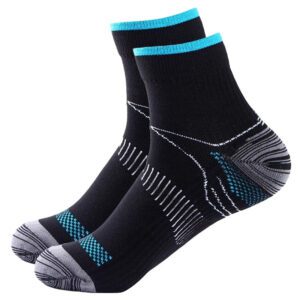
Supportive insoles that correct excessive foot pronation or provide arch support can subtly but meaningfully improve the alignment of the entire lower limb chain — reducing the asymmetric strain patterns that often contribute to one-sided psoas tightness. If you stand or walk a lot and experience recurring hip or lower back discomfort, evaluating your footwear and insole support is a worthwhile step.
Posture Support Devices
Postural feedback supports — worn around the upper back and shoulders — serve a complementary role. Because psoas tightness often causes a cascade of compensations up the spine (rounded upper back, forward head position), a posture corrector that gently cues the shoulders back and the chest open can interrupt these compensatory patterns during everyday activities. Again, the goal isn’t dependency — it’s retraining the nervous system to recognize what upright, balanced posture actually feels like.
Foam Rollers and Massage Tools
Foam rolling is one of the most accessible and effective tools for addressing myofascial tension in the hip flexors and surrounding musculature. Rolling along the hip flexors (front of the hip crease), the quadriceps, and the lower back helps to release fascial adhesions, improve blood flow to the tissue, and reduce the resting tension that contributes to postural dysfunction. A tennis ball or targeted massage ball can provide even more precise pressure for the deep tissues around the hip.
These tools don’t replace professional care when that’s needed — but for the vast majority of people managing day-to-day stiffness and tension, they’re a practical and cost-effective part of a self-care routine.
Frequently Asked Questions
Can a tight psoas cause poor posture?
Yes, absolutely. The psoas is one of the most significant contributors to posture through its direct attachment to the lumbar spine and pelvis. When it shortens or develops uneven tension, it tips the pelvis forward, increases or decreases the lower back curve, and triggers a compensatory chain reaction all the way up to the head and neck. Poor posture that persists despite standard interventions frequently has tight hip flexors at its root.
Does sitting shorten the psoas muscle?
Yes. When you sit, the hip is held in a flexed position, which means the psoas is in a shortened state. Muscles that are held shortened for extended periods undergo adaptive shortening — the muscle fibers and surrounding fascia gradually adjust to the compressed length. Research confirms that prolonged sitting is directly associated with iliopsoas shortening, which in turn is linked to low back pain and reduced hip mobility.
Can stretching the psoas improve posture?
Yes — with an important qualification. Stretching the psoas, when done correctly and consistently, can reduce the anterior pelvic pull that distorts spinal alignment, giving the pelvis a better chance of sitting in neutral. However, stretching alone is not enough; strengthening the psoas through its full range and addressing weakness in the glutes and core muscles is equally important for lasting postural change. Think of it as a two-part process: lengthen the tight structures, then strengthen the system to hold the new position.
How do I know if my psoas is tight?
Common indicators include: difficulty standing fully upright after sitting for a while, a deep ache in the lower back or groin area, restricted range of motion when trying to extend the leg behind you at the hip, one hip appearing higher than the other, and lower back pain that doesn’t respond well to back-focused exercises. A physiotherapist can perform the Thomas Test — a simple clinical assessment in which you lie on your back and draw one knee to your chest; if the other leg lifts off the table, the psoas on that side is likely tight. Source
Is psoas tightness the same as psoas syndrome?
Not exactly. Psoas tightness refers to the muscle being shortened or holding excess tension — a very common condition, especially in sedentary populations. Psoas syndrome is a more clinical diagnosis involving irritation, inflammation, or injury to the psoas or iliopsoas complex, typically causing more significant pain and dysfunction. Most people experiencing posture problems related to the psoas are dealing with tightness and mild dysfunction rather than true psoas syndrome — but any persistent or severe pain should be evaluated by a healthcare professional.
Can the psoas affect the upper back and neck too?
Yes, through the postural chain. When the psoas tips the pelvis and distorts the lumbar curve, the thoracic spine and cervical spine compensate — often resulting in increased upper back rounding and forward head carriage. While the psoas isn’t directly attached to the upper back or neck, its effect on the foundation of the spine ripples upward, influencing posture from the ground up.
The Bottom Line
The psoas is, without exaggeration, one of the most important muscles in the human body for posture, movement, and spinal health. It operates quietly in the background of everything you do — walking, standing, sitting, breathing — and when it’s functioning well, you likely don’t even know it’s there. When it isn’t, the consequences can be felt from the lower back to the hips, from the groin to the neck.
If you’ve been living with persistent lower back pain, stubborn hip tightness, or postural problems that don’t seem to respond to conventional advice, it’s worth turning your attention to this deep, powerful, underappreciated muscle. You won’t regret getting to know it better.
The good news? The psoas responds well to consistent attention — to movement, stretching, breathing, strengthening, and smart supportive tools. You don’t need to accept chronic stiffness or pain as inevitable, regardless of your age or how long you’ve been sitting at a desk. Small, informed changes compound over time into significant, lasting improvements.
Your body is worth understanding. The psoas is a great place to start.
A note from BaronActive: This article is provided for educational purposes only and is not a substitute for professional medical advice. If you are experiencing significant pain or limited mobility, please consult a qualified healthcare provider. Our goal is to help you understand your body better so you can make confident, informed decisions about your health.
Explore our range of back supports, lumbar braces, posture correctors, and orthopedic insoles at baronactive.com — designed to support your posture and comfort as you work toward better movement and long-term spinal health.