






The jar lid doesn’t turn. Not because it’s stuck — because your wrist gives out halfway through the twist, a hot little jolt shooting up the outside of your forearm, and you set the jar back down like it insulted you.
Or maybe it’s the handshake. Someone grips your hand at a meeting, ordinary pressure, nothing dramatic, and you feel it on the inside of your elbow — a wince you have to swallow before your face gives you away.
Or it’s just the mouse. Click, click, click, all day, and by 3 p.m. there’s a dull ache that’s stopped being “new” and started being the thing your elbow does now.
Here’s the part that trips almost everyone up: you probably haven’t played tennis since gym class, and you may have never held a golf club in your life. Doesn’t matter. Tennis elbow and golfer’s elbow are named for the sports that happen to load the tendon a certain way — not for who actually gets them. Most people who have one have never touched the racket or the club the condition is named after.
So you search “tennis elbow vs golfer’s elbow which brace do you need,” and what you find is either a medical page that explains the anatomy beautifully and says nothing about which product to buy, or a brace listing that says “buy now, relieves pain!” and tells you nothing about why.
We’re going to do both, honestly. In the next few minutes you’ll get a 60-second self-check to figure out which condition you actually have, a plain-English explanation of what’s really happening inside that tendon, and — this is the part almost nobody else shows you — what a real body of clinical research says about whether a tennis elbow vs golfer’s elbow brace actually helps, and which type of brace you need for your specific situation.
The Short Answer
Outer elbow pain, worse when you extend your wrist or grip something with your palm down, is almost always tennis elbow (lateral epicondylitis). Inner elbow pain, worse when you flex your wrist or grip with your palm up, is almost always golfer’s elbow (medial epicondylitis). Neither requires you to have played the sport.
A brace genuinely helps — the largest body of clinical evidence available (17 randomized controlled trials, over 1,100 patients) shows real short-term pain relief, especially if you’re under 45. But it’s a bridge, not a cure: physiotherapy and progressive strengthening outperform bracing over the long run. For an active flare, a counterforce strap — a narrow band that redistributes load away from the tendon — is the better-evidenced tool. For general all-day support and warmth, a compression sleeve does a different, gentler job. We’ll show you exactly which one matches your situation below.
Outer Elbow or Inner Elbow? The 60-Second Self-Triage
Put your arm out in front of you, palm down, like you’re about to shake hands. Now bend your wrist up, toward the ceiling, against a little resistance — press your other hand against your fingers and push back.
Feel that on the outside of your elbow, right around the bony bump? That’s tennis elbow. Lateral epicondylitis, if you want the clinical name — “lateral” for the outer side, “-itis” for the tendon at that attachment point.
Now flip it. Palm up, and bend your wrist down toward the floor against resistance. Feel it on the inside of your elbow instead? That’s golfer’s elbow. Medial epicondylitis — same mechanism, opposite side, the tendon group that flexes your wrist and fingers instead of extending them.
That’s really the whole test. Outer elbow, wrist-up motion = tennis elbow. Inner elbow, wrist-down motion = golfer’s elbow. Both conditions share the same basic story: a tendon that attaches to a bony bump on your elbow gets repeatedly loaded — gripping, twisting, lifting with the wrist cocked — until it starts to break down faster than it can repair itself.
And here’s the myth worth killing right now: you do not need to have played the sport. The names come from the era when doctors first described these patterns in club and racket players, but the actual causes are almost always something far more mundane — typing and mousing all day, painting, carpentry, plumbing, cooking (that death-grip on a knife or a heavy pan), gardening, weightlifting, even carrying a toddler on one hip for a summer. If you’re picturing a tennis court right now, picture your keyboard instead. That’s more likely the culprit.
What’s Actually Happening in Your Elbow
Both conditions live at the same kind of address: the spot where a group of forearm tendons attaches to a bony knob on the elbow — the lateral epicondyle for tennis elbow, the medial epicondyle for golfer’s elbow. Every time you grip, twist a wrench, or curl your wrist against resistance, that tendon takes a small amount of load right at the attachment point.
Once, twice, a hundred times — no problem. Tendons are built for repetitive load. But somewhere past a few thousand repetitions without adequate recovery, the tissue starts to accumulate small, real tears faster than your body can repair them. That’s the mechanism: not one dramatic injury, but a slow accounting error between wear and repair.
Here’s a detail almost nobody explains, and it changes how you should think about treatment: despite the “-itis” in the name, which technically means inflammation, chronic tennis elbow and golfer’s elbow are now understood to be more of a degenerative overuse injury than an actively inflamed one — at least past the first few weeks. The tissue under a microscope in long-standing cases looks less like classic inflammation and more like disorganized, poorly-healed collagen. That’s a meaningful distinction, because it’s part of why anti-inflammatory approaches (ice, NSAIDs) help early on but tend to plateau, while approaches that actually reload and remodel the tendon — the exercise piece we’ll get to — matter more the longer you’ve had it.
The good news buried in that mechanism: this is fixable tissue, not damaged-for-good tissue. About 80% of cases resolve within a year with conservative care, according to the patient-education overview published through NCBI’s InformedHealth.org. It just takes longer than anyone wants, and a brace’s job in that timeline is very specific — which is exactly what the research actually shows.
Does a Brace Actually Work? What the Research Shows
Most elbow brace pages skip this question entirely and go straight to “relieves pain instantly!” We went looking for what actually happens when researchers put counterforce bracing through a real trial, and the honest answer is more useful than either extreme.
In 2020, researchers published a systematic review and meta-analysis in Prosthetics and Orthotics International that pooled 17 randomized controlled trials covering 1,145 patients with lateral elbow tendinopathy — the largest synthesis of counterforce-bracing evidence available. The finding, in plain terms: counterforce bracing does produce a real reduction in pain in the short term. That effect was notably stronger in patients under 45, where the benefit was moderate-to-large compared with physiotherapy alone.
But the same review found the opposite pattern over the long term. Physiotherapy, wrist splints, and laser therapy all outperformed bracing when researchers looked months out instead of weeks. The authors’ own conclusion: “counterforce bracing is a reasonable strategy to alleviate pain over the short term,” while “physiotherapy interventions compared to counterforce braces have better effects, especially over the long-term.”
A separate, tightly controlled study pushes on this from another angle — a prospective, randomized, double-blinded, placebo-controlled trial published in the Journal of Shoulder and Elbow Surgery, comparing a real counterforce brace against a visually identical placebo brace. Double-blinded, placebo-controlled trials are the gold standard for this kind of question precisely because they strip out the part where simply feeling like you’re doing something about your pain makes you report less of it.
Put those two findings together and you get an honest, useful picture instead of a sales pitch: a brace is a genuinely evidence-backed way to reduce pain right now, while the tendon does the slower work of actually healing underneath it. It is not, on its own, the fix. If a page tells you a $30 strap will cure your tennis elbow, it’s overselling the evidence. If a page tells you bracing does nothing, it’s ignoring 1,145 patients’ worth of data. The truth sits in the middle — and it’s good enough to be worth buying the right one.
Strap or Sleeve? The Difference Nobody Explains
Walk into almost any brace listing and “tennis elbow brace” gets used as one catch-all term for two genuinely different products. That’s not a minor labeling issue — it’s the difference between a tool that’s built to redistribute mechanical load and a tool that’s built to give you general support and warmth. Buy the wrong one and you’re not getting the wrong color. You’re getting the wrong mechanism.
A counterforce strap is a narrow band, usually an inch or two wide, worn about one to two finger-widths below the elbow crease — deliberately not over the joint itself. Positioned there, it applies focused pressure over the muscle belly, which creates what researchers sometimes call a “false tendon origin.” In effect, it gives the contracting muscle a new, slightly different point to pull against, which reduces the peak strain transmitted to the actual injured attachment point every time you grip. This is the design behind the RCT evidence in the section above — when studies test “counterforce bracing,” this narrow strap is almost always the product being tested.
A compression sleeve, by contrast, wraps evenly around the whole elbow. Its job is broader and gentler: consistent, all-over compression that can improve warmth, blood flow, and joint-position awareness (proprioception), plus a general feeling of support during activity. It’s not engineered to redistribute load at one specific point the way a strap is — think of it as the difference between a firm handshake at exactly the right spot versus a warm, even hug around the whole joint.
Neither is “better” in the abstract. They’re built for different moments:
- Reaching for extra support during an active flare, or through a specific aggravating task (a heavy work day, a round of golf, a long typing session)? The counterforce strap is the better-evidenced tool — it’s what the research above was actually testing.
- Wanting general all-day comfort, warmth, and a sense of joint support while you go about normal activity, or transitioning out of an acute flare into maintenance? A compression sleeve is the more comfortable, more appropriate choice for that longer, gentler stretch.
Some people genuinely benefit from owning both — a strap for the demanding days, a sleeve for the rest. But if you only buy one, match it to what you actually need it to do.
Red Flags: When a Brace Isn’t Enough
A brace, correctly matched and correctly worn, is a legitimate tool for the ordinary version of this problem. It is not the right tool for every version of it, and pretending otherwise would break the honesty this whole article is built on.
See a doctor before you rely on bracing alone if you notice any of the following:
- Numbness or tingling radiating into your fingers or hand. Tennis elbow and golfer’s elbow are tendon problems, not nerve problems — numbness suggests something else may be going on (nerve compression, for instance) that a strap won’t touch.
- You can’t fully straighten or bend your arm, or there’s a mechanical catching/locking sensation. That’s outside the usual tendon-overuse pattern.
- Sudden, severe pain from a specific incident — a fall, a wrench that slipped, a single heavy lift — rather than the slow, gradual onset typical of overuse. That pattern deserves an exam, not a brace.
- Visible swelling, bruising, or deformity around the elbow.
- No real improvement after 6 to 12 months of consistent conservative care (rest from the aggravating activity, bracing during flares, and progressive exercise). Mayo Clinic notes that surgery is rarely needed for either condition, but it becomes a real conversation in this window — including newer, minimally invasive options some sports medicine practices now offer.
- Pain severe enough to consistently wake you at night, rather than the dull, activity-related ache most people describe.
None of this is meant to alarm you — the overwhelming majority of tennis elbow and golfer’s elbow cases are exactly the ordinary, gradual-overuse kind that responds well to the approach in this article. But “the honest answer” only means something if it includes the version of the story where a brace isn’t the whole answer.
How to Wear Your Brace for It to Actually Help
Even the right brace does very little if it’s sitting in the wrong spot or clamped on so hard it just adds a new problem. Here’s how to actually get the benefit the research describes.
Position it correctly. For a counterforce strap, that’s roughly one to two finger-widths below the bony bump at your elbow — over the muscle belly of your forearm, not over the joint itself and not right up against the elbow crease. Positioned too high, near the joint, it stops doing its job and just becomes an uncomfortable ring around your elbow.
Run the wrist-curl check. Once it’s on, do a slow wrist curl in the direction that normally hurts. You’re looking for the strap to noticeably ease that specific movement. If it doesn’t change anything, or if it makes the pain worse, the position is off — loosen it, shift it slightly, and retest before assuming the product itself isn’t working.
Check the snugness, not just the tightness. A well-fitted strap or sleeve should let you comfortably slip one finger underneath the non-padded sections. Tighter isn’t better here — cranking a counterforce strap down hard doesn’t increase the effect, it mostly just restricts circulation and gets uncomfortable fast enough that you’ll stop wearing it, which defeats the point entirely.
Wear it during the activity that aggravates you, not necessarily around the clock. The evidence base is built on bracing used during aggravating tasks and activity, not on 24-hour wear. Many people find a few focused hours during a demanding work shift, workout, or round of golf more useful — and more sustainable — than trying to sleep in it every night.
Pair it with the boring stuff that actually rebuilds the tendon. Ice for 15-20 minutes after aggravating activity, and — once the acute flare has calmed — a progressive strengthening routine (search “eccentric exercises for tennis elbow” or “golfer’s elbow” for the specific movements; a physical therapist can build this correctly for your case). The brace buys you comfort today. The exercise is what actually changes the tendon’s capacity over the coming weeks.
Choosing the Right Brace for Your Condition
Once you know which elbow you’re dealing with and which mechanism you actually need, the shopping decision is a lot less overwhelming than the average brace aisle makes it look. Here’s how the evidence maps onto an actual buying decision.
For an active flare — the counterforce strap, the evidence-matched pick. BaronActive’s Adjustable Elbow Compression Strap with Shock-Absorbing Pad is a true counterforce design — a built-in SBR foam pad positioned directly over the forearm tendon, with an adjustable hook-and-loop closure so you can dial in the exact placement the wrist-curl check calls for. It’s the one BaronActive elbow product built on the same mechanism the 17-study RCT evidence actually tested, it’s one-size-fits-most (14.1″/36cm, adjustable), and it’s backed by a 30-day money-back guarantee — the only one of the three elbow products with a stated guarantee, worth knowing if you’re not certain which condition you have yet.
Editor’s Pick: Adjustable Elbow Compression Strap with Shock-Absorbing Pad — the counterforce mechanism the research actually supports, for both tennis elbow and golfer’s elbow. $29.99, 30-day guarantee.
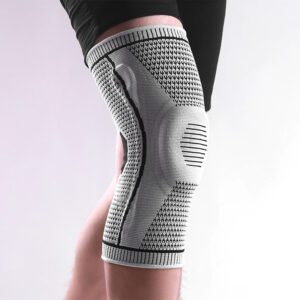
For general all-day support, warmth, or the maintenance phase after a flare — a compression sleeve. BaronActive carries two: the Decompression Elbow Pain Relief Brace ($29.99, sizes S/M/L, with a silicone stabilization pad and 3D-woven breathable fabric) and the Painless Elbow Compression Sleeves ($24.99, sizes M/L/XL, sold individually so order two for a pair). Both are genuinely comfortable, breathable, all-day options — just remember they’re doing a different job than the strap. If your main goal is targeted relief during a demanding task, a sleeve alone likely won’t give you what the RCT evidence describes; if your goal is general comfort and support through the day, either sleeve is a reasonable, honestly-priced choice.
A simple way to decide: if you’re mid-flare and need relief specifically while you type, lift, golf, or grip through your workday, start with the strap. If you’re past the worst of it and want ongoing daytime support and warmth while you finish healing, a sleeve is the more comfortable long-haul option. Either way, browse the full elbow sleeves and support lineup to compare sizing and colors side by side.
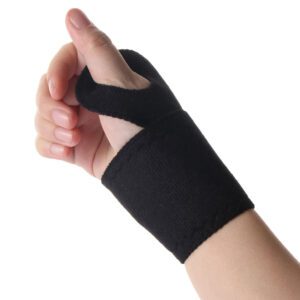
If your pain pattern doesn’t match either of these two conditions cleanly — say it’s centered more in your wrist or hand than your elbow — it’s worth a look at our broader breakdown of braces for sports injuries by body part, which covers the full range of joints this same overuse pattern can show up in.
Common Mistakes That Delay Recovery
Treating the brace as permission to keep doing the thing that caused it. A strap that dulls the pain doesn’t mean the tendon has healed — it means you can’t feel the warning signal as clearly. Grinding through the exact same repetitive task at the exact same volume, just because it hurts less now, is the single most common way people turn a six-week problem into a six-month one.
Buying the wrong mechanism for the job. Grabbing a compression sleeve because it was the top result, when what you actually needed for an active flare was a counterforce strap — or the reverse, wearing a strap 24/7 for general comfort when a sleeve would be gentler and just as effective for that purpose. Match the product to the job, using the framework above.
Cranking the strap down as tight as it’ll go. More pressure isn’t more relief past a certain point — it’s just circulation loss and a brace you’ll stop wearing out of discomfort within a week.
Quitting the moment it feels better. The pain easing is genuinely good news, but it isn’t the finish line. Tendons that get reloaded properly — even gently, even briefly — come back stronger and more resistant to the next flare. Tendons that get rested completely and then thrown straight back into full activity tend to flare right back up.
Ignoring the red-flag list for months on end. If you’re at the six-to-twelve-month mark with no real improvement, or any of the warning signs from earlier in this article, that’s not a signal to try a fancier brace. It’s a signal to get an actual evaluation.
FAQ
Can you have tennis elbow and golfer’s elbow at the same time? Yes, though it’s less common than having just one. It’s possible to strain both the outer and inner tendon groups simultaneously, especially with activities that load the wrist heavily in both directions (some weightlifting and manual-labor patterns can do this). If both sides genuinely hurt, the self-triage in this article still works — just apply it to each side independently, and consider seeing a doctor to confirm, since two overlapping conditions are more worth a professional look than one straightforward case.
Do I actually need to have played tennis or golf to get these? No. Most people with either condition have never played the sport it’s named for. Typing, mousing, manual trades, cooking, weightlifting, and even carrying a child are all far more common real-world causes.
How long until a brace actually helps? Based on the clinical trial evidence, many people notice a meaningful reduction in pain within days to a couple of weeks of consistent, correctly-positioned wear during aggravating activity. Full tendon healing is a much longer timeline — weeks to several months, with about 80% of cases resolved within a year with conservative care.
Can I sleep in an elbow brace? You can, but it’s usually not necessary and isn’t what the research on effectiveness is actually based on. Most of the evidence comes from bracing worn during aggravating daytime activity. If nighttime discomfort is a real problem for you, a compression sleeve is generally more comfortable for overnight wear than a snug counterforce strap.
Is surgery ever necessary? Rarely. Mayo Clinic notes surgery is uncommon and typically only becomes a real conversation after 6 to 12 months of conservative treatment (rest, bracing, and progressive exercise) without meaningful improvement. If you’re in that window, that’s the point to bring in a doctor or sports medicine specialist rather than trying another brace.
The Bottom Line
So: tennis elbow vs. golfer’s elbow, which brace do you need? Outer elbow, wrist-up pain is tennis elbow. Inner elbow, wrist-down pain is golfer’s elbow. Neither one requires a racket or a club — your keyboard, your toolbox, or your kitchen knife is a far more likely culprit.
On the question this whole article was built to answer honestly: a brace works. Not as a cure, but as a genuinely evidence-backed way to reduce pain while the actual repair happens underneath it — real relief from a real body of research, not a marketing claim. For an active flare, reach for a counterforce strap, the mechanism the research actually tested. For general daytime support and warmth, a compression sleeve is the gentler, more comfortable tool for that longer stretch.
Match the brace to the condition, match the mechanism to the moment, watch for the red flags that mean it’s time for a real evaluation, and give the boring part — rest from the aggravating task, then progressive reloading — the time it actually needs. That combination, not the brace alone, is what gets you back to opening the jar without wincing.