






Reaching for a cabinet shouldn’t make you flinch. Neither should rolling over in bed, putting on a jacket, or reaching back for a seatbelt. But once your shoulder starts talking back, every one of those small, automatic movements turns into a calculation — can I do this without it grabbing?
Somewhere in the middle of that, a shoulder brace usually shows up as an option, promising stability, support, even “faster recovery.” So let’s ask the honest question, the way you’d ask a physical therapist instead of a product listing: does a shoulder brace actually help rotator cuff pain, or is it $70 of neoprene standing between you and the exercises that would actually fix it?
The honest answer, again, isn’t a clean yes or no. A shoulder brace does something real for certain kinds of shoulder pain, does very little for others, and for one common shoulder condition it can quietly make things worse. This guide breaks down what’s actually happening inside your shoulder, what a brace mechanically does and doesn’t do, what the research shows, the one shoulder condition where bracing is the wrong move entirely, and how to use support the right way so it helps you get back to reaching, lifting, and sleeping without wincing.
The Short Answer (For People Who Just Want the Verdict)
Yes, a shoulder brace can help — but mainly for impingement-type pain and general instability, and mostly by improving your body’s sense of shoulder position rather than by mechanically fixing anything. A well-designed compression or stabilization brace has been shown in research to perform about as well as guided exercise for shoulder impingement in the short term, likely by giving your nervous system better feedback about where your joint is in space. It does not repair a torn tendon, reverse a rotator cuff tear, or resolve frozen shoulder — and for that last condition specifically, immobilizing bracing can work against you.
If your pain is a dull ache with overhead activity, or comes and goes with specific movements, a brace paired with the right exercises is a reasonable, evidence-informed step. If you can’t actively lift your arm, if your shoulder is painful and stiff in every direction, or if the pain started with a specific traumatic event, read the red-flags section before reaching for a brace at all.
What’s Actually Happening in Your Shoulder
The rotator cuff isn’t a single muscle — it’s four tendons (supraspinatus, infraspinatus, teres minor, and subscapularis) that wrap around the head of your upper arm bone and hold it centered in the shoulder socket through an enormous range of motion. Unlike a hinge joint like your knee, your shoulder trades stability for mobility, and the rotator cuff is what does most of the work keeping the joint centered while your arm moves.
Most shoulder pain that gets called “rotator cuff pain” actually falls into a few different categories, and the difference matters enormously for whether a brace helps:
Subacromial impingement or tendinopathy happens when the rotator cuff tendons get compressed or irritated as they pass through a narrow space under the tip of your shoulder blade (the acromion), often from repetitive overhead motion, muscle imbalances, or posture that lets the shoulder blade sit in a position that narrows that space further. This is the most common cause of “shoulder pain that gets worse reaching overhead,” and it’s also the category where bracing has real evidence behind it.
Partial or full-thickness rotator cuff tears are a structural loss of tendon integrity — a portion of the tendon has actually torn, ranging from a small partial tear to a complete rupture. These can happen gradually from wear over years, or suddenly from trauma like a fall.
Frozen shoulder (adhesive capsulitis) is a different problem entirely: the capsule surrounding the joint itself thickens and tightens, causing progressive stiffness and pain in every direction of movement — not just overhead. This one deserves its own callout below, because bracing approaches that help impingement can actively work against frozen shoulder.
Instability and dislocation involve the joint moving more than it should, sometimes fully separating from the socket, usually from trauma or in people with naturally loose ligaments.
A brace interacts with each of these completely differently, which is exactly why “does a shoulder brace work” doesn’t have one universal answer.
What the Research Actually Shows
This is the part worth being precise about, because it’s more interesting — and more honest — than most marketing copy lets it be.
A frequently cited randomized trial compared three approaches to subacromial impingement syndrome: a guided self-training exercise program, conventional physiotherapist-led physiotherapy, and wearing a functional shoulder brace, following patients for 12 weeks. All three groups improved significantly in both shoulder function and pain, and there was no statistically significant difference between them. The researchers’ explanation for why a passive brace performed comparably to active physiotherapy is notable: they attributed the effect to improved proprioception — your nervous system’s sense of where your joint is positioned — rather than any mechanical correction the brace was providing. In plain terms, the brace didn’t fix anything structurally; it seems to have helped by giving the shoulder better positional feedback, similar to how a compression sleeve improves joint awareness elsewhere in the body.
That’s a genuinely useful, if humbler, finding than “brace cures shoulder pain.” It puts bracing in the same tier as a legitimate, evidence-supported conservative option for impingement-type pain — not a replacement for exercise, but a reasonable tool that can perform comparably to it in the short term, especially when full compliance with a supervised exercise program isn’t realistic for someone still working, training, or getting through a normal week.
Where the evidence is much stronger and more consistent is for exercise itself. Multiple systematic reviews of exercise therapy for rotator cuff impingement and tendinopathy have found statistically and clinically meaningful improvements in pain and function, with manual therapy adding a modest additional benefit on top of a structured exercise program. That’s the piece worth internalizing: exercise has a deeper, more consistently supported evidence base than bracing does. A brace is a reasonable companion to that work — not a substitute for it.
The One Condition Where Bracing Can Backfire: Frozen Shoulder
This is the section most shoulder-brace guides skip entirely, and it’s the single most important distinction in this article.
Frozen shoulder involves the joint capsule itself tightening and thickening, and the primary treatment goal is restoring motion through progressive, guided mobility work — not protecting the joint from movement. If a brace or sling is used to rest a stiff, aching shoulder the way you might rest an impingement flare, it can reinforce exactly the immobility that’s driving the stiffness in the first place. Some cases of frozen shoulder are actually triggered by a period of immobilization after an unrelated injury or surgery.
The practical distinction: impingement pain is usually worse specifically with overhead reaching, while range of motion is otherwise close to normal once you avoid the aggravating position. Frozen shoulder is stiff and painful in multiple directions — reaching behind your back, reaching across your body, and reaching overhead all feel restricted, and someone else moving your arm for you (passive range of motion) is limited too, not just your own active movement. If that second pattern sounds like you, a compression or stabilization brace is the wrong tool, and a conversation with a doctor or physical therapist about a guided mobility program is the right next step.
Three Real Use Cases for Shoulder Bracing
1. Impingement and overhead-activity flare-ups. If overhead reaching, lifting, or throwing motions reliably trigger your pain, and your range of motion is otherwise reasonably intact, a compression-style brace worn during the aggravating activity — paired with rotator cuff and scapular strengthening — fits the evidence outlined above.
2. Return-to-activity after a mild strain. Once acute pain has settled and you’re rebuilding activity tolerance, light compression support can provide the proprioceptive feedback that helped in the impingement research, giving you more confidence to move through a fuller range as you rebuild strength.
3. Protection during a healing window after injury or surgery. This is a different job entirely from the compression braces above — an immobilizing sling-style support that restricts motion is appropriate after a dislocation, surgical repair, or acute traumatic injury, specifically under a doctor’s guidance, to protect healing tissue during a defined window. This is not the same tool or purpose as a proprioceptive compression brace for impingement, even though both get called “shoulder braces.”
The Red Flags That Mean See a Doctor First
Bracing and self-management are reasonable first steps for many shoulder complaints, but certain signs mean the picture is more than an impingement flare, and a brace alone isn’t the right response:
- You cannot actively lift your arm out to the side or overhead, especially if someone else can passively move it for you without the same limitation. This pattern (sometimes checked as a “drop arm” sign) can point to a significant rotator cuff tear that needs an orthopedic evaluation.
- Stiffness and pain in every direction of movement, not just overhead — the frozen shoulder pattern described above, which calls for a mobility-focused approach rather than bracing.
- The pain started suddenly after a fall, a hard tackle, or catching yourself on an outstretched arm, rather than building gradually. Traumatic onset raises the likelihood of a structural tear or dislocation that benefits from prompt evaluation.
- Visible deformity, or a sense that the joint has slipped out of place. This needs urgent medical attention, not a compression brace.
- Night pain that doesn’t ease no matter how you position yourself, especially alongside weakness — this combination is a common presenting pattern for more significant rotator cuff pathology.
- No meaningful improvement after four to six weeks of consistent bracing paired with appropriate exercise. That’s a reasonable trial window; beyond it, ongoing pain deserves a professional look rather than continued self-management.
None of these are reasons to panic — most shoulder pain responds well to the right conservative approach. They’re reasons to get a proper diagnosis before deciding a brace is the whole plan.
How to Use Shoulder Bracing Correctly
Match the brace to the job. A compression or stabilization brace for impingement-type pain and a sling-style immobilizer for post-injury protection are not interchangeable, even though both are called shoulder braces. Using an immobilizing sling for a garden-variety impingement flare can create the same disuse problem frozen shoulder research warns about.
Wear it during the aggravating activity, not necessarily all day. For impingement-type pain, the evidence points to bracing as useful during the specific movements that provoke symptoms — overhead work, throwing, lifting — rather than as an all-day, everyday habit indefinitely.
Pair it with rotator cuff and scapular strengthening, not instead of it. Since exercise has the stronger, more consistent evidence base of the two, a brace works best as support alongside a structured strengthening routine, not a replacement for one. External and internal rotation work with a light resistance band, and scapular retraction exercises that draw your shoulder blades down and back, are consistently included in evidence-based rehabilitation protocols for impingement.
Check that it isn’t restricting more motion than intended. A brace for impingement should feel supportive without locking your shoulder into a fixed position — if you can’t complete normal daily movements while wearing it, either the fit is wrong or it’s the wrong type of brace for the job.
Give it a genuine multi-week trial. As with the research above, meaningful change from a conservative approach — bracing plus exercise — tends to build over several weeks, not several days.
Choosing the Right Shoulder Support
A compression and stabilization brace for impingement, strain, or return-to-activity support. Look for adjustable straps that let you dial in support without restricting full arm mobility — the goal is proprioceptive feedback and gentle stabilization, not immobilization. Our ProRecover Shoulder Support Brace is built for this role: targeted stabilization that reduces unwanted movement during activity and recovery, without locking the joint down.
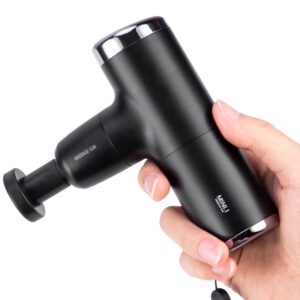
A heat-and-massage option for symptom relief during a flare. Separate from structural support, warmth and gentle massage can ease muscle guarding and discomfort around an irritated shoulder in the moment — genuinely useful for taking the edge off during a bad stretch, though it’s worth being clear-eyed that heat and massage relieve symptoms rather than repair tendon tissue. Our ProBrace Heat & Massage Therapy device fills that role for short daily sessions.
Adjustability over rigidity for daytime impingement support. Unlike a post-surgical immobilizer, a brace you’ll wear during activity needs to move with you, not against you.
Breathable material for wear during activity. A brace that traps heat during an already-uncomfortable flare is one you’ll stop reaching for regardless of how well-designed it is.
Common Mistakes People Make With Shoulder Bracing
Using an immobilizing brace for ordinary impingement pain. This is the single biggest mistake covered in this guide — treating every kind of shoulder pain as something to rest and protect, when impingement pain generally responds better to graded activity and exercise than to immobilization.
Skipping the exercise component entirely. A brace alone, without the rotator cuff and scapular strengthening work that has the stronger evidence base, is leaving most of the available benefit on the table.
Ignoring the frozen shoulder pattern. Treating multi-directional stiffness the same way you’d treat an overhead-only impingement flare can prolong a problem that needed a completely different approach from the start.
Expecting a heat-and-massage device to fix a structural tear. Warmth and massage genuinely ease muscle guarding and discomfort, but they don’t repair torn tendon tissue — that distinction matters for setting realistic expectations.
Pushing through a “drop arm” pattern or night pain instead of getting evaluated. These are the signs most likely to indicate something a brace and home exercise program won’t resolve on their own.
Frequently Asked Questions
Does a shoulder brace help rotator cuff impingement?
Yes, evidence suggests a compression or stabilization brace can perform comparably to guided exercise for impingement-type pain in the short term, likely by improving proprioceptive feedback rather than through any mechanical correction. It works best paired with rotator cuff and scapular strengthening exercises, not used alone.
Can a shoulder brace fix a torn rotator cuff?
No. A brace can support the joint and ease discomfort during activity, but it cannot repair torn tendon tissue. A confirmed tear, especially one causing significant weakness or inability to actively lift the arm, needs a medical evaluation to determine whether conservative treatment or surgical repair is appropriate.
Should I wear a shoulder brace all day?
For impingement-type pain, most of the supporting evidence points to wearing a brace during the specific activities that trigger symptoms, rather than continuously all day. All-day immobilization is reserved for specific post-injury or post-surgical situations under a doctor’s guidance.
Is a shoulder brace bad for frozen shoulder?
An immobilizing brace can work against frozen shoulder recovery, since the primary treatment goal is restoring motion through guided mobility work, not resting the joint. If your shoulder is stiff and painful in every direction, not just overhead, talk to a doctor or physical therapist before bracing.
How do I know if my shoulder pain needs a doctor instead of a brace?
See a doctor if you can’t actively lift your arm out to the side or overhead, if pain and stiffness affect every direction of movement, if the pain started with a specific fall or trauma, if you notice visible deformity, or if consistent bracing and exercise haven’t helped after four to six weeks.
What’s the difference between a compression shoulder brace and a sling?
A compression or stabilization brace supports the joint while allowing movement, and is generally used for impingement, mild strains, and return-to-activity support. A sling immobilizes the arm and is reserved for acute injuries, dislocations, or post-surgical recovery under medical guidance — the two serve very different purposes despite both being called shoulder braces.
The Bottom Line
A shoulder brace isn’t a miracle fix, and it isn’t a waste of money either. For impingement-type pain, it’s a genuinely evidence-informed tool that appears to help mainly through better joint-position feedback — comparable to guided exercise in the short term, and a reasonable companion to the strengthening work that has the strongest evidence overall. Ask it to repair a torn tendon, or use it to immobilize a frozen, multi-directional stiff shoulder, and it will work against the goal instead of toward it.
Used with that distinction in mind — a stabilization brace like our ProRecover Shoulder Support Brace during aggravating activity, heat and massage from something like ProBrace for symptom relief during a flare, and real rotator cuff strengthening running alongside both — a shoulder brace earns its place as part of the plan, not the whole plan.
If your shoulder pain traces back to hours spent hunched over a desk, it’s worth knowing that rounded, forward-slumped posture narrows the same subacromial space where impingement happens — which is why posture work often shows up alongside shoulder rehab, not as a separate, unrelated fix. And if you’re weighing bracing options across more than one joint, our complete guide to sports injury braces by body part breaks down the same match-the-tool-to-the-injury approach for the rest of your body.