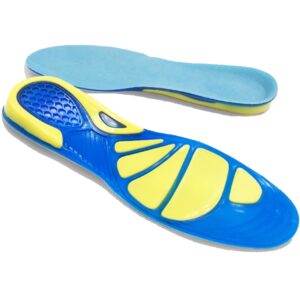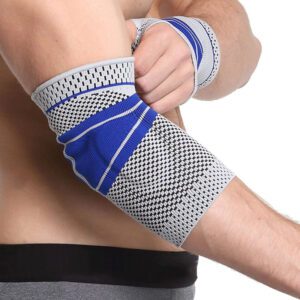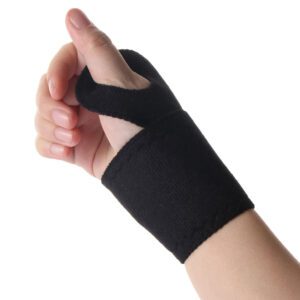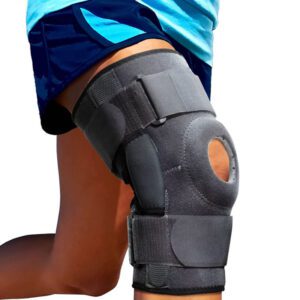







Open any pickleball bag in the parking lot and you’ll find the same archaeology. Two paddles, one with a chip. Three balls, one cracked. A neoprene knee sleeve that has seen things. An ankle wrap from the summer somebody rolled it. A tennis-elbow strap, a wrist support, half a roll of tape.
Ask the owner which one is doing anything and you’ll get a shrug and a story. “My sister swears by it.” “It feels better with it on.” Nobody knows, and that’s not a character flaw. The brace pages that rank for pickleball run around 500 words, name no author, and cite no research. We checked.
So we did the reading. Four epidemiology papers, two Cochrane reviews, a handful of randomized trials, and the emergency-room data from the last decade. The pattern that came out of it changes what you should put in your bag.
Pickleball hurts people in two different ways, and braces only touch one of them.
The first way is slow and visible: a knee that aches after Thursday doubles, an elbow that complains when you lift a coffee cup, an ankle that rolls for the third time. Braces have a plausible job here, and for one joint the trial evidence is good. The second way is fast and unannounced: you back up for a lob, your feet disagree with the court, and your hand hits the ground first. No brace has been shown to stop that. Knowing which kind of injury you’re worried about is how you spend $20 to $50 where it counts, and spend your effort where a brace can’t reach.
The short answer
Pickleball braces help with the injuries you can see coming: a repeatedly sprained ankle, a sore elbow, an achy knee. The best evidence is for ankle braces, which roughly halved sprains in trials. Evidence for knee and elbow braces is modest, and no brace has been shown to prevent the fall-related wrist fractures that fill emergency rooms.
Here’s why that matters now. Pickleball participation grew 223% over three years, according to the Sports and Fitness Industry Association figures UC Davis Health cites (UC Davis Health, August 2024). A 2025 analysis of US emergency-department data from 2013 to 2022 estimated 77,963 pickleball injuries nationwide, with the mean age at 64 and 91% of injured players aged 50 or older. Emergency-room injuries have risen 88% since 2020 (Tobin et al., Journal of the American Osteopathic Academy of Orthopedics, Spring 2025).
This guide takes your body one part at a time, tells you what the evidence supports, and tells you which of our braces fit where, including the ones we would not buy for your problem. One note first: this is education, not medical advice. If a joint has locked, given way, or swollen after a fall, a clinician comes before a brace.
Two kinds of pickleball injury
Most articles about pickleball injuries hand you a list: sprains, strains, tendinitis, fractures. A list hides the one thing that matters for your shopping. The injuries split into two families with different causes, and different answers.
Family one: the slow ones (overuse and sprains)
In a 2025 survey of 232 players at a Korean pickleball championship (mean age 50.5), 34.2% reported at least one injury in the previous 12 months. Of those injuries, 78% were overuse injuries and 22% traumatic. By region: knee 23.3%, elbow or forearm 18.1%, shoulder or upper arm 17.2%, ankle or foot 13.8%, wrist or hand 9.5% (Jeong et al., Frontiers in Public Health, 2025).
Emergency-room data tells a similar story for the legs. A review of lower-extremity pickleball injuries (2000 to 2019) found that 76.3% were sprains or strains. The lower leg accounted for 43.9% of cases, the ankle for 21.3%, and the knee for 19.3% (Forrester, Lower Extremity Review, 2021).
These are the injuries a brace can plausibly help with: they build over weeks, they’re tied to a specific joint, and you usually feel them coming.
Family two: the fast ones (falls and fractures)
The same emergency-room data shows something different. In the 2025 analysis, fractures made up 27% of injuries, the same share as sprains. Women accounted for 68% of the fractures even though men and women were nearly evenly split overall (51% male, 49% female). The wrist was the most commonly fractured site at 29%, and 54% of fractures involved the wrist and lower arm (Tobin et al., 2025).
A 2023 narrative review pulling together earlier studies reports that slips, trips, dives and falls were the most common mechanism overall (63%, citing Greiner et al.), and that in a series of 204 people treated for pickleball or paddleball injuries (mean age 65), wrist injury was the most frequent upper-extremity presentation (44.7%), with 19.1% needing surgery (Pergolizzi et al., Cureus, 2023). A study presented at the American Academy of Orthopaedic Surgeons meeting found a 90-fold rise in pickleball fractures between 2002 and 2022, concentrated among players aged 60 to 69, as UC Davis Health reports.
Why the split matters
| Family one: slow | Family two: fast | |
|---|---|---|
| What it looks like | Aching knee, sore elbow, rolling ankle | A fall on a hard court, a hand to the ground |
| Typical injuries | Sprains, tendon overuse, arthritis flare-ups | Wrist and lower-arm fractures, shoulder and collarbone injuries |
| Warning | Yes, for weeks | None |
| Can a brace plausibly help? | Sometimes; evidence varies by joint | No trial evidence in pickleball that we found |
Two honest caveats. Emergency-department records only count people who came in, so overuse problems treated in clinics are under-counted there, and the Korean survey covers tournament players in one country, self-reported. The two data sources look at different slices of the same sport. Both point the same way: the injuries that are cheapest to prevent with a brace are not the ones that fill emergency rooms.
The rest of this guide follows from that.
The 60-second brace map
Answer four questions about your body today.
- Has the same ankle rolled more than once? Go to the ankle section. A brace has the best case here, and the case is strongest with a previous sprain.
- Does a knee ache or swell after play? Go to the knee section. If it catches, locks or gives way, a clinician comes first.
- Does the outside of your elbow hurt when you grip the paddle or lift a mug? Go to the elbow section.
- Did a fall cause this, or can you not put weight on it, grip, or straighten it? Skip the brace shop. Get it examined and imaged. Bracing a possible fracture is not a plan.
And here is the whole guide at a glance:
| Body part | Strength of brace evidence | What fits | When it is not a brace job |
|---|---|---|---|
| Ankle | Strongest: 14-trial Cochrane review, about half the sprains | Semi-rigid lace-up; rigid for high-risk or severe instability | Fresh severe sprain, can’t bear weight |
| Knee | Inconclusive for arthritis; none found for meniscus tears | Sleeve or wrap for comfort; hinged only on a clinician’s advice | Locking, giving way, large swelling |
| Elbow | Modest, short-term pain relief | Counterforce strap | Numbness or tingling, pain at rest |
| Shoulder | One trial: exercise matched a brace | Usually none | Weakness lifting the arm, pain at night |
| Wrist | No pickleball trial; indirect evidence only | Support for sprain or overuse, after a clinician check | After a fall with swelling or deformity |
| Achilles | None | None; manage load and warm up | A sudden pop or inability to push off |
Ankle: where the brace evidence is strongest
If you take one thing from the research and put it in your bag, make it this. The ankle is the one joint where bracing has solid trial evidence.
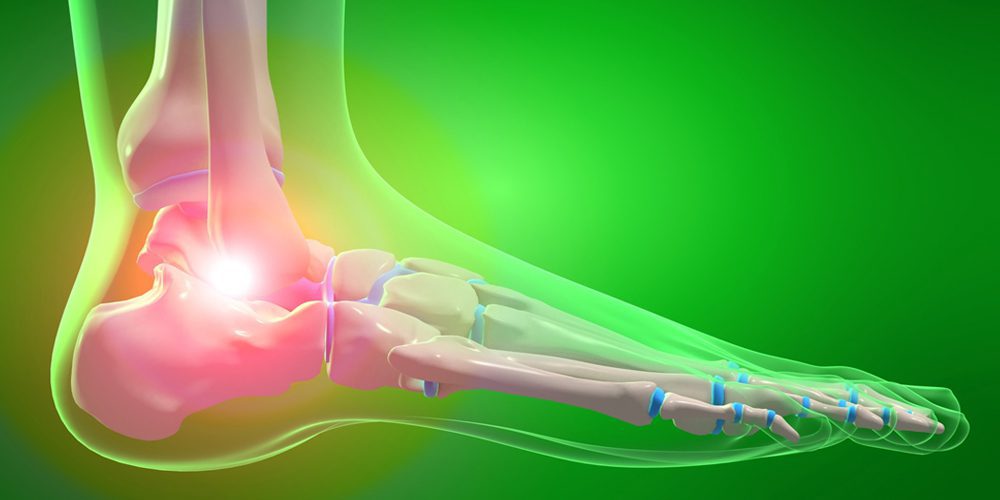
A Cochrane review of 14 randomized trials with 8,279 participants found that external ankle supports (semi-rigid orthoses in three trials, an air-cast brace in one) significantly reduced ankle sprains, with a risk ratio of 0.53 (95% CI 0.40 to 0.69), or about half as many sprains. The benefit was larger for people who had sprained an ankle before, though it may help those who hadn’t. The authors called it “good evidence” for ankle supports in high-risk sports (Handoll et al., Cochrane review).
A later randomized trial compared a brace, neuromuscular (balance) training, and both together in 384 people with a previous sprain. Over a year, 15% of the brace group had a recurrent sprain versus 27% of the training group (relative risk 0.53, 95% CI 0.29 to 0.97). The brace reduced how often ankles rolled, but not how severe the sprains were when they happened (Janssen et al., British Journal of Sports Medicine, 2014).
Why would a brace work? One lab study of 45 active people doing a 180-degree cutting turn, which is a fair stand-in for a pickleball scramble to the kitchen line, found that a semi-rigid brace significantly reduced how far the ankle rolled inward compared with no brace and with a soft brace. The soft brace did not change joint movement (Fuerst et al., Journal of Foot and Ankle Research, 2021).
What the ankle evidence doesn’t tell you
Be a careful reader here, and so are we. The Cochrane trials mostly followed young adults in organized, high-risk sports such as soccer and basketball. We found no trial of ankle braces in pickleball players in their 60s. The logic carries over (lateral cuts, sudden stops, previous sprains), but it is an extrapolation. And a brace lowers the odds of a sprain; it doesn’t make you sprain-proof. An evidence summary on MDedge puts the number of athletes who need to wear a brace to prevent one sprain at about 22 (MDedge summary), which is a reasonable bet at $40, and not a guarantee.
Which ankle brace fits
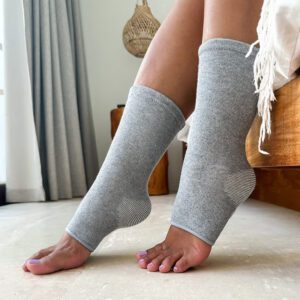
- Soft compression sleeve. Our Stability Foot & Ankle Brace X Wrap ($19.99) gives warmth and light compression. Based on the lab finding above, we don’t recommend a soft sleeve as your only support if your ankle has a history of rolling.
- Semi-rigid lace-up. Our Ankle Brace with Speed Laces ($39.99) has figure-8 straps and two side stabilizers, in sizes S to XL chosen by shoe size. This is the tier to try first if you have rolled your ankle before. It has one customer review so far, so judge it on its design, not its rating.
- Rigid shell. The Pro Protection Ankle Guard ($49.99) has a rigid hard shell and a single adjustable strap, one size. It’s for higher-risk situations or a more unstable ankle, and the page itself warns it may not suit extra-large ankles or calves. No reviews yet.
Our full tier-by-tier breakdown is in Best Ankle Brace for Chronic Instability, and if your ankle keeps giving way, Why Does My Ankle Keep Rolling? explains what’s happening inside the joint.
A fresh, painful sprain that you can’t walk on is not a shopping problem. Get it checked first.
Knee: sleeves, braces and the meniscus question
The knee is the most common injury site in the Korean tournament survey (23.3%), and about one in five of the lower-extremity emergency-room cases. It’s also the joint where brace marketing runs furthest ahead of the evidence.
Arthritic knees. A Cochrane review of braces and orthoses for knee osteoarthritis pooled 13 studies with 1,356 participants. For braces versus no treatment, only one study (117 participants) had usable 12-month data, and it found no meaningful difference in pain, function or quality of life. Many people in both groups stopped using the device. The authors rated the certainty as low and called the evidence for benefit “inconclusive” (Cochrane review abstract). That doesn’t mean a sleeve can’t feel good. It means nobody has shown that it changes the course of the problem.
Meniscus tears. UC Davis Health’s chief of sport medicine lists meniscus tears among the pickleball injuries she sees. We found no trial of braces for meniscal tears. What we did find is a well-run Norwegian trial in which 140 adults aged 35 to 60 with an MRI-confirmed degenerative tear in the inner meniscus (and little or no arthritis) were randomized to 12 weeks of supervised exercise or to arthroscopic partial meniscectomy. At two years, the two groups did not differ in any clinically relevant way (difference 0.9 points, 95% CI -4.3 to 6.1), and 19% of the exercise group went on to have surgery (Kise et al., BMJ, 2016). The lesson for your shopping: for this kind of tear, the best-tested treatment is a physical therapist’s exercise program, not a brace. A knee that truly locks or catches is a different conversation, with a surgeon.
Which knee support fits
- Pull-on sleeve style. Our Painless Knee Support Brace ($29.99) is an elastic knit with an anti-slip silicone insert, in sizes S to XXXL, and holds a 4.83 out of 5 rating from 48 reviews. Reviewers praise how it stays put. The recurring complaints: it can bunch behind the knee after sitting, and it’s thinner than some expected.
- Patella pad and side stays. The All Activity Knee Support Brace ($39.99) adds a cushioned ring around the kneecap, spiral side stays and a built-in donning aid. It has a 4.78 rating from 9 reviews, and one reviewer reported a seam coming apart.
- Tendon strap. The Patellar Knee Strap ($19.99) is a narrow strap that presses on the tendon below the kneecap. Three reviews, all positive, which is too few to say much.
- Hinged brace. Hinges exist for ligament instability, and whether you need one is a clinician’s call, not a pickleball decision. We make one, the Twin Hinged Pro Knee Brace, but only buy it on advice.
What a sleeve can offer is warmth, a snug reminder of your knee, and the confidence some players say they feel. Treat those as comfort, not as treatment. Our guides on how knee braces work and how to choose the right knee brace cover sizing and fit.
See a clinician before you brace if the knee locks, gives way, swells within hours of a twist, or won’t fully straighten.
Pickleball elbow and the shoulder
“Pickleball elbow” is lateral epicondylitis, the same overuse tendon problem as tennis elbow, according to the orthopaedic surgeon UC Davis Health quotes on shoulder and elbow conditions. In the Korean survey, the elbow and forearm accounted for 18.1% of injuries, second only to the knee.
Bracing evidence here is real but limited. Our guide to tennis elbow versus golfer’s elbow braces summarizes a 2020 systematic review of 17 randomized trials with 1,145 patients. Counterforce bracing (a strap that spreads the load away from the tendon) gave reasonable short-term pain relief, but physiotherapy performed better over the long term. So a strap is a fair tool for getting through the next few weeks of play, and exercise is the fix that lasts.
Our Adjustable Elbow Compression Strap ($29.99) is a counterforce design with a foam pad over the tendon attachment point, one size, with a 30-day money-back guarantee. It has no customer reviews yet. Numbness or tingling in the ring and little fingers is a different problem (see our finger-pattern guide), and pain at rest or at night deserves a clinician.
The shoulder is the other major overuse site (17.2% in the Korean survey), and the surgeon quoted by UC Davis Health sees rotator cuff tendinitis and tears, some of them large and traumatic. A brace is usually the wrong first purchase. In a 12-week randomized trial of subacromial impingement, a self-guided exercise program, conventional physiotherapy and a functional shoulder brace all improved pain with no significant difference between them, as we explain in Does a Shoulder Brace Help Rotator Cuff Pain? UC Davis suggests strengthening the shoulders, core and legs outside the court. If you can’t lift your arm or the pain wakes you at night, get an evaluation.
The wrist and the fall: the injury no brace stops
This is the section the headline promised.
Return to the numbers. Fractures were 27% of pickleball injuries in the national analysis, women made up 68% of them, and the wrist was the most commonly fractured site. In the 204-person treatment series, wrist injury was the most frequent presentation, and nearly one in five patients needed surgery. The mechanism behind many of them is the same: a fall, with a hand out to catch it.
What does the research say about braces and wrist protection here? We found no trial of wrist guards or wrist supports in pickleball players. The nearest evidence comes from snowboarding, where a systematic review of two randomized studies, a meta-analysis and several observational studies concluded that wrist guards “may provide a protective effect.” Snowboard guards are rigid splints built for a specific kind of fall, so that is indirect evidence, and we would not assume it transfers to a pickleball court.
Our wrist support is not a fracture guard. The Pro Compression Wrist Support Brace ($24.99) is a compression support for sore or sprained wrists. One reviewer said that “the pressure on the wrist is strong” and that the pain was relieved, and also that he didn’t need it when the pain wasn’t active. That’s a fair description of what it’s for. If you have wrist pain with numbness at night, do carpal tunnel wrist braces work? covers that separate question.
What does lower the odds of the fall, then?
Nothing is guaranteed, but the sources we read point at four things:
- Footwear. UC Davis Health recommends supportive, non-slip shoes with good lateral stability. The Cureus review says players need properly fitted athletic shoes with padding and support.
- How you move. The same review links falls to rapid movements, sudden changes of direction and running backward. A practical (not trial-tested) response: let the deep lob go, and call your partner’s name instead of backpedaling.
- Bone health. UC Davis suggests a bone-density (DEXA) scan for adults over 65, and earlier with a family history of osteoporosis or prior fractures. A fall onto an outstretched hand does less damage to a stronger bone.
- Conditioning outside the court. UC Davis suggests about 150 minutes a week of other exercise, such as walking, swimming or biking.
If you fall and the wrist is swollen, deformed, or you can’t rotate it, get it examined and imaged. Do not brace it and play on.
Achilles and calves
The Achilles tendon rupture is the injury surgeons mention when they talk about weekend athletes. A 2024 abstract in Foot & Ankle Orthopaedics counted “at-risk” Achilles movements in five minutes of professional singles video and found pickleball players averaged 97.59 per ankle versus 68.39 for tennis players (p = 2.61E-07). The authors cautioned that only a tiny fraction of such movements cause a rupture, the sample was small, and little literature exists on how often pickleball ruptures happen (abstract at DOAJ). So it’s a reason for respect, not for panic.
No brace has been shown to prevent a rupture. We sell socks with Achilles-area compression, and one of their four reviewers wrote: “Not nearly enough support for a heel / Achilles issue.” We wouldn’t ask them to stop a tendon tearing. What UC Davis suggests instead is a dynamic warm-up with light cardio before play, building duration and intensity gradually, and a rest day each week. A sudden pop or snap at the back of the ankle, or being unable to push off, needs urgent medical attention.
Calf sleeves are a recovery tool, not a protection tool. A meta-analysis of 23 studies found compression garments gave a small overall benefit for recovery after exercise (effect size 0.38), with the largest gains in recovering strength (0.62). The applied pressure did not significantly change the results (Brown et al., Sports Medicine, 2017). The participants were healthy exercisers, not pickleball players, and the outcome was recovery, not injury prevention. If you like the feel, our Pro Compression Calf Sleeves ($29.99) don’t state a pressure rating on the product page, so don’t buy them to match a prescribed range.
Wearing a brace so it helps
- Don’t debut a brace at a tournament. Wear it for a casual session first and look at your skin afterward.
- Size by measurement, not by guess. Use the size chart on the product page, and for knees follow the steps in our knee brace guide.
- One support per joint. Stacking a sleeve under a hinged brace usually adds bulk, not protection.
- Wear it for the activity it was built for. The ankle trials tested braces during sport. For the other joints, comfort should decide.
- Pair it with the real fix. Balance training for the ankle, supervised exercise for the knee, physiotherapy for the elbow, strengthening for the shoulder. A brace buys you time, and the exercise decides how long that lasts.
- Replace it when it stretches out or the stitching goes. Our own reviews include one seam failure, which is why we mention it.
What lowers your risk more than any brace
Braces do one job. The rest of the bag does the rest. Here is the checklist the sources point to, in the order we’d tackle it.
- Lessons and skill. In the Korean survey, higher skill level and more weekly play hours were each associated with lower odds of injury (odds ratios 0.789 and 0.913). That’s observational, so it doesn’t prove cause, but the authors recommend structured skill development and basic injury-prevention education for recreational players.
- Doubles over singles for older players, which is also the Korean authors’ suggestion.
- Balance training for any ankle that has rolled. A systematic review of two randomized trials found at least six weeks of balance and coordination training reduced recurrent sprains for up to a year, as summarized on MDedge.
- The right shoes. Supportive, non-slip, laterally stable. (Cochrane found the protective effect of high-top shoes unclear, so don’t spend on height.)
- A dynamic warm-up and a gradual build. Light cardio and dynamic stretching before play, with duration and intensity rising slowly, and a rest day every week.
- A baseline of other exercise. About 150 minutes a week away from the court.
- A bone-density check after 65, earlier with risk factors.
- Then the brace, matched to the joint and the evidence, as above.
Forward this list to your doubles partner. It is cheaper than a hospital visit and it makes you more fun to play with.
Red flags: stop and see a clinician
Stop and get examined, rather than reaching for a brace, if any of these happen:
- You fell and the wrist, arm or collarbone is swollen, deformed or can’t rotate.
- A sudden pop or snap at the back of the ankle, or you can’t push off.
- A knee that locks, catches, gives way, or swells within hours of a twist.
- You can’t put weight on the ankle after a roll.
- Numbness, tingling or weakness that spreads, or pain that wakes you at night.
- Pain that isn’t improving after a few weeks of sensible rest and exercise.
Frequently asked questions
Do pickleball players need braces?
Not everyone. A brace has the best evidence for a previously sprained ankle, modest evidence for tennis-elbow-type pain, and inconclusive evidence for knees. No brace has been shown to prevent fall-related wrist fractures, which are a large share of pickleball emergency visits. Match the brace to your actual problem.
What is the best ankle brace for pickleball?
The trial evidence supports semi-rigid ankle supports for people who have sprained an ankle before. A lace-up brace with side stabilizers, like our Ankle Brace with Speed Laces, fits that tier. A rigid shell suits higher-risk or more unstable ankles. A soft sleeve is for comfort and shouldn’t be your only support.
Is a knee brace worth it for pickleball over 50?
For comfort, many players find a sleeve or wrap worthwhile. For treatment, a Cochrane review of braces for knee osteoarthritis found the evidence inconclusive. For a degenerative meniscus tear, the best-tested approach in one randomized trial was supervised exercise. Get new swelling, locking or giving way examined first.
What is pickleball elbow and what helps?
Pickleball elbow is lateral epicondylitis, the same overuse tendon problem as tennis elbow. A counterforce strap can give short-term pain relief according to a systematic review of 17 randomized trials, and physiotherapy did better over the long term.
Can a brace prevent a wrist fracture from a fall?
We found no trial showing that. Wrist injuries are the most commonly fractured site in pickleball emergency data, but the evidence for protective guards comes from snowboarding, which is a different sport and a different fall. Compression wrist supports are for sore or sprained wrists, not fracture protection.
Can a brace stop an Achilles tendon rupture?
No brace has been shown to. A small video study found more at-risk Achilles movements in pickleball than in tennis, but only a tiny fraction of such movements cause a rupture. A dynamic warm-up and gradual build-up are the main tools. A sudden pop or snap needs urgent care.
Should I wear a brace while I play, or only when I’m hurt?
The ankle trials tested braces worn during sport, so that’s what the evidence supports for the ankle. For knees and elbows, it comes down to comfort and symptoms. In every case, a brace works best alongside the exercise that fixes the underlying problem.
Do compression calf sleeves help pickleball players?
They may help recovery a little. A meta-analysis of 23 studies found a small overall recovery benefit from compression garments (effect size 0.38), with the biggest effect on strength recovery. The studies weren’t in pickleball players and measured recovery, not injury prevention.
Back to the bag
Open your bag again. Keep the ankle brace if your ankle has rolled before. Keep the elbow strap if the outside of your elbow complains, and keep the knee sleeve if it makes you more comfortable. Take out the three cracked balls, the wrist support you never needed, and the belief that a brace can do what shoes, lessons, strong bones and a sensible warm-up do.
Then put in the one thing that isn’t a product: the habit of letting the deep lob go.
See you at the kitchen line.