Best Braces for Sports Injuries by Body Part: A Complete 2026 Guide
Share This Article
The moment arrives without warning. You plant your foot to cut left, and your knee buckles sideways. You land from a rebound, and your ankle rolls before you even feel it. You reach overhead for a serve, and your shoulder screams in protest. The game stops. Your season hangs in the balance.
If you are reading this, you have felt that moment — or you are trying desperately to prevent it. The sports brace aisle offers hundreds of options, each promising protection and pain relief. But the wrong brace wastes your money, delays your recovery, and sometimes makes the problem worse.
This guide gives you what generic “Top 10” lists never provide: a systematic way to match the right brace to your specific injury, your sport, and your recovery stage. You will learn how to choose between hinged and compression designs, which brace works for ACL tears versus runner’s knee, when to wear a brace and when to rest without one, and the five mistakes that turn a $50 purchase into a drawer full of regrets.
Whether you are recovering from a sprain, managing chronic tendonitis, or buying preventive support before your first marathon, this guide turns confusion into confidence. No medical jargon. No affiliate fluff. Just clear answers you can act on tonight.
Medical disclaimer: This guide provides general information about sports braces and should not replace professional medical diagnosis or treatment. Always consult a doctor or physical therapist for persistent pain, severe injuries, or before returning to sport after surgery.
How to Choose the Right Sports Brace
Walking into the brace aisle — or scrolling through Amazon at midnight — feels like staring at a wall of medical jargon and conflicting claims. Hinged? Compression? Neoprene? Copper-infused? The options multiply, and your knee still throbs.
Here is the truth most buying guides skip: the best brace is not the most expensive one. It is the one that matches your specific injury, your sport, and your recovery stage. Get any of those three wrong, and you have wasted money on false confidence.
Brace Types Decoded
Hinged braces offer rigid lateral support with metal or plastic stays on the sides. They prevent side-to-side movement — the kind that reinjures an ACL or destabilizes a joint. Use these for moderate-to-severe injuries where structural support is non-negotiable. They are bulkier and cost more, but they protect.
Compression sleeves provide uniform pressure that reduces swelling, improves proprioception (your body’s awareness of joint position), and keeps muscles warm. They do NOT stop dangerous joint movements. Use these for mild strains, prevention, and returning to light activity after recovery.
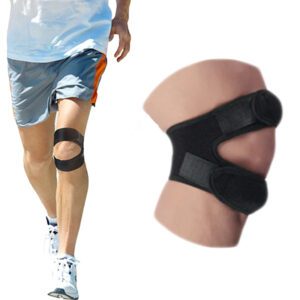
Wrap-around braces with adjustable straps let you customize tightness and target specific areas — like a patellar strap that sits below the kneecap to redirect tendon pressure. These work well for tendonitis, mild instability, and conditions where your needs change throughout the day.
Sleeve-style braces slip on like a sock. Simple, lightweight, no straps to fuss with. Best for low-grade compression needs and all-day comfort — but limited support for serious injuries.
What Features Actually Matter
Material: Neoprene retains heat and lasts for years. Breathable mesh panels prevent the swampy feeling during summer runs. Moisture-wicking fabrics matter if you sweat heavily.
Adjustability: Velcro straps let you loosen the brace as swelling decreases during recovery. Fixed-size sleeves require precise sizing upfront.
Breathability: Look for perforated panels or moisture-wicking lining. A brace you refuse to wear because it feels like a sauna helps nobody.
Sizing precision: Measure your joint circumference, not your pants size. Most brace returns happen because someone ordered medium based on gut feeling instead of a tape measure.
Price Tiers: What You Get at Each Level
Budget ($15–$30): Basic neoprene sleeves and simple wraps. Fine for mild support and short-term use. Materials wear faster, stitching loosens after repeated washing.
Mid-range ($30–$60): Better materials, reinforced stitching, targeted pressure zones. The sweet spot for most recreational athletes. Durability improves dramatically here.
Premium ($60+): Hinged mechanisms, medical-grade materials, sport-specific engineering. Worth it for serious injuries, competitive athletes, or anyone who has already blown through two cheaper braces.
When to See a Doctor First
A brace masks pain; it does not heal underlying damage. See a doctor before buying if you experienced:
Inability to bear weight (possible fracture)
Numbness or tingling (nerve involvement)
Pain that worsens after two weeks of rest
Braces support recovery. They do not replace diagnosis.
Best Knee Braces for Sports Injuries
Now that you understand how to evaluate braces generally, let us apply that framework to the most vulnerable joint in sports. Knee injuries end more athletic seasons than any other joint problem. Whether you felt the dreaded pop of an ACL tear or the gradual ache of runner’s knee that will not quit, the right brace becomes your bridge back to movement.
ACL and Ligament Injuries: Hinged Braces
After an ACL, MCL, or LCL injury, your knee needs more than compression — it needs mechanical prevention of the sideways twisting that caused the damage. Hinged knee braces with metal or carbon-fiber stays on both sides stop that dangerous varus and valgus motion.
Look for braces with an open patella (hole over the kneecap) to reduce pressure and a frame that does not dig into your thigh when you bend. Athletes returning to cutting sports — basketball, soccer, football — need this level of protection. Expect to spend $50–$150 for a brace that actually performs under load.
Recovery timeline: post-surgical patients typically wear hinged braces for 6–12 weeks during rehab, then transition to lighter support as strength returns.
Runner’s Knee and Patellar Tracking Issues
If your pain sits around or behind the kneecap — especially when descending stairs or after mileage increases — you likely have patellofemoral pain syndrome. The solution here is not massive hinges; it is targeted pressure and tracking correction.
A patellar strap wraps below the kneecap and applies pressure to the patellar tendon. This redirects force, reduces tendon stress, and often eliminates pain within days. Cost: $10–$25. Simple, effective, barely noticeable under running shorts.
For broader support, a compression knee sleeve with patellar stabilization — a silicone ring around the kneecap — keeps the kneecap centered in its groove during movement. This prevents the lateral drift that irritates the joint.
General Knee Instability
Some knees feel loose without a specific diagnosis. Maybe you twisted an ankle years ago and your gait changed, or muscle imbalance lets the knee wobble on uneven ground. A wrap-around knee brace with adjustable straps lets you dial in support exactly where you need it — tighter medially, looser laterally, whatever your specific instability demands.
Sport-Specific Guidance
Running: Compression sleeves work best. They add warmth and proprioception without restricting stride. Avoid bulky hinged braces unless rehabbing a specific injury — the weight changes your gait.
Basketball and soccer: Hinged braces for post-injury return. The cutting, pivoting, and jumping demand lateral stability that sleeves cannot provide.
Weightlifting: Compression sleeves for squatting and Olympic lifting. They keep joints warm and provide elastic rebound at the bottom of a squat. Powerlifters often prefer tight 7mm neoprene sleeves for maximum support.
Hiking and trail running: Wrap-around braces with reinforced patellar straps handle uneven terrain where a simple sleeve might shift or slide.
Explore BaronActive’s complete knee support collection — from recovery sleeves to competition-grade hinged braces designed for athletes who refuse to quit.
Best Ankle Braces for Sprains and Support
Ankle sprains account for roughly 15% of all sports injuries. If you have ever rolled your ankle on a hidden rock or landed on someone’s foot after a rebound, you know the pain — and the fear that it will happen again the moment you return to play.
Sprain Severity Determines Brace Type
Not all ankle sprains need the same protection. Match your brace to your injury grade:
Grade I (mild stretch): A compression sleeve or light wrap provides enough support. You can still bear weight, and the main goal is reducing swelling and reminding your ankle to stay stable.
Grade II (partial tear): A lace-up brace or semi-rigid stirrup gives the stability that stretched ligaments cannot provide. These braces limit the inversion and eversion movements that re-sprain a healing ankle.
Grade III (complete tear): A rigid stirrup brace or walking boot immobilizes the joint completely. This level requires medical supervision — do not self-diagnose a Grade III sprain.
Lace-Up vs. Stirrup vs. Sleeve
Lace-up ankle braces fit like a shoe that goes over your sock. They offer customizable tightness and solid support for moderate sprains. Basketball players favor these because they fit inside standard athletic shoes without adding bulk.
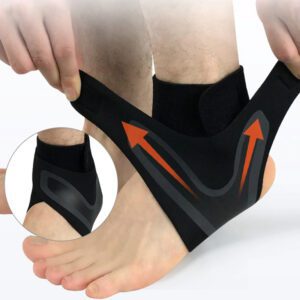
Stirrup braces have rigid plastic supports on both sides of the ankle connected by a heel strap. They excel at preventing the dangerous rolling motion that causes sprains. Bulkier than lace-ups, but unmatched for lateral stability.
Compression ankle sleeves slide on like a thick sock. Best for prevention, mild sprains, and post-recovery confidence. They improve proprioception — your brain’s sense of where your ankle is in space — which prevents re-injury before it happens.
Week 3–4: Light activity in a lace-up or stirrup brace. Straight-line running if pain-free. No cutting or jumping.
Week 5–6: Sport-specific drills with brace. Lateral movements tested gradually.
Week 7+: Full return to play. Many athletes continue wearing a compression sleeve or light lace-up for weeks 7–12 as insurance against re-injury.
Sport-Specific Recommendations
Basketball: Lace-up braces with figure-eight straps. The jumping and landing demand maximum inversion protection. Many leagues at the high school and college level now require ankle braces for all players — the data on injury reduction is that strong.
Soccer: Low-profile stirrup braces that fit inside cleats. Look for thin-shell designs that do not affect ball feel.
Running: Compression sleeves for prevention. If recovering from a sprain, a lightweight lace-up that does not alter stride mechanics.
Hiking and trail running: Stirrup braces with aggressive tread contact. Uneven terrain hides re-injury risks under every leaf.
Shop ankle support at BaronActive — lace-up, stirrup, and compression options for every sport and recovery stage.
Best Shoulder Braces for Rotator Cuff and Instability
Shoulder injuries frustrate like no other joint problem. Your knee swells; you rest it. Your ankle rolls; you ice it. But a shoulder? You use it to reach cabinets, put on a seatbelt, and roll over in sleep. Rest feels impossible, and returning to sport too early risks re-injury.
Rotator Cuff Strains and Impingement
The rotator cuff is not one muscle — it is four tendons that stabilize the shoulder joint through its entire range of motion. When one or more of those tendons inflame or tear partially, every overhead motion becomes a gamble.
For rotator cuff strains and impingement, compression braces with adjustable straps work best. These braces wrap around the upper arm and shoulder, providing warmth and gentle stabilization without immobilizing the joint. Look for breathable fabrics that handle sweat during activity.
Some designs include a chest strap that limits external rotation — the motion that pinches inflamed tendons against the acromion bone. This is not weakness; it is protection while healing.
Shoulder Instability and Dislocation Risk
If your shoulder has dislocated before, or if it feels like it might “slip out” during certain movements, you need a stabilization brace that restricts the positions most likely to cause dislocation.
These braces typically limit external rotation and abduction (raising your arm out to the side). They feel restrictive at first — because they are. The restriction is the point. Athletes returning to contact sports after dislocation should not skip this level of protection.
Immobilization vs. Compression vs. Posture
Immobilization braces — the sling-type devices — are for acute injuries and post-surgical recovery. They keep the arm at the side, preventing any motion that could tear fresh stitches or newly repaired tendons. Not for sports use.
Compression braces support during light activity and everyday life. They warm the joint, improve circulation, and provide proprioceptive feedback. Best for mild strains and chronic overuse.
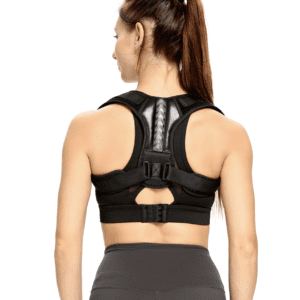
Posture-correcting braces pull the shoulders back into neutral alignment. Forward-rounded shoulders — common in desk workers and weightlifters — compress the subacromial space and worsen impingement. These braces do not support the shoulder directly; they fix the position problem that caused the pain.
Recovery Timeline: The Hard Truth
Rotator cuff injuries heal slowly. Tendons receive less blood flow than muscles, which means slower tissue repair.
Mild strain: 2–4 weeks with rest and targeted support. Moderate strain: 6–12 weeks with progressive loading. Severe tear or surgery: 4–6 months minimum. Some athletes never regain full overhead strength.
A brace helps during the return-to-activity phase. It does not accelerate biology.
When Bracing Is Not Enough
See a sports medicine doctor or orthopedist if you experience:
Visible deformity or asymmetry
Weakness that does not improve after two weeks
Repeated dislocations (these often require surgical stabilization)
Braces manage symptoms. They do not repair torn tendons or reshape damaged joint structures.
BaronActive’s shoulder support collection includes compression wraps, stabilization braces, and posture-correcting designs to match your specific injury and recovery phase.
Best Elbow and Wrist Braces for Athletic Use
Elbow and wrist injuries receive less attention than knee and ankle problems, but they end careers in golf, tennis, weightlifting, and any sport requiring grip strength. The right brace at the right time keeps you training while the tissue heals underneath.
Tennis Elbow vs. Golfer’s Elbow
Despite the names, both conditions affect athletes across multiple sports — not just racket players. The distinction matters because the pressure point and brace design differ.
Tennis elbow (lateral epicondylitis) affects the outer elbow. The extensor tendons that run along the top of your forearm attach here. Repetitive wrist extension — backhand swings, typing, lifting — irritates this junction.
For tennis elbow, a counterforce strap wraps around the forearm below the elbow. This redistributes force away from the tendon insertion, reducing strain by up to 30%. The brace should sit about an inch below the elbow crease, not directly on the painful spot.
Golfer’s elbow (medial epicondylitis) affects the inner elbow. The flexor tendons — used in gripping, throwing, and wrist flexion — attach here. Pitchers, climbers, and weightlifters feel this more than golfers.
A golfer’s elbow brace applies pressure to the medial forearm, not the lateral. Some braces are reversible; others are side-specific. Check the packaging or product description carefully.
Wrist Instability During Lifting
Heavy pressing — bench press, overhead press, push-ups — compresses the wrist joint. If you have hypermobile wrists or previous sprains, this compression causes pain that limits your training.
Wrist wraps stiffen the joint by limiting extension. They do not immobilize; they provide a rigid “column” for the weight to travel through. Powerlifters and strongman competitors use these for maximum loads.
Wrist braces with splints immobilize partially. These suit acute injuries where any movement hurts. Not ideal for training, but necessary during the early healing phase.
Sleeve vs. Strap vs. Wrap
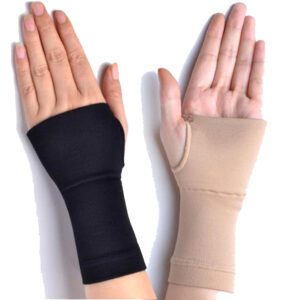
Compression elbow sleeves improve warmth and circulation. Best for chronic tendonitis, arthritis, and prevention. They slip on easily and stay in place during activity.
Counterforce straps target specific tendon insertions. Best for diagnosed tennis or golfer’s elbow. Require precise placement; ineffective if positioned incorrectly.
Rigid hinged braces restrict elbow flexion and extension. Used post-surgery or during severe acute injuries. Too restrictive for most athletic activity.
Wrist wraps provide adjustable compression and stiffness. Best for lifting and strength sports. Not designed for impact protection.
When to Rest vs. Brace
If the pain is sharp, localized, and started recently — rest first, brace second. Pushing through acute tendonitis with a brace often prolongs recovery by masking the pain signal your body uses to tell you to stop.
If the pain is dull, chronic, and warms up during activity — bracing makes sense. This pattern suggests a manageable overuse condition, not an acute tear.
Browse BaronActive’s elbow and wrist support — targeted straps, compression sleeves, and lifting wraps for every upper-body activity.
Compression Sleeves vs. Braces: Which Do You Need?
By now, you have seen both compression sleeves and structural braces recommended throughout this guide. The confusion is intentional — because both tools matter, but for different problems. Choosing the wrong one either leaves you unprotected or restricts movement unnecessarily.
When Compression Alone Is Sufficient
Compression sleeves provide uniform pressure around a joint or muscle. They excel at:
Reducing swelling by encouraging venous return — blood and lymphatic fluid flow back toward the heart instead of pooling in the joint
Improving proprioception — your nervous system’s awareness of where the joint sits in space. Better proprioception means fewer missteps and awkward landings
Keeping tissue warm during activity, which improves elasticity and reduces re-injury risk
Preventing minor injuries in healthy joints during demanding activity
If your joint feels stable but achy, if you are managing chronic tendonitis, or if you want preventive support during long training sessions — compression is your answer.
When You Need Structural Support
Braces with hinges, stays, or rigid frames provide mechanical blocking of dangerous joint positions. They do what compression cannot: they stop the knee from buckling sideways, the ankle from rolling, the shoulder from slipping.
Choose structural bracing when:
Your joint feels unstable or gives way during activity
You are returning to sport after surgery and need protection
A doctor or physical therapist specifically recommended a hinged or rigid brace
The Layering Strategy: Can You Wear Both?
Yes — and many athletes should.
Compression sleeves worn UNDER a hinged brace serve two purposes. First, they manage swelling and keep the skin dry, preventing the brace from causing irritation during long practices. Second, they provide proprioceptive feedback even in areas the brace does not cover.
The combination looks like this: compression sleeve directly on skin, brace over the top. The sleeve handles circulation and warmth; the brace handles mechanical protection.
The Danger of Wearing Only Compression for a Serious Injury
This is the mistake that turns a Grade II ankle sprain into a chronic instability problem. Compression feels good — warm, supportive, snug. But it does not stop the inversion motion that tears ligaments.
If you have a history of giving way, if your knee buckles on stairs, if your shoulder slips during reaching — compression alone is insufficient. You need the mechanical protection of a brace.
How to Tell Which You Need: The 30-Second Test
Stand on the affected leg. Close your eyes. Shift your weight. If you feel confident and stable, compression suffices. If you wobble, catch yourself, or feel unsafe — you need structural support.
Your nervous system knows the truth even when marketing copy claims otherwise.
BaronActive carries both compression sleeves and structural braces — so you can choose the right tool for your specific joint and injury stage, or layer them for maximum protection.
Sport-Specific Brace Recommendations
A basketball player and a marathon runner do not need the same knee support. The forces, movements, and risks differ dramatically by sport, and the brace industry designs accordingly. Here is what to wear — and what to skip — for your specific activity.
Running
Running is linear and repetitive. The risks are overuse injuries — runner’s knee, IT band syndrome, plantar fasciitis — not the traumatic collisions that dominate court sports.
Knee: Compression sleeves with patellar stabilization for anterior knee pain. IT band straps for lateral knee pain that worsens after mile three.
Ankle: Compression sleeves for prevention, especially if you have a history of sprains. Avoid bulky stirrup braces — they alter stride mechanics and create compensations upstream.
What to skip: Hinged knee braces. The weight and bulk change your gait cycle. Save these for post-injury return, not everyday training.
Basketball
Basketball demands cutting, pivoting, jumping, and landing — often on another player’s foot. Ankle and knee injuries dominate the sport, and the data on brace prevention is compelling.
Ankle: Lace-up braces are non-negotiable for anyone with a previous sprain. Studies show they reduce re-injury rates by up to 50%. High-top shoes help, but they do not replace a brace.
Knee: Hinged braces for post-ACL return. Compression sleeves with patellar straps for jumper’s knee and general overuse.
What to skip: Minimalist ankle sleeves for players with instability history. The confidence to cut hard is worth the bulk of a lace-up.
Weightlifting
Olympic lifting and powerlifting compress joints under maximal loads. The goal is not preventing side-to-side motion — it is creating a rigid, warm joint that handles vertical force.
Knee: Thick 7mm neoprene sleeves for squatting. They provide elastic rebound at the bottom of the squat and keep the joint warm between sets.
Wrist: Wrist wraps for pressing movements. They limit extension under load, preventing the hypermobility that causes pain during heavy bench and overhead work.
Elbow: Compression sleeves for tendonitis during high-volume pressing and pulling.
What to skip: Hinged knee braces. They restrict the deep flexion required for Olympic lifting and add unnecessary bulk under a barbell.
Soccer
Soccer combines long-distance running with sudden cuts, kicks, and contact. Ankle and knee injuries are common, but ball feel matters — bulky braces affect touch.
Ankle: Low-profile stirrup braces that fit inside cleats. Look for thin-shell designs that do not interfere with ball control.
Knee: Compression sleeves for general support. Hinged braces only for post-injury return to play.
Shin: Do not forget that shin guards and ankle braces need to coexist. Some braces integrate with shin guard sleeves; others require separate placement.
CrossFit and HIIT
The varied nature of CrossFit means your brace needs change by the minute — from running to Olympic lifting to gymnastics. Versatility matters.
Knee: Compression sleeves that stay in place during burpees, box jumps, and squats. Look for silicone grip strips at the top edge to prevent sliding.
Wrist: Wraps for heavy lifting portions, removed for bodyweight movements. Quick on-and-off matters in timed workouts.
What to skip: Permanent hinged braces. The constant switching between movement types makes rigid braces impractical for most WODs.
The Universal Truth
No brace prevents all injuries. The best brace for your sport is the one you will actually wear — comfortable enough for full practice, protective enough for your specific risks, and appropriate enough that it does not create new problems by altering mechanics.
Common Mistakes When Buying Sports Braces
Buying the wrong brace wastes money and delays healing. After reviewing thousands of athlete purchases and returns, the same errors appear repeatedly. Avoid these five mistakes, and you will choose correctly the first time.
Mistake 1: Buying the Cheapest Option
A $12 neoprene sleeve from a big-box store feels like a bargain — until the stitching unravels in week three, the elastic loses tension, and you are back where you started. Budget braces use thinner materials, weaker stitching, and generic sizing that fits nobody well.
You do not need premium prices for basic support, but the $25–$40 range hits the durability threshold. Below that, you are buying false confidence wrapped in cheap fabric.
Mistake 2: Guessing Your Size
Most brace returns happen because of sizing errors. “Medium” is not a body type — it is a measurement. Measure the circumference of your joint at its widest point using a flexible tape measure. Check the brand’s sizing chart before ordering. If you fall between sizes, size down for compression sleeves (they stretch) and size up for rigid braces (they do not).
A brace that slides down your calf or pinches your thigh ends up in a drawer, not on your body.
Mistake 3: Wearing a Brace Instead of Fixing the Problem
Braces support healing; they do not cause it. If your knee pain comes from weak hips and poor ankle mobility, a knee brace masks the symptom while the root cause worsens. Use braces during the return-to-activity phase, but pair them with physical therapy, strength work, and mobility drills that address why the injury happened.
Athletes who brace forever without rehabbing the underlying issue often develop compensatory injuries — the ankle feels fine, but now the hip hurts.
Mistake 4: Ignoring Comfort
The best brace in the world helps zero percent if you refuse to wear it. Scratchy edges, heat-trapping materials, and straps that dig into soft tissue create excuses to leave the brace at home. Read reviews for comfort complaints before buying. Look for moisture-wicking linings, padded straps, and breathable mesh panels.
Compliance matters more than specifications. A mid-grade brace you wear beats a premium brace you hate.
Mistake 5: Not Breaking It In Before Game Day
Never wear a new brace for the first time in competition. Practice with it first — jog, cut, jump, and land to see if it shifts, chafes, or restricts motion you need. Wash it once before heavy use to soften stiff materials and check for manufacturing defects.
The middle of a championship game is the wrong time to discover your brace digs into your Achilles.
Conclusion: Your Recovery Roadmap Starts Here
Sports injuries interrupt training, threaten seasons, and test your patience. But the right brace — chosen for your specific joint, injury, and sport — becomes a bridge between where you are now and where you want to be.
You now have a framework, not just a list. You know that knee injuries demand different support depending on whether you tore a ligament or irritated a tendon. You understand that ankle sprains require different braces for different severity grades. You have seen how shoulder braces range from light compression to rigid immobilization, and why choosing the wrong tier wastes money and delays healing.
The pattern across every joint and every sport is the same: match the brace to the problem, not the price tag to your budget. Compression for mild issues and prevention. Structural support for instability and post-injury return. Layer them when your situation demands both.
The five mistakes section exists because too many athletes buy generic, size poorly, mask problems instead of fixing them, ignore comfort, and debut new equipment on game day. Avoid those errors, and you are already ahead of most competitors.
Your next step is simple: identify your primary joint concern, reference the section that covers it, measure your joint circumference with a tape measure, and choose a brace that matches your injury severity and sport demands. Then break it in during practice before trusting it in competition.
Recovery is not passive. It is a series of intentional choices — rest when needed, strengthen the surrounding muscles, address movement dysfunctions, and support the healing tissue with the right equipment at the right time.
Explore BaronActive’s complete collection of sport-specific braces and compression sleeves — designed for athletes who refuse to let injury define their limits. From recovery to return to performance, find the support your body needs to get back in the game.
Medical disclaimer: The information in this article is for educational purposes only and does not constitute medical advice. Consult a qualified healthcare provider for diagnosis and treatment of sports injuries. Discontinue use of any brace if pain increases, numbness develops, or symptoms worsen.