






You take off your shoes at the end of the day and pause.
Your socks have left deep marks around your ankles. Your feet look puffy. Your lower legs feel heavy, almost like they belong to someone else. Maybe you wiggle your toes, rub your calves, and tell yourself, “I guess this is just getting older.”
But a quiet worry lingers:
Is this normal? Is it my circulation? Is there something I should be doing before it gets worse?
If you’ve noticed swelling in your legs and feet—especially in the evenings, after long days of standing, sitting, or traveling—you are far from alone. Mild lower-leg swelling is common, and in many cases, it reflects how gravity, blood flow, and daily habits interact in your body. At the same time, it’s also a signal worth listening to. It’s your body’s way of saying, “I’m working harder down here than I should.”
This article is meant to feel like sitting down with a knowledgeable, calm clinician who explains what’s going on in your legs in plain language—and then walks you through what can genuinely help, including how compression socks fit into the bigger picture of circulation and comfort.
Why Legs and Feet Swell
To understand why your legs and feet swell, it helps to picture your circulation as a two-way highway.
On one side, your heart pumps oxygen-rich blood out through your arteries to every corner of your body. On the way back, your veins carry used blood—now lower in oxygen—back toward the heart. At the same time, a parallel system called the lymphatic system helps drain extra fluid and waste products from your tissues.
Under normal conditions, fluid leaves and returns in a balanced way. But when that balance tilts, extra fluid can collect in the soft tissues of your lower legs and feet. This is called edema. The Cleveland Clinic describes edema as excess fluid trapped in your body’s tissues, often noticeable in the legs, ankles, and feet. MedlinePlus notes that swelling in these areas is especially common because of the effect of gravity.
Gravity’s daily tug on your legs
Imagine a clear tube filled with water standing upright. The water naturally settles toward the bottom. Now imagine your veins as flexible tubes running up your legs. When you sit or stand still for long periods, gravity tends to pull blood and fluid downward, toward your feet and ankles.
Your body has smart design features to fight that downward pull:
- Small one-way valves inside your leg veins that are supposed to keep blood moving upward toward the heart.
- Your calf muscles, which act like a natural pump. Every time you walk and your calf muscles contract, they squeeze the veins and help push blood upward.
If you stay still—like at a desk, behind a counter, or in a car or airplane seat—the calf pump is much less active. Blood and fluid move more slowly, and the pressure in the lower veins rises. Over hours, that extra pressure encourages fluid to leak out of the blood vessels into the surrounding tissues, leading to puffiness and swelling in your legs and feet.
It’s why a day on your feet in a hot store, or a long day at your desk, or a cross-country flight can all end with the same feeling: tight shoes, sock marks, and heavy legs.
The role of your veins and lymph system
Your veins are not just passive tubes. They’re dynamic, responsive structures. When the valves inside them are working well and the muscle pump is active, blood returns efficiently to your heart. But if those valves are weakened or stretched—something that becomes more common with age, weight gain, pregnancy, or a strong family history—blood can pool in the lower legs. This is often part of what leads to varicose veins and chronic swelling.
Alongside the veins, your lymph vessels collect excess fluid and proteins that leak out into your tissues and return them to the bloodstream. If the lymph system can’t keep up, or if it’s damaged (such as after surgery, cancer treatment, or infection), fluid can build up and cause more persistent swelling, known as lymphedema.
In mild, day-to-day swelling, you’re usually feeling the combined effect of:
- Gravity pulling fluid downward.
- Slower movement of blood in your lower legs (especially when you’re not walking much).
- Temporary fluid shifts related to heat, hormones, salt intake, or a long day upright.
In more serious or chronic situations, underlying vein problems, lymphatic issues, or conditions affecting your heart, kidneys, or liver can contribute significantly.
When Swelling Is Common—and When It’s Not
It’s important to draw a line between swelling that is common and often manageable with lifestyle changes and support, and swelling that might be a sign of something that deserves medical attention.
Common, everyday swelling
Many people experience noticeable swelling in their lower legs and feet in these situations:
- After standing for many hours, such as in retail, food service, teaching, or healthcare.
- After sitting for long stretches, like office jobs, driving, or flights.
- In hot weather, which causes blood vessels to widen, making it easier for fluid to seep into tissues.
- In the evening, particularly if you’ve been less active or on your feet a lot during the day.
- During pregnancy, because of hormonal changes, increased blood volume, and pressure from the growing uterus on pelvic veins.
For many, this swelling:
- Is mild to moderate.
- Improves overnight or when you elevate your legs.
- Comes with feelings of heaviness, tightness, or tiredness, but not severe pain.
Research on travelers, for example, has shown that wearing compression stockings during flights can reduce leg swelling and discomfort caused by prolonged sitting. Studies of people wearing compression stockings during the day also show reductions in lower-leg swelling even over short periods.
When swelling deserves prompt medical attention
Most of the time, leg and foot swelling is not an emergency. However, it can sometimes point to more serious issues. MedlinePlus and the Cleveland Clinic both emphasize that sudden, severe, or unusual swelling—especially when it’s not clearly linked to a long day on your feet—should be evaluated.
You should contact a healthcare professional promptly (or seek urgent care) if:
- Swelling appears suddenly in just one leg, especially if it’s accompanied by pain, warmth, or redness, which can be a sign of a blood clot.
- You notice new swelling and also feel short of breath, have chest pain, or feel unwell, which can be related to heart or lung problems.
- The skin is very red, hot, or painful, which could suggest an infection like cellulitis.
- Swelling is persistent, worsening over time, or interfering with your usual activities despite reasonable self-care.
In addition, if you have known heart, kidney, or liver disease, and you notice your leg swelling getting worse, that’s a reason to check in with your clinician.
The goal is not to alarm you, but to help you distinguish between:
“I’ve had a long day and my legs need some support”
and
“This is new, severe, or different enough that I should get it checked.”
If you are unsure which category you fall into, it’s always reasonable to ask a healthcare provider.
How Compression Socks Help Reduce Swelling
When you hear “compression socks,” you might picture stiff, hospital-issued stockings that are hard to put on and uncomfortable to wear. Modern compression socks—especially those designed for daily life—are very different.
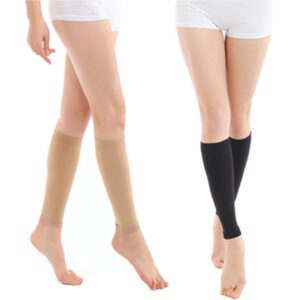
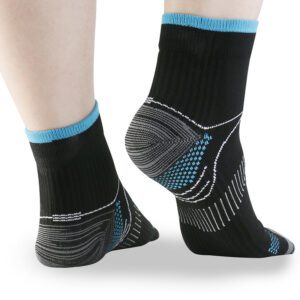
At their core, compression socks are engineered to gently support your veins and the fluid systems in your lower legs so that gravity doesn’t get the final say. Harvard Health describes compression socks as garments that squeeze your legs and blood vessels to promote better circulation, reduce swelling, and relieve leg discomfort. The Cleveland Clinic notes that lower-leg compression is an effective way to improve blood flow and reduce pain and swelling associated with poor circulation.
Graduated compression: help that starts at the ankle
The key concept is “graduated compression.” Instead of applying the same pressure everywhere, a well-designed compression sock gives the most squeeze at the ankle and gradually less as it moves up the leg.
This gentle pressure gradient:
- Narrows the diameter of the veins slightly, so the valves inside them can close more effectively and push blood upward.
- Combines with your calf muscles to act almost like an extra layer of muscle, helping to squeeze venous blood up toward the heart.
- Discourages blood and fluid from pooling in the lower leg and foot, making it harder for fluid to leak out into the tissues.
One insurer’s clinical policy on compression stockings explains that this graduated pressure helps blood flow toward the heart instead of backward or downward, reduces venous pressure, and aids both venous return and lymphatic drainage. Over time, this can help ease venous hypertension (high pressure inside leg veins), reduce swelling, and support better tissue health.
People often report that with consistent wear, their legs feel:
- Less swollen and tight at the end of the day.
- Less achy or heavy when they’ve been standing or sitting for hours.
- More energized, especially if they’re on their feet a lot for work.
Studies of compression stockings in various settings—including everyday use and long flights—support these observations, showing reductions in ankle and leg swelling, improved comfort, and in some cases less pain.
Why compression can feel so relieving
If you’ve ever pressed gently on a swollen ankle and felt a sense of relief, you already know part of why compression helps. Compression socks apply that supportive pressure in a much more controlled, consistent way than your hands ever could.
They essentially:
- Encourage fluid that’s trying to collect in your ankles and feet to move back into the circulation.
- Support vein walls so they’re less stretched, which can reduce that dull, dragging discomfort.
- Help your natural muscle pumps work more efficiently, especially during walking or gentle movement.
Physicians at major centers describe compression stockings as a simple, noninvasive way to support vein function, improve symptoms in conditions like varicose veins and lymphedema, and reduce swelling.
What Makes a Good Compression Sock for Swelling
Not all compression socks feel the same—or work the same. If you’ve tried a pair that was scratchy, stiff, or left your legs feeling worse, you already know how quickly a person can give up on them.
A good compression sock for swelling in your legs and feet needs to check several boxes at once: effective compression, long-wear comfort, breathable materials, and a fit that respects your daily life.
Compression level: enough support, still comfortable
Compression is often measured in millimeters of mercury (mmHg). For general swelling, tired legs, and everyday support, many people do well with mild to moderate graduated compression—often in the 15–20 mmHg or 20–30 mmHg range, depending on individual needs and medical advice.
Authoritative sources like WebMD and Cleveland Clinic note that compression stockings can improve blood flow and reduce leg pain and swelling, and higher-pressure medical-grade stockings are usually reserved for specific conditions and prescribed by a doctor.
For many readers of BaronActive—people dealing with long days on their feet, evening swelling, or mild circulation concerns—the “sweet spot” is usually mild to moderate daily compression that:
- You can actually put on without a struggle.
- You can comfortably wear for many hours.
- You don’t feel desperate to rip off halfway through your shift or flight.
Comfort and breathability for real life
Because swelling often builds gradually throughout the day, the socks that actually help you are the ones you can keep on. That means:
- Fabrics that are soft, smooth against the skin, and not overly thick.
- Breathable, moisture-wicking materials so your feet don’t feel damp or overheated.
- Seams that don’t dig into your toes or rub at your heel.
- A cuff at the top that holds the sock in place without acting like a tourniquet.
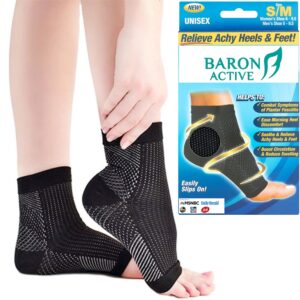
When compression socks are designed thoughtfully—like the daily-wear styles offered by BaronActive—they feel more like supportive athletic socks than medical devices. This kind of everyday comfort matters. It’s what makes a person say, “Okay, I can actually live in these,” rather than leaving them in a drawer.
Fit and durability: the quiet essentials
Effective compression depends heavily on fit. The pressure levels printed on the package only apply if the sock hugs your leg in the right way. That’s why better-quality brands emphasize:
- Sizing based on calf and sometimes ankle circumference, not just shoe size.
- Enough stretch to accommodate mild changes in leg size during the day without cutting in.
- Durable stitching that holds up to repeated wear and washing without the compression “fading” too quickly.
When a sock keeps its shape and targeted compression after many wears, it stops being an experiment and becomes part of your daily health routine. BaronActive’s focus on everyday compression—rather than purely clinical or fashion-first design—means their socks are built with this kind of repeated, practical use in mind.
Why Some Compression Socks Don’t Work Well
If you’ve tried compression socks and thought, “These don’t help at all,” or “They actually make my legs feel worse,” there are several possible reasons. The problem is often not the idea of compression, but how it’s being delivered.
The wrong size or fit
If a sock is too tight, you might notice:
- Deep marks at the top band.
- Numbness, tingling, or a “pins and needles” sensation.
- Increased discomfort, especially around the top of the sock.
I
f it’s too loose, you may not get enough compression at the ankle to make a meaningful difference. The pressure falls below the therapeutic range, and the sock becomes more like a standard knee-high.
Since graduated compression depends on a specific pressure profile from ankle upward, poor sizing can mean you either get:
- Uneven compression that concentrates in the wrong area, or
- Almost no real support at all.
Careful measuring and using a brand’s specific size chart makes a noticeable difference. BaronActive designs its compression socks with clear, accessible sizing guidance so more people land in that “just right” zone where support feels snug but not restrictive.
Poor material quality and uneven compression
Lower-quality socks may:
- Have inconsistent weave or knit patterns that produce “hot spots” of pressure.
- Lose elasticity quickly, so the compression diminishes after a few washes.
- Use fabrics that trap heat and moisture, making your legs sweat and itch.
When the compression isn’t truly graduated—more squeeze at the ankle, less as you go up—the sock can behave more like a band than a supportive garment. This can leave your legs feeling strangled in one area and unsupported in another, discouraging regular use.
Over time, inconsistent compression can also make you doubt the whole concept: “Compression socks don’t work for me.” Often, it’s that these compression socks weren’t engineered or built to the standard your legs actually need.
Discomfort leads to inconsistent use
Even a well-made sock won’t help if you can’t stand to wear it. When people find compression uncomfortable, they often:
- Only wear them for a couple of hours instead of all day.
- Take them off as soon as they get home.
- Avoid them on warmer days or more active days.
Yet we know from clinical research that the benefits of compression—less swelling, better leg comfort, improved venous function—depend on consistent use. Just like wearing supportive footwear, you feel the difference because you stick with it.
That’s why BaronActive designs focus on daily comfort: breathable fabrics, carefully constructed cuffs, and gentle but effective compression that encourages long wear. The more naturally a sock fits into your life, the more your legs and feet can benefit.
How BaronActive Compression Socks Fit Into Your Day
BaronActive exists at the intersection of education, movement, and practical support for your legs and feet. The goal is not to hand you a product and walk away; it’s to help you understand what your body is telling you—and then provide tools that actually make a difference.
If you’ve been dealing with:
- Swollen ankles when you kick off your shoes.
- Heavy, dragging legs after a shift.
- Tired feet at the end of a travel day.
BaronActive’s compression socks are designed as daily companions, not occasional medical gear. They bring together the key principles that research and vascular specialists emphasize:
- Graduated compression that supports venous return and helps reduce pooling of blood and fluid.
- Comfortable, breathable fabrics that can realistically be worn for long workdays or travel.
- Sizing that respects different calf and leg shapes so you actually get the compression you’re promised.
On baronactive.com, you’ll find compression socks specifically intended for all-day wear—whether you’re standing on hard floors, sitting at a computer, walking the warehouse, or navigating airports. When you pair these socks with simple circulation-friendly habits (like those we’ll discuss next), you give your legs a better chance to feel lighter, less swollen, and more “yours” again by the end of the day.
As you explore BaronActive’s collection, look for styles recommended for swelling, tired legs, prolonged standing, or travel. These are built with the everyday realities of swelling in mind.
Supporting Habits to Reduce Swelling in Legs and Feet
Compression socks can do a lot, but they work best as part of a broader approach to supporting your circulation. Think of them as a key player on a team that includes movement, positioning, footwear, and hydration.
Move your ankles and calves throughout the day
Your calf muscles are sometimes called your “second heart” for your legs because of how important they are for pumping blood upward. When you’re on a long call, at a register, or on a plane, even small movements matter:
- Flex and point your feet under the desk or in your seat.
- Roll your ankles in circles several times every hour.
- If you stand a lot, shift your weight, rise onto your toes, or march in place.
These tiny motions contract your calf muscles, squeezing your veins and helping blood move up toward your heart. Combined with compression socks, they create a helpful “squeeze and guide” system that works with your body’s own circulation.
BaronActive’s blog often covers topics like standing all day, leg fatigue, and simple movement habits. As you browse their articles, you’ll find practical routines you can sprinkle into your workday without needing a gym or special equipment.
Elevate your legs when you can
When you elevate your legs above heart level, you give gravity a chance to work with you instead of against you. This positioning:
- Helps venous blood flow back toward the heart more easily.
- Encourages pooled fluid to shift out of the ankles and lower legs.
Even 15–20 minutes in the evening with your feet up on a pillow or resting against the wall can make a noticeable difference for some people. If your day ends with a ritual—watching a show, reading, or scrolling through your phone—consider doing it with your legs supported.
Compression socks and leg elevation complement each other: the socks help limit fluid buildup during the day, and elevation helps your body clear what’s left more efficiently at night.
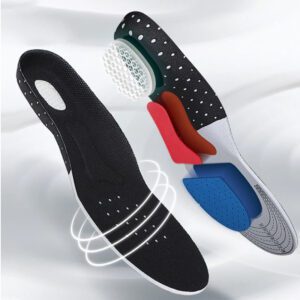
Wear supportive footwear and consider insoles
Your feet are the base of everything. If you’re in unsupportive shoes on hard floors all day, the strain travels up into your ankles, calves, and knees. Over time, this can contribute to fatigue, altered gait, and even changes in how fluid distributes in your lower legs.
Supportive footwear and insoles help by:
- Absorbing shock from every step, so your tissues take less of the load.
- Improving alignment from the foot upward, which can help your muscles pump more effectively and reduce strain.
- Making it easier to stay active, which in turn keeps circulation moving.
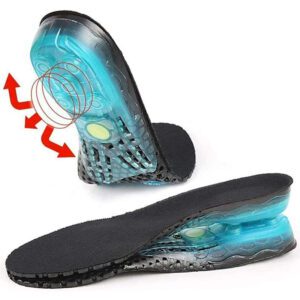
BaronActive offers insoles and supportive products designed precisely for people who stand or walk for long periods. Pairing these with compression socks can be especially helpful if your swelling comes with foot pain, arch fatigue, or aching heels.
Stay hydrated and be mindful of salt
It may seem counterintuitive, but gentle, consistent hydration helps your body regulate fluid balance. When you’re dehydrated, your body sometimes holds on to fluid more stubbornly as a protective response. Meanwhile, high salt intake can contribute to fluid retention in susceptible people.
Moderate, steady water intake throughout the day—not chugging large amounts all at once—can support your circulation and kidneys as they manage fluid levels. If you suspect salt is playing a role in your swelling, adjusting intake and watching for changes is a reasonable experiment to discuss with your clinician.
When Compression Socks Are Especially Helpful
Many people first turn to compression socks because of a single scenario—maybe a long flight, a demanding retail job, or pregnancy. But once they feel the difference, they often realize how many parts of their life could feel better with consistent support.
Authoritative medical and vascular sources highlight compression therapy for:
- Varicose veins and chronic venous insufficiency, to reduce swelling and leg fatigue.
- Long periods of immobility, such as travel or sedentary office work.
- Certain cases of lymphedema, to help manage swelling and reduce complications.
For BaronActive readers, compression socks are often especially useful if:
- Your workday involves hours of standing in place.
- You sit at a desk most of the day and notice ankle swelling by evening.
- You travel regularly by plane, train, or long car trips.
- You feel your legs are more swollen in hot weather or after busy days.
- You’re starting to develop visible veins and want to support your circulation.
In these cases, adding compression socks is less about “fixing” something and more about supporting how your body already wants to function. They help your veins and lymph vessels cope with the demands of your day so that swelling doesn’t accumulate as much in the first place.
FAQs: Compression Socks for Swelling in Legs and Feet
Do compression socks help with swollen feet?
Yes. Compression socks have been shown in clinical studies and expert reviews to reduce leg and ankle swelling by increasing tissue pressure and improving venous blood flow. Hospitals, vascular clinics, and major health organizations routinely recommend them for conditions where swelling in the lower legs is a problem, as well as for long periods of sitting or standing. For everyday swelling, well-designed, properly fitted compression socks—like those from BaronActive—can ease puffiness, reduce heaviness, and improve comfort over the course of the day.
How long should you wear compression socks?
For most people using compression socks to manage daily swelling, the typical pattern is to put them on in the morning (when swelling is usually least) and wear them throughout the day, taking them off in the evening. Studies of compression during work or flights often involve wearing the socks for the entire period of standing or sitting, which is when the risk of fluid pooling is highest. Your clinician may give different instructions if you have specific medical conditions, but for everyday use, “on for the day, off at night” is a common and practical rhythm.
Are compression socks safe to wear daily?
For most people, yes—wearing appropriate compression socks daily is safe and often beneficial. They are widely used for ongoing conditions like chronic venous insufficiency and varicose veins, as well as for long-term support in people who stand, sit, or travel frequently. However, people with certain medical issues—such as significant arterial disease in the legs, severe neuropathy, or fragile skin—should only use compression under medical guidance. If you have diabetes, peripheral artery disease, or any major circulation disorder, it’s wise to talk with your healthcare provider before starting daily compression.
What level of compression is best for swelling?
The “best” level depends on why your legs are swelling and your overall health. For mild to moderate swelling, tired legs, and general prevention in people without major underlying disease, mild to moderate compression (often 15–20 mmHg) is commonly recommended for daily wear, with 20–30 mmHg sometimes used for more pronounced symptoms under medical advice. Higher levels (30–40 mmHg and above) are usually reserved for more significant venous disease or under a specialist’s direction. When in doubt, starting with a comfortable, mild-to-moderate compression sock from a trusted brand like BaronActive and observing how your legs respond—ideally with your clinician’s input—is a sensible approach.
Swelling in your legs and feet can feel mysterious, frustrating, and at times a little scary. But once you understand how gravity, veins, and daily habits affect your lower body, the picture becomes much clearer. In many cases, that puffiness at the end of the day is your body’s way of saying, “I need a bit more support.”
Compression socks, supportive footwear, movement, leg elevation, and healthy daily habits form a powerful, practical toolkit. BaronActive is here not only to provide thoughtfully designed compression socks and supports, but also to help you understand why they work and how to use them in a way that fits your real life.
If you imagine your ideal evening—pulling off your shoes and noticing that your ankles look more like they did in the morning, that your legs feel lighter instead of heavier—that future is often closer than it seems.
Would you like help choosing a specific compression level and style from BaronActive based on how severe your swelling feels by the end of a typical day?