





If you’ve searched this exact phrase, you’re probably past the point of wondering whether your ankle is just “a little weak.” It rolls. It gives out on uneven ground, on stairs, sometimes on nothing at all. You’ve likely already tried resting it, maybe even tried a cheap brace that didn’t seem to do much, and now you want to know what works before you spend money again.
Here’s the honest answer most product roundups skip: not all ankle braces do the same job, and the difference isn’t marketing, it’s mechanics. A 2021 biomechanics study published in the Journal of Foot and Ankle Research found that a semi-rigid brace measurably changed how much an unstable ankle rolls inward during a hard cutting motion – while a soft compression sleeve, tested the same way, changed almost nothing. That single finding should decide most of your buying decision, and almost no one selling you a brace mentions it.
This guide covers what the evidence says about brace rigidity and chronic ankle instability, which of the three main brace types fits your situation, and where a brace fits into a real recovery plan rather than standing in for one.
The Short Answer (For People Who Just Want the Verdict)
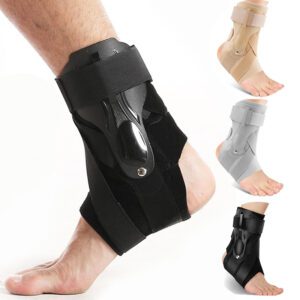
For most people with chronic ankle instability – an ankle that rolls or gives out repeatedly, not a single fresh sprain – a semi-rigid lace-up brace with side stabilizers is the evidence-backed default. It restricts the inward-rolling motion (inversion) that causes your ankle to give out, while still fitting in normal shoes and letting you move through your day. Our Ankle Brace with Speed Laces ($39.99) is built to this spec: two side stabilizers, adjustable figure-8 straps, and a low enough profile to wear with sneakers or work shoes.
If your instability is more severe, or you’re returning to a high-inversion-risk sport (basketball, soccer, trail running), step up to a rigid hard-shell brace, like our Pro Protection Ankle Guard ($49.99) – it’s already our Editor’s Pick in the companion mechanism article on chronic ankle instability, for exactly that higher-risk use case.
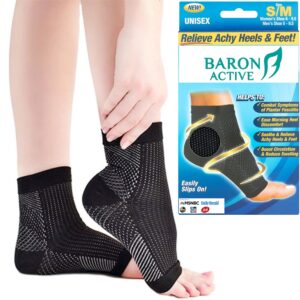
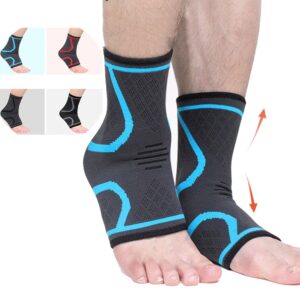
What you should skip, at least as your only support: a basic elastic compression sleeve. It feels supportive and helps with swelling, but the same research shows it does essentially nothing to mechanically control the motion that’s causing your ankle to roll.
What’s Actually Happening When a Brace “Works” (Or Doesn’t)
An ankle that keeps rolling is failing at one specific job: controlling inversion, the inward-rolling motion where your sole turns to face inward and your ankle collapses over the outside edge of your foot. That’s the motion behind the overwhelming majority of ankle sprains, and in chronic instability, it’s the motion your ankle has stopped reliably controlling on its own – whether because the ligaments are looser than before (mechanical instability), the balance and reaction-time system around the joint is under-recruiting (functional instability), or both.
A brace’s entire job is to physically limit how far into that inversion motion your ankle can travel before something stops it – ideally stopping it before it reaches the range where the ligaments get stressed again. That’s a mechanical, structural job, and it turns out different brace designs do it to wildly different degrees.
This is also where the “does bracing weaken your ankle” concern from our companion article comes back in: a brace that’s genuinely restricting inversion is doing a job your own proprioceptive system isn’t fully doing yet, not replacing a job it was already doing well. That’s a temporary trade, not a permanent dependency, provided you’re also doing the rebuilding work.
It also explains why brace type matters so much more than brace brand. Mechanical instability means the ligaments themselves are looser than they should be, so nothing short of an actual physical limit on motion helps – which is a job only a semi-rigid or rigid structure can do. Functional instability is different: the ligaments may test normally, but the reflexive, split-second muscle response that’s supposed to catch a roll before it becomes a sprain is delayed or under-firing. A rigid structure still helps here too, partly by giving that slower reflex system a mechanical backstop while it’s retrained. Most people with a genuinely chronic problem have some combination of both, which is exactly the population the research below was testing.
What the Research Actually Shows About Brace Type
A study published in the Journal of Foot and Ankle Research tested exactly this question with real movement data instead of marketing claims. Researchers split 45 physically active people into three groups – healthy ankles, functional instability only, and combined functional-plus-mechanical instability – and had each group perform a hard 180-degree cutting turn after a running approach, once unbraced, once in a soft elastic sleeve, and once in a semi-rigid brace with side supports. Motion-capture cameras and force plates tracked exactly how far each ankle rolled into inversion, while electrodes tracked how the muscles around the ankle reacted.
The result was not a close call. The semi-rigid brace significantly reduced maximum inversion angle compared to no brace at all (p < 0.001), with the effect strongest in the group with genuine mechanical instability – exactly the population this article is written for. The soft elastic sleeve, tested under identical conditions, produced no statistically meaningful change in either joint motion or muscle activation. Structurally, it didn’t do the job.
There’s a second finding worth sitting with: the semi-rigid brace also reduced peroneal muscle overactivation in the 100 milliseconds around ground contact – the ankle’s own emergency-reflex muscles firing less frantically because the brace was already doing part of the stabilizing work. A brace that measurably calms down a hyperactive stabilizing reflex is doing something real, not just adding bulk.
Separately, sports-medicine guidance reviewing this same evidence echoes the same tiering: semi-rigid braces restrict more inversion and eversion than lace-up designs, which is why they’re the step-up recommendation for higher-risk sport and more severe residual instability, while a properly fitted lace-up brace is the adequate, more wearable choice for moderate cases. That same source notes athletes are roughly two to three times more likely to sprain an ankle when not wearing a brace at all, though it’s upfront that bracing does more for preventing a repeat sprain than a first one – another reason this guide is written for people managing an already-established instability, not trying to prevent a first-ever roll.
And on the question everyone asks before buying anything: research reviewed by the same sports-medicine sources found bracing doesn’t measurably hurt speed, agility, or jump performance, even with long-term wear – so “it’ll slow me down” isn’t a real reason to skip one.
A podiatrist-authored breakdown of brace selection puts the practical version of this tiering plainly: lace-up braces with figure-8 straps give “the most control without stiffening the joint,” making them the default for moderate instability in daily life and return-to-sport situations, while semi-rigid stirrup-style and rigid designs step in for acute injury or more severe residual instability in higher-risk sport. That source adds the same caveat the research keeps circling back to: “a brace manages the symptom but does not rebuild the ligament” – strengthening and balance work are what reduce how often your ankle gives out.
Choosing the Right Brace for Your Situation
Three tiers, matched to what the evidence supports for each:
| Tier | Best for | Mechanical support | BaronActive option |
|---|---|---|---|
| Elastic/compression sleeve | Mild soreness, swelling, comfort during daily wear | Minimal – no significant effect on inversion control in controlled testing | Stability Foot & Ankle Brace X Wrap ($19.99) |
| Semi-rigid lace-up with side stabilizers | Moderate chronic instability, everyday activity, most sports | Significant, measurable reduction in inversion angle | Ankle Brace with Speed Laces ($39.99) – Editor’s Pick |
| Rigid hard-shell | Higher-risk sports (cutting, jumping), more severe or residual instability, post-injury protection | Highest restriction of inversion/eversion motion | Pro Protection Ankle Guard ($49.99) |
If you’re not sure which tier you’re in: default to the semi-rigid lace-up tier. It’s the evidence-backed default for moderate chronic instability specifically, it fits in regular shoes, and it gives you real mechanical support without the bulk or motion restriction of a full rigid shell. Step up to rigid only if you’re returning to a genuinely high-inversion-risk sport or your ankle has given out more than once or twice recently despite bracing.
Editor’s Pick: Ankle Brace with Speed Laces – semi-rigid support with two side stabilizers and adjustable figure-8 straps, the same design category the research shows measurably controls inversion, in a low enough profile to wear with normal shoes. Check the current price →
Whichever tier you land on, browse the full ankle braces category to compare sizing and fit against your specific foot shape – a brace that’s technically the right tier but fits poorly won’t deliver the support the research describes.
Terrain and Activity: Where Each Tier Actually Gets Tested
The tiering above isn’t just theoretical – it maps onto the specific situations where ankles give out. A brace that’s fine for a flat office floor can fail exactly when you need it on a hiking trail, and the research reflects that difference in demand.
Uneven outdoor terrain (trails, gravel, curbs, grass fields) puts unpredictable, sudden inversion stress on the ankle – precisely the motion the semi-rigid tier is built to resist. If most of your instability episodes happen outdoors rather than on flat, predictable ground, the semi-rigid lace-up tier is the right baseline, and the rigid tier is worth considering if trail running or hiking is a regular activity rather than an occasional one.
Cutting and pivoting sports (basketball, soccer, tennis, court sports) generate faster, higher-force inversion moments than walking ever will – close to the exact movement the 45-participant study above used to test brace performance. This is the clearest case for the rigid tier, or at minimum the semi-rigid tier, over a compression sleeve.
Flat, predictable indoor surfaces and low-impact daily activity put comparatively little inversion stress on the ankle, which is where a compression sleeve’s actual strengths – warmth, mild compression, comfort – are genuinely useful, even though the same sleeve underperforms once real inversion stress shows up.
Matching your brace to where your ankle gets tested, not just to a general severity label, is a big part of getting real value out of whichever tier you choose.
Who Should Skip Bracing Alone (Read This First)
- You’ve had more than two or three “gives out” episodes in the last month despite already wearing some kind of support. That’s a signal to see a doctor or physical therapist before buying anything else, not to buy a bigger brace.
- You have visible swelling, bruising, or can’t bear weight after a recent roll. That’s an acute injury needing evaluation, not chronic instability management.
- Your ankle instability came with a “pop” and immediate severe pain at some point. That history warrants an actual ligament evaluation, since a brace alone may not be enough regardless of type.
- You’re relying on a brace instead of doing any balance or strengthening work. Per the sports-medicine guidance above, a brace manages symptoms – it doesn’t rebuild the ligament or retrain the proprioceptive system that’s supposed to catch a roll before it happens. That part is genuinely the exercise protocol covered in our ankle instability mechanism article, not any product.
- You’re under 18 and this started with your first-ever sprain. Younger patients develop chronic instability after a first sprain at notably higher rates than adults, per the pooled data in our companion article – which makes an early evaluation and a real rehab program more valuable than jumping straight to product research.
None of this means bracing is pointless while you sort those things out – it means bracing alone, without addressing why the instability is happening, tends to plateau. If none of the flags above apply to you, the tiered comparison above is enough to make a confident choice today.
Common Mistakes People Make Buying an Ankle Brace
Buying a compression sleeve because it’s cheaper and “should be similar enough.” The biomechanics data above says otherwise – a sleeve and a semi-rigid brace are not interchangeable for real instability, whatever the price difference suggests.
Buying the most rigid option “to be safe.” More rigidity isn’t automatically better – it’s appropriate for higher-risk activity or more severe instability, but for moderate day-to-day instability it’s often more restriction than you need, and comfort matters for whether you’ll wear it consistently.
Wearing the brace only during workouts or sports. If your ankle also gives out walking on uneven sidewalks or stairs, that’s when you need the support too – chronic instability doesn’t clock out when exercise ends.
Expecting the brace to fix the underlying problem. As covered above, this is the mistake the research is most explicit about: bracing controls motion in the moment, it doesn’t rebuild the strength and reaction time that failed in the first place.
Ignoring fit for the sake of the “right” tier. A semi-rigid brace that’s technically the right category but too loose, too tight, or the wrong size for your foot shape won’t deliver the inversion control the studies measured. Check the sizing chart before ordering.
Switching brace tiers every time you have a setback, instead of checking your program. If a semi-rigid brace stops feeling like enough, the first question isn’t “do I need a more rigid brace” – it’s “has my strengthening and balance work been consistent.” A brace upgrade can mask a training gap without solving it.
Frequently Asked Questions
Do I need a rigid ankle brace, or is a lace-up one enough? For most moderate chronic instability, a semi-rigid lace-up brace with side stabilizers is the evidence-backed default – it measurably reduces the inward-rolling motion that causes rolling episodes. Step up to a rigid hard-shell brace if you’re returning to a high-inversion-risk sport or your instability is more severe.
Will an elastic compression sleeve help my ankle instability? It can help with mild soreness, swelling, and general comfort, but controlled biomechanics testing found it produces no significant change in ankle motion or muscle activation during a hard cutting movement – the exact motion that causes rolling episodes. For genuine chronic instability, it isn’t enough on its own.
Can I wear an ankle brace during sports, or just for daily activities? Research reviewed by sports-medicine sources found bracing doesn’t meaningfully affect speed, agility, or jump performance, even with long-term wear, so both semi-rigid and rigid options are appropriate during activity, not just daily wear.
Will wearing a brace make my ankle weaker or more dependent on it over time? This is addressed directly in our companion mechanism article – the short version is that a brace supplements a stabilizing system that isn’t fully doing its job yet; it doesn’t replace or atrophy it, provided you’re also doing balance and strengthening work rather than relying on the brace exclusively.
How do I know if my instability is severe enough for a rigid brace instead of lace-up? Frequency and context are the best signals: occasional instability on uneven ground during daily activity usually fits the lace-up tier, while instability during high-inversion-risk sports, or multiple recent “gives out” episodes despite already bracing, points toward the rigid tier or a professional evaluation.
Is it normal for my ankle to still feel unstable even while wearing a brace? A brace should meaningfully reduce – not eliminate – the sensation of instability by mechanically limiting excess motion. If it feels like it’s doing nothing at all, check that you have the right tier (a sleeve genuinely won’t do this job) and the right fit before assuming bracing doesn’t work for you.
Do I need a different brace for outdoor trails versus the gym? Not necessarily a different brace, but the same brace matters more outdoors. Uneven, unpredictable terrain generates the sudden inversion stress that separates the tiers most clearly, so if your instability shows up mainly on trails or uneven ground, that’s a good reason to choose the semi-rigid or rigid tier over a sleeve even if your gym sessions feel fine unbraced.
Can I use a cheaper generic brace instead of one built specifically around this research? The rigidity category matters more than the brand – a generic semi-rigid lace-up brace with real side stabilizers will behave similarly to the one tested in the research. What to check before buying a generic option: real medial and lateral stabilizers (not just elastic fabric marketed as “support”), adjustable straps rather than a single stretch panel, and a low enough profile to fit your normal shoes.
The Bottom Line
The honest answer to “what’s the best ankle brace for chronic instability” isn’t a single product – it’s a match between brace rigidity and how unstable your ankle is, backed by real motion-capture data showing that a semi-rigid brace controls the rolling motion that causes instability while a soft sleeve largely doesn’t.
For most people, that means a semi-rigid lace-up brace with side stabilizers, like our Ankle Brace with Speed Laces, is the right starting point. Step up to a rigid option like the Pro Protection Ankle Guard for higher-risk sport or more severe instability, and skip the plain compression sleeve as your only line of defense if the instability is real and recurring.
Either way, keep the brace in its proper role: a tool that controls motion while you do the actual rebuilding work. Buy for the tier your instability and activity demand, not for the biggest brace on the page or the cheapest one in the cart – the data above shows those two impulses lead to the two most common buying mistakes on this exact product category.
For the exercise-based approach the research says reduces recurrence for good, read our full breakdown of why ankles keep rolling and what fixes it. Used together – the right brace tier now, the right rehab program alongside it – that’s the honest, two-part answer to an ankle that keeps giving out.